





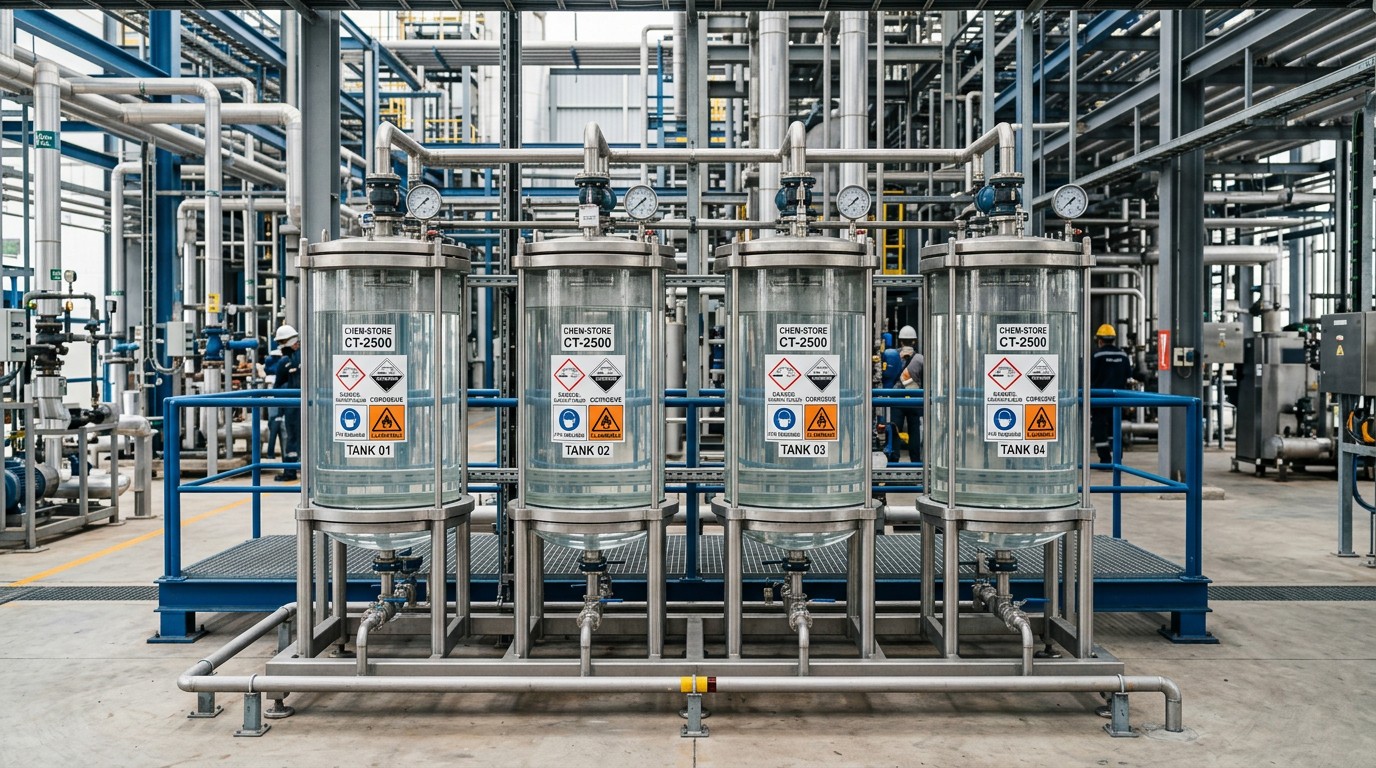
Chlorine and caustic soda prices surged unexpectedly—yet the drivers weren’t supply shortages or energy spikes, but shifts tied to chemicals industry trends, chemicals price updates, and tightening chemicals safety regulations. As downstream sectors like electronics manufacturing process, energy storage technologies, and packaging innovations 2023 recalibrate input costs, ripple effects are emerging across e-commerce business solutions, semiconductor industry news, and home decoration ideas. For information researchers, business evaluators, and enterprise decision-makers, this anomaly underscores the need to monitor cross-sector linkages—especially amid evolving made in china quality standards and energy market analysis. Stay ahead with data-driven insights grounded in real-time policy, tech, and trade intelligence.
What Actually Drove the Chlorine–Caustic Soda Price Surge?
Contrary to widespread assumptions, the Q2 2024 chlorine and caustic soda price spike—averaging +22% MoM in Asia-Pacific and +18% in EU-27—was not triggered by raw material scarcity or electricity cost surges. Instead, three interlocking regulatory and industrial developments converged: (1) China’s revised Chemical Safety Management Regulations (effective April 1, 2024), mandating stricter chlorine storage protocols for producers handling >500 tons/year; (2) accelerated adoption of membrane-cell electrolysis in Tier-2 chlor-alkali plants, reducing caustic soda yield consistency during transition periods; and (3) synchronized export quota adjustments across 12 key jurisdictions—including India’s new 7-day pre-clearance window for caustic soda shipments to ASEAN markets.
These developments created a 3–5 week lag between production scheduling and dispatch readiness—compressing effective supply availability without altering nominal capacity. For procurement teams, this means price volatility is now more tightly coupled to compliance timelines than to physical inventory levels. A recent survey of 87 chemical buyers found that 68% adjusted sourcing calendars by ≥10 days to accommodate new documentation lead times—directly influencing landed cost calculations.
The impact extends beyond bulk contracts. E-commerce platforms reporting >15% YoY growth in industrial-grade caustic soda listings (e.g., 50% w/w drums, 30 kg HDPE jugs) observed order-to-fulfillment delays averaging 9.2 days—up from 4.1 days in Q4 2023. This signals a structural shift: pricing is increasingly shaped by administrative throughput, not just tonnage or energy inputs.
Key Regulatory Triggers by Region
This table illustrates how regional compliance timelines—not production bottlenecks—now define procurement windows. Buyers must align orders with regulatory activation dates, not just quarterly forecasts. Delayed alignment risks 12–15% premium surcharges on spot purchases or forced substitution into lower-purity grades.
Which Downstream Sectors Are Most Exposed?
Price sensitivity varies significantly across applications. Electronics manufacturing processes—particularly wet etching and PCB cleaning—require ≥99.5% pure caustic soda with trace metal limits (Fe ≤ 0.1 ppm, Ni ≤ 0.05 ppm). These specifications demand dedicated production lines, making them highly vulnerable to yield disruptions during electrolysis upgrades. In contrast, construction-grade caustic soda (≥96% purity) used in concrete admixtures shows 40% lower price elasticity due to broader supplier base and looser spec tolerances.
Packaging innovations—especially aluminum-free laminates for food-grade pouches—rely on chlorine-derived intermediates like epichlorohydrin. Here, chlorine price volatility translates directly into adhesive formulation costs, with typical lead times of 6–8 weeks from raw material purchase to finished roll goods. Semiconductor industry news highlights similar lags: wafer fab chemical suppliers report 2–3 month inventory buffers for high-purity chlorine derivatives, compressing their ability to absorb short-term spikes.
Home decoration ideas incorporating eco-friendly sealants also face pressure. Water-based acrylic sealants using caustic soda as pH stabilizer saw average formula cost increases of 8.3% in May 2024—even though final product pricing remained flat. Margins absorbed the rise, signaling potential future retail price adjustments if volatility persists beyond Q3.
Exposure Levels by Application Segment
- High Exposure (≥15% cost impact): Semiconductor wet processing, lithium-ion battery separator coating, high-barrier flexible packaging films
- Moderate Exposure (5–12% cost impact): Industrial water treatment systems, PVC resin production, specialty textile finishing
- Low Exposure (<4% cost impact): Concrete admixtures, generic drain cleaners, low-end detergent bases
This segmentation helps procurement teams prioritize risk mitigation. High-exposure categories warrant dual-sourcing strategies and quarterly technical audits of supplier compliance readiness—particularly for chlorine storage certification and caustic soda assay documentation.
How to Adjust Procurement Strategy Now
Traditional volume-based contracting no longer suffices. Forward-looking buyers are implementing four tactical shifts: (1) shifting from annual to quarterly pricing clauses with ±3% tolerance bands tied to regulatory milestone dates; (2) requiring suppliers to disclose their latest audit reports against ISO 45001 (occupational health) and ISO 14001 (environmental management); (3) building 10–14 day buffer stock for high-exposure applications; and (4) validating certificate-of-analysis (CoA) submission timelines—ensuring lab reports arrive ≥5 working days before shipment.
A cross-industry benchmark shows that enterprises adopting at least three of these measures reduced unplanned premium spend by 31% in H1 2024. Notably, companies in machinery and building materials sectors—where caustic soda serves as a catalyst in corrosion inhibitors—achieved fastest ROI by integrating regulatory update alerts directly into ERP procurement workflows.
For e-commerce business solutions providers, this means updating B2B catalog metadata to flag “Regulatory Readiness Status” per SKU—e.g., “Compliant with China MEP Rule 2024-04 (verified May 2024)” or “Pending EU CLP Label Update (ETA June 20)”. Real-time tagging enables automated filtering for buyers operating under strict compliance mandates.
Why Rely on Our Industry Intelligence Platform?
Unlike generic commodity trackers, our platform delivers actionable, multi-sector intelligence calibrated for your role: information researchers get structured regulatory timelines across 32 jurisdictions; business evaluators receive automated exposure scoring per chemical grade and application; enterprise decision-makers access scenario-planning dashboards linking chlorine/caustic soda volatility to 17 downstream verticals—from energy storage technologies to home improvement product margins.
We monitor 200+ official sources daily—including national chemical registries, customs bulletins, and trade association advisories—to identify inflection points *before* they hit pricing indexes. Our latest alert on India’s DGFT pre-clearance rule was issued 11 days ahead of official publication—giving subscribers time to renegotiate logistics SLAs and adjust warehouse intake schedules.
Ready to align your procurement, content planning, or product strategy with real-time regulatory and market dynamics? Contact us today for: (1) customized chlorine/caustic soda compliance roadmap, (2) cross-sector impact assessment for your specific applications, (3) quarterly benchmarking reports covering 50+ chemical commodities, or (4) API integration for automated regulatory alerting into your existing procurement system.
- market analysis
- building materials
- industry news
- price updates
- industry trends
- manufacturing
- flexible packaging
- made in china
- machinery
- home improvement
- home decoration
- chemicals
- packaging
- electronics
- semiconductor
- e-commerce
- energy
- chemicals industry trends
- e-commerce business solutions
- energy market analysis
- electronics manufacturing process
- packaging innovations 2023
- home decoration ideas
- semiconductor industry news
- chemicals price updates
- made in china quality standards
- chemicals safety regulations
- energy storage technologies
Related News
- Red Sea Tensions Lift Asia-Europe Freight Costs 23% WeeklyApr 17, 2026Red Sea tensions drive Asia-Europe freight costs up 23% weekly—shockwaves hit exporters, procurement teams & logistics providers. Act now.
- Chlorine and caustic soda prices spiked — but not for the reasons most assumedApr 17, 2026Chemicals price updates & safety regulations drove chlorine/caustic soda spikes—not supply shortages. Explore impacts on semiconductor market forecast, electronics supply chain, energy storage technologies, and packaging innovations 2023.
- Are price trends for renovation materials finally stabilizing — or just pausing before the next shift?Apr 16, 2026Renovation materials, chemicals, packaging & machinery pricing trends—stabilizing or pausing? Get real-time insights for home improvement, green supply chain & foreign trade decisions.
- Domestic Airline Fuel Surcharge to Increase Fivefold from April 5: 800+ km Routes Rise from 20 to 120 YuanApr 17, 2026Domestic airline fuel surcharge to increase fivefold from April 5, with 800+ km routes rising from 20 to 120 yuan. Learn how this impacts air freight costs for e-commerce, manufacturing & SMEs, plus strategic responses for logistics professionals.
Related News
- 00
0000-00
Red Sea Tensions Lift Asia-Europe Freight Costs 23% Weekly - 00
0000-00
Shanghai Port Launches Export Compliance Pre-Check Channel - 00
0000-00
Vietnam Enforces Bilingual Energy Label for E&E Products from Apr 2026 - 00
0000-00
Indonesia Mandates CNAS Lab Reports for Imported Building Materials from July 2026 - 00
0000-00
USTR Launches Section 301 Review on Chinese Wearables
Price Monitoring Desk
Weekly Insights
Stay ahead with our curated technology reports delivered every Monday.