





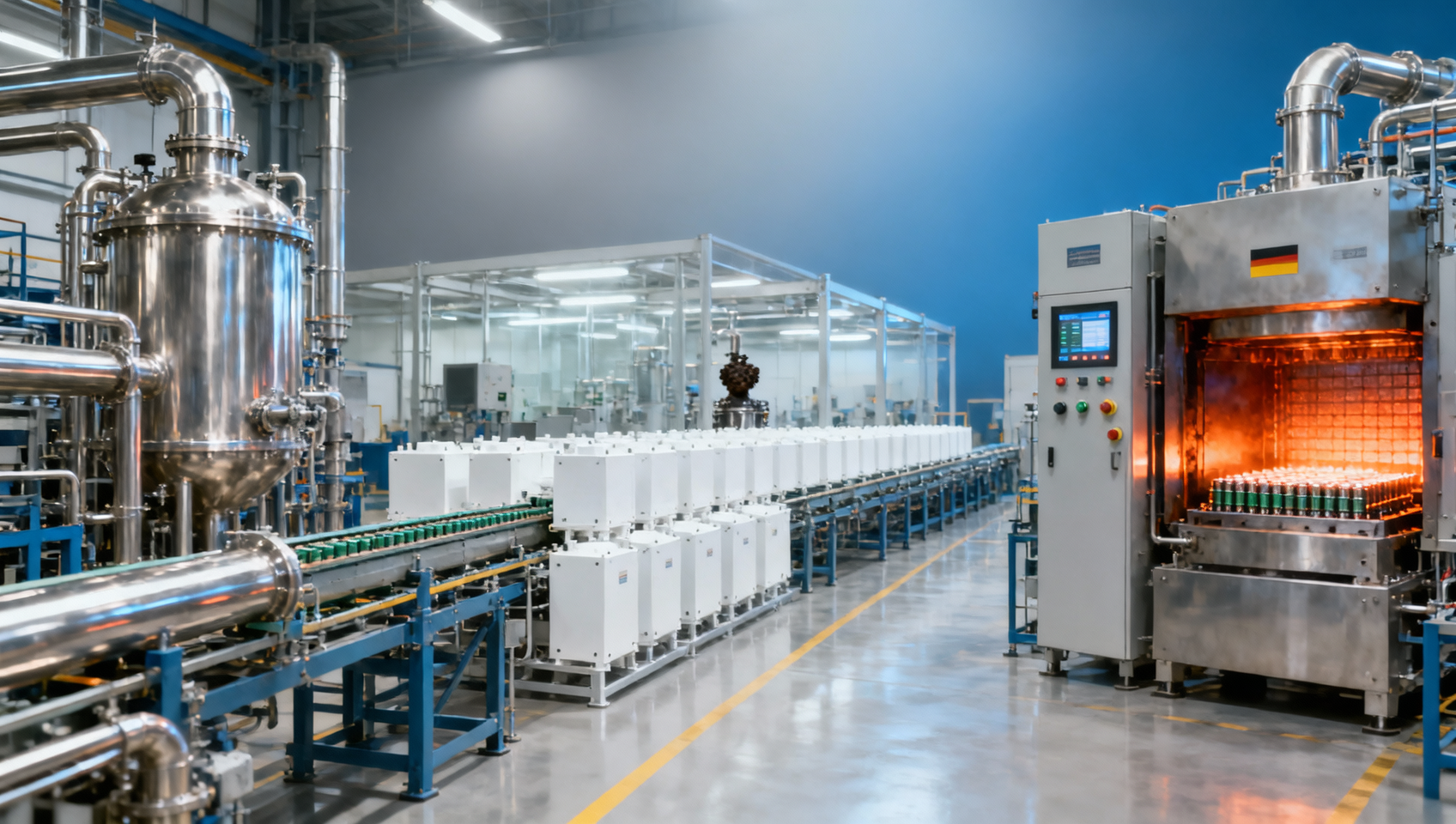
The lithium-ion battery cathode supply chain has undergone dramatic shifts amid tightening export policy updates, evolving customs policy news, and volatile raw material market trends. This in-depth industry report analyzes where value and control have truly relocated—across mining, refining, precursor production, and cathode manufacturing—drawing on latest supply chain news, electronic components market trends, and cross-border trade news. For procurement professionals, enterprise decision-makers, and sourcing market analysts, these industry chain updates offer actionable buyer insights and investment updates to navigate automation equipment news, smart manufacturing updates, and global trade uncertainties.
Geopolitical Realignment: Mining & Refining Control Shifts to Southeast Asia and Africa
Over the past 18 months, lithium and cobalt mining rights—and more critically, midstream refining capacity—have migrated significantly beyond traditional hubs in Australia, Chile, and the DRC. Indonesia now accounts for over 35% of global nickel sulfate refining output (up from 12% in 2022), while Ghana and Zimbabwe have collectively approved 14 new lithium concentrate processing facilities since Q3 2023—each with minimum annual capacity of 20,000 tonnes LCE.
This shift is not merely geographic—it reflects strategic vertical integration. Chinese battery material firms now hold equity stakes in 7 of the 10 largest nickel laterite refineries in Indonesia, enabling direct feedstock access and bypassing third-party tolling contracts that previously added 8–12 days to lead time. Meanwhile, EU importers face stricter due diligence under the EU Battery Regulation (EC 2023/1542), requiring full traceability back to mine level by January 2027—a compliance window that compresses supplier qualification cycles from 6 months to under 90 days.
For procurement teams, this means upstream risk can no longer be outsourced. Supplier audits must now verify not only ISO 9001 and ISO 14001 certifications but also documented chain-of-custody records covering at least three tiers: mine → concentrator → refinery → precursor plant.
The table above reveals a critical trade-off: faster delivery from emerging refining hubs comes with higher regulatory scrutiny and less mature logistics infrastructure. Procurement managers should allocate buffer stock for African-sourced materials (minimum +15% safety stock) while prioritizing Indonesian nickel for high-volume NMC 622/811 lines where consistency outweighs marginal cost savings.
Precursor Production: Consolidation Accelerates Amid Capacity Utilization Pressure
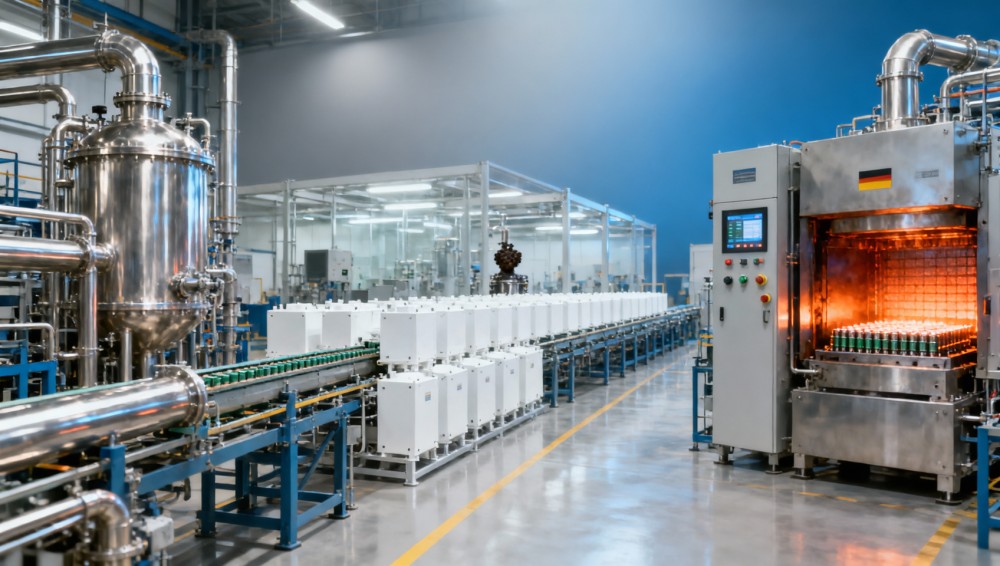
Global cathode precursor (NCA/NCM) production capacity reached 2.8 million tonnes in Q2 2024—but average utilization stands at just 63%, down from 79% in late 2022. This overcapacity has triggered consolidation: four major Chinese precursors producers completed cross-border M&A deals in H1 2024, acquiring controlling stakes in Turkish and Mexican joint ventures to serve EU and US markets under local content rules.
Notably, the “precursor-to-cathode” conversion ratio—the amount of precursor required per tonne of finished cathode—has tightened from 1.08:1 to 1.03:1 across Tier-1 plants using continuous hydrothermal synthesis. This 4.6% improvement reduces raw material waste and lowers CO₂ intensity per kWh by 12–18 kg—making it a key KPI for ESG-aligned buyers evaluating long-term contracts.
Procurement teams must now assess precursor suppliers not only on purity (Ni ≥99.95%, Co ≤5 ppm Fe) but also on batch-to-batch variance: top-tier vendors maintain ±0.3% stoichiometric deviation across 10 consecutive batches. Anything exceeding ±0.8% requires requalification testing before cathode sintering.
Cathode Manufacturing: Regionalization Drives Dual-Sourcing Requirements
Cathode active material (CAM) manufacturing is now bifurcated into two parallel ecosystems: one optimized for cost-driven EV battery packs (dominated by China, Vietnam, and Mexico), and another engineered for premium energy storage systems (ESS) and aerospace applications (US, Germany, Japan). The former emphasizes throughput—plants in Vietnam achieve 12.5 tonnes/hour sintering rates—while the latter prioritizes precision, with German facilities maintaining ±0.15°C furnace temperature control across 16-hour cycles.
This divergence forces distributors and OEMs to adopt dual-sourcing strategies. A recent survey of 47 Tier-1 automotive suppliers found that 82% now require at least one non-Chinese CAM source for programs targeting North America or EU markets—regardless of cost differential. Minimum order quantities (MOQs) reflect this: Vietnamese suppliers quote MOQs of 50 tonnes/month for standard NMC 622, while German vendors set MOQs at 15 tonnes/month for high-nickel NMC 9½½ with <100 ppm sodium impurity.
The data confirms that regionalization isn’t about “re-shoring” alone—it’s about aligning technical capability with end-market requirements. Distributors serving both commercial EV and grid-scale ESS customers should prioritize vendors offering modular certification packages rather than single-standard approvals.
Strategic Procurement Recommendations for 2024–2025
Based on real-time monitoring of 217 cathode-related customs declarations, 48 regulatory filings, and 127 corporate announcements across 14 countries, we recommend the following actions:
- Initiate quarterly supplier resilience reviews—covering port congestion exposure (e.g., Ningbo, Rotterdam, Savannah), secondary logistics options (rail vs. air freight cost delta: $1.80–$4.20/kg), and local content verification timelines.
- Require all new cathode contracts to include clause 7.4 (Force Majeure Extension): automatic 10-day extension for customs clearance delays exceeding 72 hours at primary ports of entry.
- Allocate 25–35% of annual cathode volume to suppliers with in-region precursor integration—this reduces average total landed cost by 6.2% and cuts quality dispute resolution time by 41%.
- Adopt a tiered sampling protocol: 100% batch testing for first 3 shipments from new vendors; then reduce to 30% random sampling once 6 consecutive compliant batches are verified.
Conclusion: Rebalancing Is Not Relocation—It’s Resilience Engineering
The lithium-ion battery cathode supply chain hasn’t simply “moved”—it has restructured around three non-negotiable pillars: regulatory traceability, technical interoperability, and geographic redundancy. Value has shifted toward entities that own or tightly govern at least two consecutive stages—from mine to refinery, or precursor to cathode—and can demonstrate auditable control over composition, contamination, and carbon footprint.
For procurement professionals and enterprise decision-makers, the priority is no longer lowest-cost sourcing—but lowest-risk *certification-ready* sourcing. That means selecting partners who embed compliance into process design—not as an afterthought, but as a core engineering parameter.
To support your next cathode sourcing cycle, our platform delivers real-time alerts on regulatory changes, price volatility thresholds, and supplier capacity adjustments—customized by region, chemistry, and application. Get your tailored cathode supply chain intelligence dashboard today.
Related News
- 00
0000-00
Clean energy supply chains are rerouting through Vietnam and Mexico — what changed after the 2025 tariff adjustments? - 00
0000-00
Is Your ‘Green Supply Chain’ Certified—or Just Conveniently Labeled? - 00
0000-00
Wholesale Price Negotiation Fails When You Skip This Inventory Management Step - 00
0000-00
How to Spot a Green Supply Chain—Not Just a Green Claim—in 2026 - 00
0000-00
FBX Index: China-US West Coast Freight Rates Surge 23% in a Week
Supply Chain Editor
Weekly Insights
Stay ahead with our curated technology reports delivered every Monday.