





In fast-changing industries, market analysis techniques for clean energy help reduce blind spots by connecting clean energy market trends, clean energy policy updates, and renewable energy supply chain challenges with broader signals such as manufacturing industry market analysis and building materials price fluctuations. For researchers, buyers, operators, and decision-makers, this approach turns scattered data into practical insight for smarter planning and faster response.
Why do clean energy market analysis techniques often miss critical cross-industry signals?
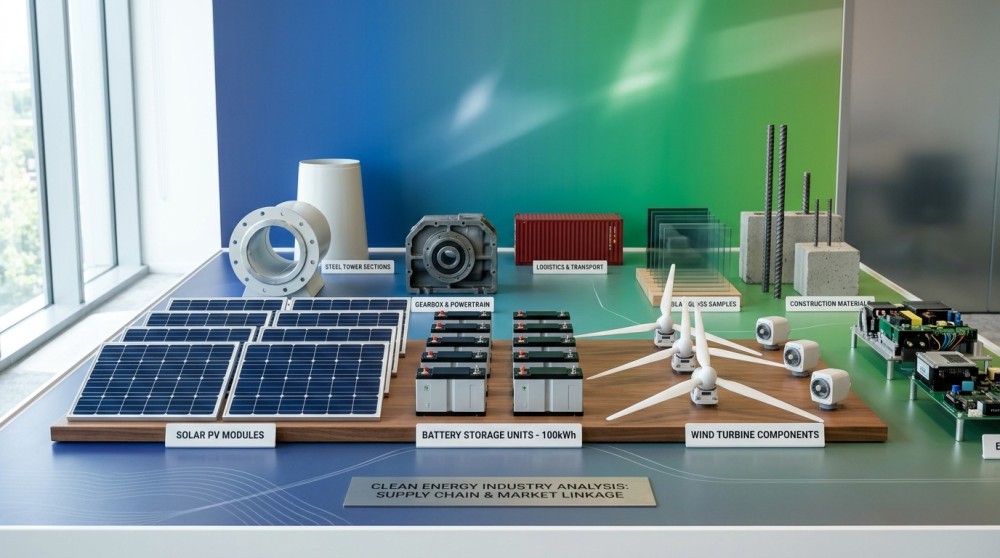
Many teams track clean energy demand, technology updates, and policy headlines, but blind spots appear when they evaluate these signals in isolation. In practice, clean energy market analysis techniques work best when they connect energy developments with adjacent sectors such as machinery, chemicals, packaging, electronics, foreign trade, and construction materials. A battery project, for example, is not shaped only by energy policy. It is also affected by equipment lead time, export controls, raw material prices, logistics constraints, and downstream buying cycles.
For information researchers, the first risk is fragmented monitoring. One database may cover policy updates daily, while another updates commodity prices weekly or monthly. This mismatch creates lag in interpretation. For procurement staff, the second risk is incomplete supplier visibility. A quote may look stable for 7–15 days, yet the true cost base can shift faster if metals, insulation materials, semiconductors, or shipping rates move within the same period. That is why broader market analysis reduces blind spots more effectively than a single-sector reading.
Operators and commercial evaluators face a third problem: they often see operational symptoms before they see market causes. A delay in inverter delivery, an increase in packaging cost, or a longer customs clearance cycle may appear as isolated incidents. In reality, these are often connected to wider manufacturing capacity allocation, trade policy changes, and upstream component tightness. Good market analysis techniques for clean energy should therefore integrate at least 3 layers: sector-specific indicators, cross-industry supply chain indicators, and timing indicators that show whether a signal is short term, seasonal, or structural.
For enterprise decision-makers, the issue is not access to information alone but decision usability. They need a structure that helps answer practical questions within 24–72 hours: Is a price increase temporary? Is a supplier delay local or industry-wide? Is a new policy commercially relevant now or only after 1–2 quarters? A comprehensive industry news platform becomes valuable here because it organizes regulations, market movements, price changes, technology shifts, company news, and international trade developments into one monitoring framework instead of scattered feeds.
Three common blind spots that distort clean energy decisions
- Policy-only interpretation: teams focus on subsidies, market access, or grid policy but ignore equipment availability, materials inflation, and export friction.
- Price-only interpretation: teams track module, battery, or fuel prices but miss the effect of packaging, chemicals, electronics, and freight on final procurement cost.
- Single-region interpretation: teams evaluate one domestic market while supplier capacity and demand pressure are shifting across multiple trade corridors at the same time.
When these blind spots overlap, even experienced teams can underestimate lead-time risk by 2–4 weeks or misread demand timing by one purchasing cycle. That is why the most useful market analysis techniques for clean energy are not just analytical methods. They are workflow methods for connecting information across sectors, timeframes, and decisions.
How should researchers and buyers structure market analysis techniques for clean energy?
A practical structure starts with decision purpose. Researchers may need early-stage market mapping. Buyers may need supplier timing and cost risk signals. Operators may need continuity indicators for production and maintenance planning. Commercial reviewers may need evidence for budget, pricing, and margin assumptions. These users do not need the same dashboard, but they do need the same logic: signal collection, signal comparison, risk grading, and action timing.
One effective method is to organize clean energy market analysis techniques into 4 steps over a rolling cycle. Step 1 is daily monitoring of policy changes, trade developments, and major company announcements. Step 2 is weekly comparison of component prices, lead times, and upstream material signals. Step 3 is monthly validation against sector demand trends in manufacturing, construction, foreign trade, and electronics. Step 4 is quarterly scenario review to test whether the market is entering a temporary fluctuation, a medium-term adjustment, or a structural shift.
What should be monitored in a cross-industry intelligence workflow?
The table below summarizes core monitoring dimensions that help reduce blind spots in clean energy market analysis. It is designed for B2B use, where procurement, investment review, content planning, and strategic communication often depend on the same upstream facts but lead to different actions.
This structure works because it does not force all users to interpret every signal equally. Instead, it helps each team filter what matters most. Researchers can prioritize signal discovery. Buyers can prioritize lead-time and pricing stability. Decision-makers can prioritize market direction and capital exposure. The same information platform serves different users by organizing updates into action-ready categories rather than raw news volume.
A simple 4-step review process
- Define the decision window: immediate purchase in 7–30 days, project planning in 1–2 quarters, or strategic positioning over 6–12 months.
- Map dependencies: identify whether the clean energy decision depends on metals, electronics, building materials, export channels, or local compliance review.
- Grade signals: mark each signal as cost-related, supply-related, policy-related, or demand-related, then test whether it is temporary or persistent.
- Translate insight into action: delay, accelerate, diversify suppliers, revise forecast assumptions, or seek an alternative configuration.
If a team follows this process consistently for 8–12 weeks, decision quality usually improves because discussions shift from reacting to headlines toward comparing commercial impact. That is the core advantage of structured market analysis techniques for clean energy.
Which comparison factors matter most when evaluating clean energy market trends?
Not every trend deserves the same weight. A useful comparison framework separates visible trends from decision-critical trends. Visible trends are easy to track, such as public announcements or headline policy changes. Decision-critical trends are the ones that alter cost, timing, compliance, or market access. For buyers and business evaluators, this distinction matters because a well-publicized technology shift may have less immediate impact than a 10–20 day extension in equipment lead time or a tighter packaging supply window.
A broader industry perspective also helps interpret renewable energy supply chain challenges correctly. For example, construction cycles can influence demand for cables, insulation, and metal structures. Electronics demand can affect semiconductor allocation. Chemical sector changes can alter availability of adhesives, coatings, and battery materials. These are not side issues. They are often the hidden variables that decide whether a procurement plan remains viable under changing market conditions.
Comparison table for practical decision-making
The following table compares common signal categories by their direct relevance to procurement and strategic decisions. It is especially useful when teams need to decide what to monitor daily, weekly, or monthly without overloading internal reporting.
The key insight is that trend analysis should always end with a decision filter. Ask four questions: Does this change cost? Does it change lead time? Does it change compliance exposure? Does it change market access? If the answer is no to all four, the trend may still be relevant for background monitoring, but it should not dominate operational decisions. This comparison method helps teams avoid noise while still keeping broad awareness.
For content teams and strategic communicators, the same framework also improves external messaging. Instead of publishing generic market summaries, they can explain how clean energy market trends connect to foreign trade, machinery supply, building materials price fluctuations, and technology deployment cycles. That makes industry communication more useful to B2B readers who need commercial implications, not just headlines.
How can procurement teams turn clean energy market analysis into buying decisions?
Procurement teams usually work under 5 pressures at once: budget limits, delivery urgency, changing specifications, compliance expectations, and incomplete supplier visibility. Market analysis techniques for clean energy become practical only when they support a buying choice such as whether to lock in a quote, split orders, qualify a second source, or adjust the project timeline. The goal is not more reports. The goal is fewer surprises between sourcing, approval, and delivery.
A strong procurement review usually combines 3 categories of evidence. First, price evidence: component trends, upstream material movement, and quote validity windows such as 7 days, 15 days, or 30 days. Second, supply evidence: factory capacity, maintenance schedules, shipping routes, and customs timing. Third, compliance evidence: local regulations, testing requirements, labeling needs, documentation standards, and contract clauses linked to cross-border trade. When any one of these categories is missing, blind spots increase sharply.
Five checks before confirming a sourcing plan
- Check whether upstream materials linked to batteries, electrical components, coatings, or metal structures have moved during the past 2–4 weeks.
- Confirm whether lead time refers only to production or includes packaging, inspection, port handling, and inland delivery.
- Review if the target market requires additional documents, test reports, energy labeling, or import declarations.
- Evaluate whether one supplier is exposed to a single region, single shipping route, or single key component source.
- Assess whether a price offer remains valid if exchange rates, freight, or customs charges change within the current buying cycle.
This is where an industry news platform adds practical value. Because it tracks policy, price changes, trade trends, and corporate developments across multiple sectors, it helps buyers interpret a quote in context. A stable product price may still be risky if logistics costs are rising, packaging availability is tight, or a relevant market has announced new import screening. Cross-industry visibility helps procurement teams compare what is written in the quote with what is happening in the market.
Typical implementation rhythm for purchasing teams
In many B2B environments, a workable rhythm is daily alert monitoring, a weekly risk note, and a monthly sourcing review. Daily monitoring catches urgent policy or logistics changes. Weekly review supports quote decisions and supplier communication. Monthly review allows category managers and decision-makers to test whether they should secure stock, diversify sourcing, or revise budget assumptions. This cadence is often more realistic than trying to run full-scale market analysis every day.
For urgent procurement, teams should shorten the loop further. If delivery is needed in less than 30 days, market analysis should prioritize route reliability, inventory signal, and customs predictability over long-term trend commentary. If the project horizon is 3–6 months, the focus should shift toward capacity allocation, policy direction, and technology substitution risk. Matching analysis depth to purchase timing is one of the simplest ways to reduce blind spots.
What common mistakes create blind spots in renewable energy supply chain analysis?
The first mistake is confusing information volume with market understanding. Teams may read dozens of updates each week and still miss the one indicator that affects their decision. Effective market analysis techniques for clean energy do not depend on collecting everything. They depend on selecting the right indicators for the right horizon, whether that horizon is 14 days, 90 days, or the next two quarters.
The second mistake is assuming that supply chain risk belongs only to logistics. In reality, renewable energy supply chain challenges may begin with chemicals, industrial components, electronics, machinery maintenance, labor scheduling, or regional compliance shifts. By the time the problem reaches logistics, the real cause may have already developed upstream. This is why cross-sector monitoring is essential for researchers and operators who need early warnings rather than post-event explanations.
The third mistake is treating all market changes as permanent. Some shifts last one buying cycle. Others last one season. Others reshape the market for 6–12 months or longer. Without time classification, teams either overreact or delay action. A useful rule is to classify signals into 3 bands: immediate disruption, medium-term adjustment, and structural change. This makes internal discussion more disciplined and improves escalation decisions.
FAQ: practical questions from researchers, operators, and buyers
How often should clean energy market trends be reviewed?
That depends on the decision. For active procurement or volatile trade conditions, daily to weekly review is appropriate. For strategic market mapping, weekly to monthly review is often sufficient. A common approach is to maintain daily alerts for policy and logistics, weekly tracking for prices and supplier developments, and a monthly synthesis for management decisions.
Which users benefit most from cross-industry market analysis?
Information researchers benefit because they can connect isolated updates into a usable story. Operators benefit because they can relate maintenance, scheduling, and supply continuity to market drivers. Procurement teams benefit because they can validate quotes and identify hidden cost drivers. Business evaluators and decision-makers benefit because they can compare risk, timing, and market opportunity in one structured view.
What is the most overlooked input in clean energy market analysis techniques?
One of the most overlooked inputs is adjacent-sector price and capacity data. Building materials, industrial machinery, electronics components, chemicals, and packaging often shape the final cost and delivery reliability of clean energy projects. Ignoring these sectors can make a sourcing plan look stable on paper while it is already becoming fragile in practice.
How can a team tell whether a signal is actionable?
A signal is usually actionable if it changes one of four things: cost, lead time, compliance burden, or market access. If a development affects none of these in the current planning window, it may still matter for background awareness, but it should not dominate the decision process. This rule helps reduce noise and keeps analysis linked to business action.
Why choose us when you need cleaner, faster, and more usable market intelligence?
When businesses evaluate market analysis techniques for clean energy, they rarely need isolated news. They need connected intelligence that links clean energy policy updates, market trends, price movements, technology changes, company activity, and international trade developments across multiple sectors. Our comprehensive industry news platform is built for that exact need. It helps users move from scattered information to decision-ready insight without losing industry context.
For researchers, we support faster topic discovery and more complete signal tracking. For operators, we help connect market events to supply continuity and execution risk. For procurement teams, we make it easier to compare supplier timing, cost pressure, and external disruptions. For commercial evaluators and enterprise decision-makers, we provide broader visibility across manufacturing, foreign trade, machinery, building materials, chemicals, packaging, electronics, e-commerce, and energy so market changes can be reviewed from more than one angle.
If you are planning a project, preparing a sourcing decision, updating content strategy, or evaluating market direction for the next 1–2 quarters, you can contact us for focused support around the points that matter most: parameter confirmation, solution comparison, delivery cycle review, supplier and market screening, compliance and documentation questions, sample information, and quotation communication. This makes the conversation practical from the first exchange, especially when timing, budget, and cross-industry uncertainty all matter at once.
The fastest way to reduce blind spots is to start with the right decision question. Tell us whether you need help tracking policy changes, comparing market trends, assessing renewable energy supply chain challenges, or building a more reliable monitoring workflow. We can help you organize the relevant signals, shorten the search process, and turn market complexity into clearer next steps.
- market analysis
- supply chain
- building materials
- industry news
- raw material prices
- company news
- manufacturing
- cement
- insulation materials
- adhesives
- foreign trade
- international trade
- machinery
- industrial machinery
- construction materials
- chemicals
- packaging
- electronics
- semiconductor
- e-commerce
- energy
- clean energy
- renewable energy
- policy updates
- energy market analysis
- market analysis techniques for clean energy
- clean energy policy updates
- renewable energy supply chain challenges
- manufacturing industry market analysis
- clean energy market trends
- building materials price fluctuations
Related News
- Market Analysis Techniques for Clean Energy That Reduce Blind SpotsApr 22, 2026Market analysis techniques for clean energy reduce blind spots by linking clean energy market trends, policy updates, and supply chain risks to faster, smarter B2B decisions.
- When Business Intelligence for Market Analysis Gets Too GenericApr 22, 2026Business intelligence for market analysis gets results only when it is sector-specific. Discover home decoration market insights, clean energy market trends, semiconductor supply chain updates, and more.
- AI Lobster Clerk Debuts at Retail Expo, Draws SEA Procurement InquiriesApr 19, 2026AI Lobster Clerk debuts at China Retail Expo—drawing SEA procurement interest with multilingual AI, 99.2% OCR accuracy & offline-ready retail automation.
- 2026 Humanoid Robot Half Marathon in BeijingApr 19, 20262026 Humanoid Robot Half Marathon in Beijing: First international robotics race sparks global procurement interest in Chinese motion control chips, joint modules & RTOS integration.
Related News
- 00
0000-00
Two Supreme Organs Issue Anti-Bribery Judicial Interpretation (II) - 00
0000-00
Yangtze River Delta: 163 Projects Boost Manufacturing Sourcing Hub - 00
0000-00
China’s 'AI+Education' Action Plan Opens Standardization Window for AI Ed-Tech Exports - 00
0000-00
HKMA Sets Q3 2026 Timeline for First Stablecoin Licenses - 00
0000-00
China-Sri Lanka Joint Operation Repatriates 125 Telecom Fraud Suspects
Technology Insights Desk
Weekly Insights
Stay ahead with our curated technology reports delivered every Monday.