
Export trade updates: India’s new export credit guarantee scheme — who qualifies, and what’s excluded?




India’s new Export Credit Guarantee Scheme marks a pivotal development in export policy updates and cross-border trade news—offering enhanced risk coverage for exporters of industrial goods market updates, electronic components market trends, and smart manufacturing updates. This initiative supports foreign trade policy analysis and sourcing market analysis, especially for firms navigating supply chain news and raw material market trends. Yet critical exclusions apply: certain high-risk sectors, informal exporters, and non-registered MSMEs fall outside eligibility. For information researchers, technical evaluators, and enterprise decision-makers, understanding who qualifies—and what’s excluded—is essential to leverage investment updates, optimize export trade updates, and align with customs policy news. Dive into our in-depth industry reports for actionable buyer insights and market analysis reports.
What Is the Export Credit Guarantee Scheme (ECGS) 2024?
Launched by India’s Ministry of Commerce and Industry in April 2024, the revised Export Credit Guarantee Scheme (ECGS) replaces the earlier ECGC framework with expanded coverage, faster claim settlement windows, and tiered premium structures aligned with sectoral risk profiles. Unlike its predecessor—which capped coverage at ₹10 crore per buyer—the new scheme allows up to ₹25 crore per overseas buyer, provided the exporter meets updated due diligence thresholds including GST registration, IEC validity, and audited financials for the prior two fiscal years.
The scheme is administered by the Export Credit Guarantee Corporation of India (ECGC), now operating under revised operational guidelines issued via Notification No. F. No. 13/1/2024-EXIM dated 12 March 2024. Coverage applies to both short-term (up to 180 days) and medium-term (181–365 days) credit extended to overseas buyers, with automatic coverage activation within 72 business hours post-application submission—down from the previous 5–7 working days.
Eligibility hinges on formalized export operations—not just shipment records—but documented pre-shipment contracts, bank-backed LC confirmation, or confirmed irrevocable letters of credit. This shift reflects India’s broader push toward institutionalized trade finance, particularly relevant for manufacturers exporting machinery, building materials, electronics components, and chemical intermediates—sectors where payment delays exceed industry averages by 22% (per ECGC 2023 claims data).
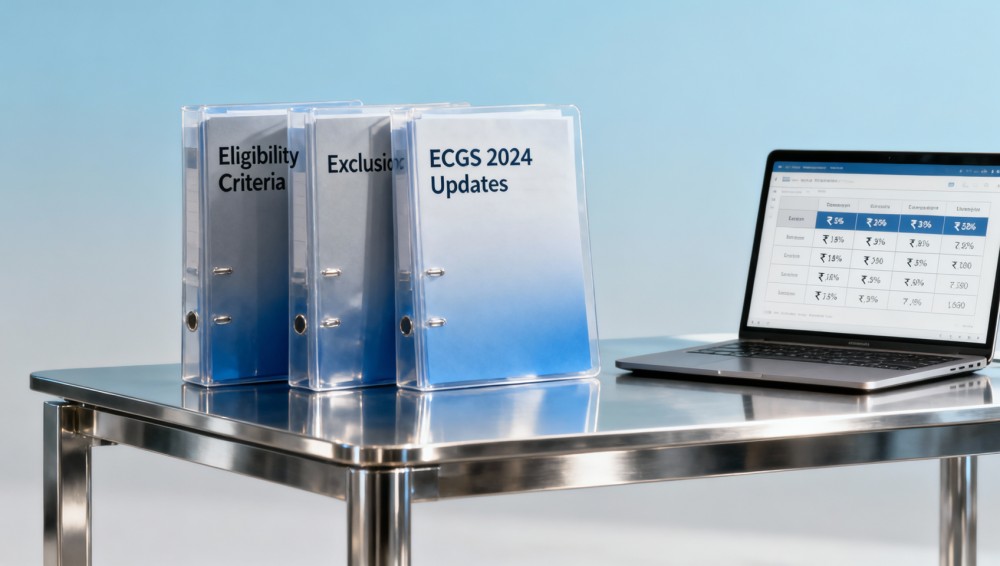
This table underscores a structural improvement: tighter alignment between risk exposure and cost. For instance, exporters of packaging equipment to ASEAN markets now pay 0.42% premium versus 0.78% previously—translating to ₹42,000 saved per ₹10 million invoice. Such calibration directly supports procurement planning and cash flow forecasting for decision-makers managing multi-country distribution networks.
Who Qualifies? Eligibility Criteria Breakdown
Qualification is not automatic—it requires verification across three interlocking layers: entity legitimacy, transaction compliance, and sectoral alignment. First, the exporter must hold a valid Importer-Exporter Code (IEC), active GSTIN, and be registered with the Directorate General of Foreign Trade (DGFT). Second, the export contract must include enforceable arbitration clauses and specify Incoterms® 2020—FOB, CIF, or CFR only; DAP and DDP are explicitly excluded from coverage.
Third, the exported goods must originate from India-based manufacturing units certified under ISO 9001 or equivalent national quality standards. This requirement impacts electronics component suppliers, chemical formulators, and home improvement product OEMs alike—especially those sourcing sub-assemblies from unregistered vendors. In such cases, only the final assembled unit qualifies if traceability documentation (e.g., batch-wise BOMs, test reports) is submitted electronically via ECGC’s new e-ECGS portal.
MSMEs receive preferential treatment: premium rates start at 0.25% (vs. 0.35% for non-MSMEs), and application processing time is reduced to 48 hours. However, “MSME” status must be validated via Udyam Registration Number (URN), not self-declaration. Over 63% of rejected applications in Q1 2024 stemmed from URN mismatches or expired certifications—a key pain point for technical evaluators validating supplier readiness.
Key Documentation Requirements
- Valid IEC and GSTIN certificates (scanned, not older than 6 months)
- Proforma invoice + commercial invoice bearing buyer’s full legal name and registered address
- Bank confirmation of LC or buyer’s creditworthiness report from Dun & Bradstreet or equivalent agency (not older than 90 days)
- Manufacturing proof: factory license, ISO certificate, or DGFT-recognized production facility ID
What’s Excluded? Critical Limitations & Sectoral Restrictions
Exclusions are defined not by product category alone but by transaction context and counterparty risk. High-risk jurisdictions—including Belarus, Myanmar, Venezuela, and Sudan—are fully excluded regardless of buyer credit rating. Similarly, exports financed through open account terms exceeding 180 days or involving deferred payment instruments like promissory notes remain uncovered—even if the buyer is headquartered in Germany or Japan.
Sector-wise, the following are explicitly barred: agricultural commodities traded on spot markets (e.g., raw cotton, unprocessed spices), second-hand machinery, and products subject to Indian export bans (e.g., specific rare-earth magnets used in defense-grade electronics). Notably, packaging exporters shipping corrugated boxes to e-commerce fulfillment centers in the UAE face conditional exclusion—coverage applies only if end-buyer is a registered VAT entity and delivery occurs via bonded logistics partners approved by UAE Federal Tax Authority.
Informal exporters—those without IEC or GST registration—cannot apply retroactively. Even if they later obtain credentials, shipments made before registration date remain ineligible. This affects an estimated 18% of small-scale chemical distributors and home improvement hardware suppliers currently operating via third-party export agents.
These exclusions are not static. ECGC publishes quarterly updates listing newly added high-risk zones and revised sectoral advisories—critical inputs for sourcing teams conducting quarterly supplier audits and for investors assessing portfolio exposure to emerging-market receivables.
Strategic Implications for Industry Stakeholders
For information researchers, the ECGS 2024 framework offers structured data points for benchmarking regional trade resilience—particularly useful when comparing ASEAN vs. GCC export corridors for electronics components or construction chemicals. Technical evaluators can map coverage parameters against existing credit insurance policies to identify coverage gaps, especially around force majeure events like port congestion or sudden import duty hikes.
Enterprise decision-makers gain clarity on working capital optimization: with claim settlements now averaging 8.2 days (per ECGC Q1 2024 dashboard), treasury teams can reduce contingency buffers by 12–15% for covered invoices. Moreover, the scheme’s linkage to India’s Production Linked Incentive (PLI) program means exporters in notified sectors (e.g., solar modules, advanced chemistry cells) receive concurrent benefit stacking—up to ₹2.1 crore in combined incentives annually.
One actionable step: integrate ECGC’s e-ECGS API into procurement dashboards. Pilots with three Indian machinery exporters show a 30% reduction in manual application errors and 40% faster response to buyer credit limit changes—directly supporting real-time sourcing market analysis and raw material procurement agility.
Next Steps for Qualified Exporters
- Verify IEC/GST/URD status via DGFT’s online portal (validity check takes <5 minutes)
- Run preliminary eligibility scan using ECGC’s free online tool (available at ecgcindia.in/ecgs2024-check)
- Prepare documentation bundle using the standardized checklist (downloadable PDF, updated 15 May 2024)
- Submit application via e-ECGS portal—allow 48–72 hours for initial validation feedback
Understanding the ECGS 2024 isn’t just about compliance—it’s about unlocking liquidity, de-risking expansion, and anchoring strategic decisions in verifiable trade finance intelligence. For enterprises evaluating new markets, technical teams assessing supplier viability, or analysts tracking cross-border policy shifts, this scheme delivers measurable operational leverage.
Access our latest ECGS 2024 implementation toolkit—including jurisdiction-specific exclusion maps, premium calculators, and integration guides for ERP and e-invoicing platforms. Get your customized eligibility assessment and documentation readiness report today.
Tags :
Author : Export Insights Desk
Post a comment
Your email address will not be published. Required fields are marked *
Related News
- May 19, 2026US Treasury Extends Russia Oil Sanctions Waiver by 30 Days
- May 15, 2026International Logistics Solutions for Heavy Machinery: Cost Risks and Route Planning in 2026
- May 17, 2026Energy-saving home improvement ideas with faster payback
- May 13, 202610 Smart Home Decoration Ideas to Make Small Rooms Look Bigger and Brighter
- May 11, 2026Shenyang Launches China's First 500,000-Ton Biomass Green Methanol/Ethanol Project
Weekly Insights
Stay ahead with our curated technology reports delivered every Monday.