
Energy Industry Outlook: Where Grid Constraints Create Investment Risks





A factory expansion can have strong customer demand, approved financing, and a suitable site—and still miss its production target because the electricity connection arrives late. A power project can face the same problem from the opposite direction: generating electricity is commercially useful only when the network can carry it to buyers.
An effective energy industry outlook therefore needs to assess grid access alongside demand, fuel costs, and generation capacity. Transmission congestion, interconnection delays, and shortages of critical electrical equipment can change when an asset earns revenue, how much it costs to complete, and whether its expected margins survive.
The greatest exposure often sits where a project depends on several unfinished network improvements. The practical question is how much usable power will be available at a particular connection point, on what terms, and by which milestone.
Why energy demand growth does not translate evenly into returns
Electrification, data infrastructure, industrial expansion, and new generation can place competing demands on network capacity. Their effects are local. A country can have sufficient electricity generation overall while an industrial district lacks the substations or transmission links needed to serve additional demand.
Electricity networks also face operating limits beyond the amount of power a line can carry. Voltage control, system stability, and protection requirements can restrict new connections even where physical infrastructure appears substantial. Nearby power lines are therefore a weak indicator of whether a site can receive the required service.
This creates a split in the market outlook. Grid constraints can support spending on substations, conductors, transformers, and network services while weakening returns for projects waiting to connect. Even an equipment supplier may struggle to turn stronger orders into cash if manufacturing capacity, components, or customer acceptance schedules become bottlenecks.
Demand growth becomes investable only when the relevant delivery infrastructure and commercial arrangements can support it. National forecasts help identify direction; local connection conditions determine much of the project risk.
Where grid constraints enter the investment case
Different bottlenecks affect different parts of a financial model. Treating them all as a general contingency can obscure who bears the cost and when that cost appears.
These exposures can compound. A delayed transformer may postpone energization, which may delay commissioning, which may then affect customer deliveries or financing milestones. The resulting loss can exceed the equipment’s purchase price because the delay affects the earning capacity of the entire asset.
A connection application is not a bankable power supply
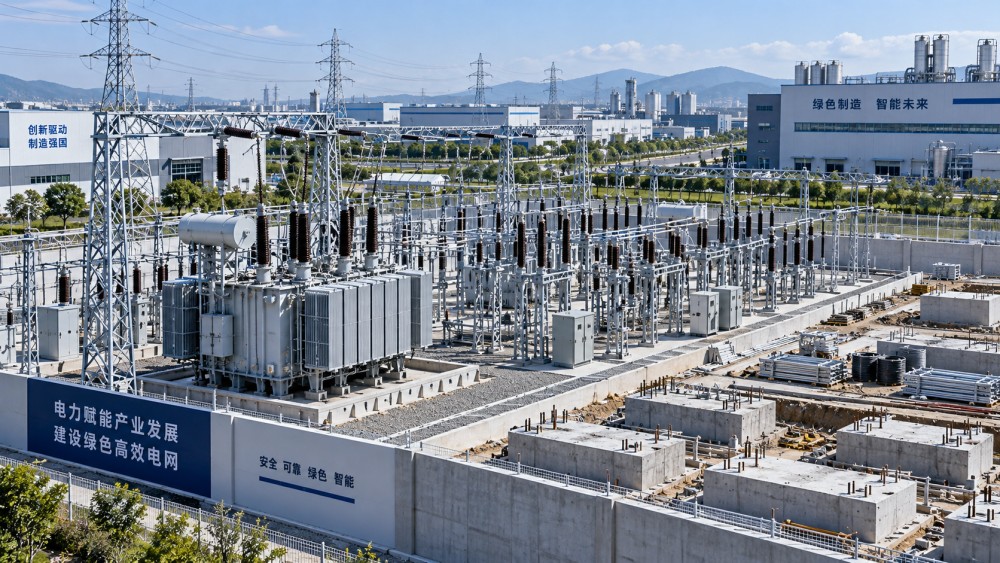
Connection status deserves close attention because familiar terms can imply more certainty than they provide. Submitting an application, entering a study process, receiving an estimate, and securing an executable agreement are different milestones. Their legal and commercial meaning varies by market and contract.
A queue position alone does not establish readiness. A project may depend on network reinforcements shared with other applicants. Changes or withdrawals elsewhere in the process can alter study assumptions, costs, or schedules. An apparently advanced project can still carry substantial exposure if its connection depends on infrastructure that has not secured permits or procurement commitments.
For an industrial site, distinguish initial energization from full operating capacity. A connection suitable for construction or commissioning may not support continuous production, large motor starts, or the planned expansion. Flexible or interruptible service may offer earlier access, but its value depends on whether the operation can tolerate restrictions.
For generation, distinguish permission to connect from the ability to export the expected output. Network operating conditions can limit dispatch after commissioning. Whether the generator receives compensation, and whether that compensation covers its obligations, depends on the applicable arrangements.
The useful evidence is a documented chain from studies and approvals through equipment procurement, construction, testing, and energization. Each unresolved dependency should have an owner and a clear consequence if it slips.
Congestion changes the value of electricity by location and hour
A strong electricity demand forecast does not guarantee attractive revenue for every generator. When substantial output reaches an area with limited export capacity, local electricity prices can weaken during those production hours. Renewable projects can be especially exposed when nearby facilities generate at similar times.
This is why an annual average power price can be misleading. A solar project earns revenue during its generating hours, and the price available during those hours may differ from the market average. The same principle applies to any asset with a concentrated operating profile.
Power contracts can redistribute this exposure without removing it. A contract settled against a regional benchmark may leave a difference between that benchmark and the project’s local price. A corporate power purchase agreement may provide a financial hedge or support renewable procurement goals while leaving the buyer dependent on a separate physical grid connection.
Industrial buyers should examine their load profile with similar care. Continuous processes, cold storage, and batch production have different abilities to respond to expensive or constrained hours. A lower headline energy rate can lose its appeal after demand charges, network charges, operating restrictions, and interruption costs are included.
Equipment supply can become the critical path
Grid investment depends on equipment that is often engineered for a specific application. Large transformers, switchgear, protection systems, and high-voltage cables must match electrical requirements, physical layouts, and utility acceptance procedures. A nominally similar product may not be an interchangeable substitute.
Procurement risk therefore begins before an order is placed. Late specification changes can trigger redesign, additional approval, or loss of a manufacturing slot. Factory testing, transport planning, site readiness, and commissioning resources also affect the delivery schedule.
Supplier assessment should examine production capability and contractual execution alongside price. Relevant questions include whether critical components are secured, when the design becomes fixed, which tests are required, and who carries the cost of a failed acceptance test or delayed delivery. For imported equipment, shipping arrangements and customs documentation add further dependencies.
Hantecorg.com’s coverage of energy, machinery, trade, and supply chains can help connect these market signals. Project decisions still need equipment-level evidence: a general report of improving availability does not establish that a particular specification has a committed delivery slot.
Which responses reduce risk—and under what conditions?
Grid constraints can make alternative locations, storage, flexible demand, and on-site generation more valuable. Each response addresses a particular problem, so selection should begin with the operating requirement.
Location choice can have the largest effect before land and construction commitments become difficult to reverse. A more expensive site with an executable connection may offer better economics than cheaper land requiring extensive network upgrades. Compare the total cost of reaching productive operation, including connection works, delay exposure, tariffs, and expansion capacity.
Battery storage can reduce short peaks, shift consumption, or support operations during limited interruptions. Its usefulness depends on power rating, usable energy, recharge opportunities, and operating restrictions. A battery cannot sustain a continuous production deficit indefinitely, and charging it may itself require scarce connection capacity.
Demand flexibility works best where loads can move without damaging output, safety, or customer commitments. Some pumping, heating, refrigeration, and charging activities offer flexibility, but each has process limits. Revenue from a flexibility program should be assessed against lost throughput, extra handling, and restart costs.
On-site generation can reduce dependence on imported electricity during some operating periods. Its contribution depends on output patterns, fuel availability where relevant, maintenance, and permissions. Backup capability also requires suitable controls and protection; installing generation does not automatically allow a facility to operate during a grid outage.
These options often work as a coordinated package. Their economics should be compared with the specific constraint they relieve, including how long that constraint is expected to last.
How to turn the outlook into a capital decision
Before approving a project, translate grid uncertainty into operational and financial scenarios. Begin with the required load or export profile, including commissioning, normal operation, seasonal peaks, and planned expansion. This establishes what the connection must actually deliver.
Then map the connection schedule against the project’s spending commitments. Identify when land, buildings, production equipment, financing, and customer obligations become costly to change. This reveals whether the business is committing substantial capital before the electricity supply is sufficiently defined.
A useful investment review should test three conditions:
- Delayed energization: include financing costs, idle equipment, site overheads, and the effect of postponed revenue.
- Partial capacity at opening: assess which production lines can operate, their margins, and whether phased commissioning is commercially workable.
- Higher operating or connection costs: test network upgrades, congestion exposure, temporary supply, and any flexibility measures needed to maintain output.
Assign each scenario a commercial response. Options may include staged construction, conditional equipment orders, revised delivery commitments, or an alternative site. A contingency budget helps with manageable cost variation; it provides less protection when the project cannot operate.
The signals to watch are concrete: study completion, approved upgrade scope, committed manufacturing capacity, construction progress, and enforceable service terms. Broader energy forecasts remain useful, but these milestones show whether market opportunity is becoming usable capacity.
For the next capital review, put the connection plan beside the construction schedule and revenue forecast. If the project’s economics require full power before the network can credibly deliver it, the location, phasing, or commercial structure needs to change before more capital is committed.
Industries
Related News
- 00
0000-00
US Treasury Extends Russia Oil Sanctions Waiver by 30 Days - 00
0000-00
International Logistics Solutions for Heavy Machinery: Cost Risks and Route Planning in 2026 - 00
0000-00
Energy-saving home improvement ideas with faster payback - 00
0000-00
10 Smart Home Decoration Ideas to Make Small Rooms Look Bigger and Brighter - 00
0000-00
Shenyang Launches China's First 500,000-Ton Biomass Green Methanol/Ethanol Project
Weekly Insights
Stay ahead with our curated technology reports delivered every Monday.