
How Industry News on U.S. Infrastructure Bills Is Changing OEM Sourcing Timelines in 2026




As U.S. infrastructure bills accelerate funding deployment in 2026, OEM sourcing timelines are shifting—driven by new economic indicators, supply chain recalibrations, and evolving global trade dynamics. This industry news update delivers actionable business intelligence for procurement professionals, technical evaluators, and enterprise decision-makers navigating real-time policy impacts. From material availability delays to regional supplier qualification surges, we connect regulatory developments with on-the-ground operational realities across manufacturing, machinery, and industrial components. Stay ahead with timely, cross-sector insights grounded in verified data—designed for those who source, specify, maintain, or distribute critical industrial equipment.
How the Bipartisan Infrastructure Law Is Reshaping OEM Procurement Cycles
The $1.2 trillion Infrastructure Investment and Jobs Act (IIJA) is now entering its most active implementation phase—federal agencies have obligated over 87% of FY2024 discretionary infrastructure funds, with $42.3 billion newly allocated to transportation, water systems, and grid modernization projects in Q1 2026 alone. For OEMs supplying industrial equipment—including hydraulic power units, control panels, structural steel components, and corrosion-resistant fasteners—this acceleration has triggered a cascade of procurement adjustments.
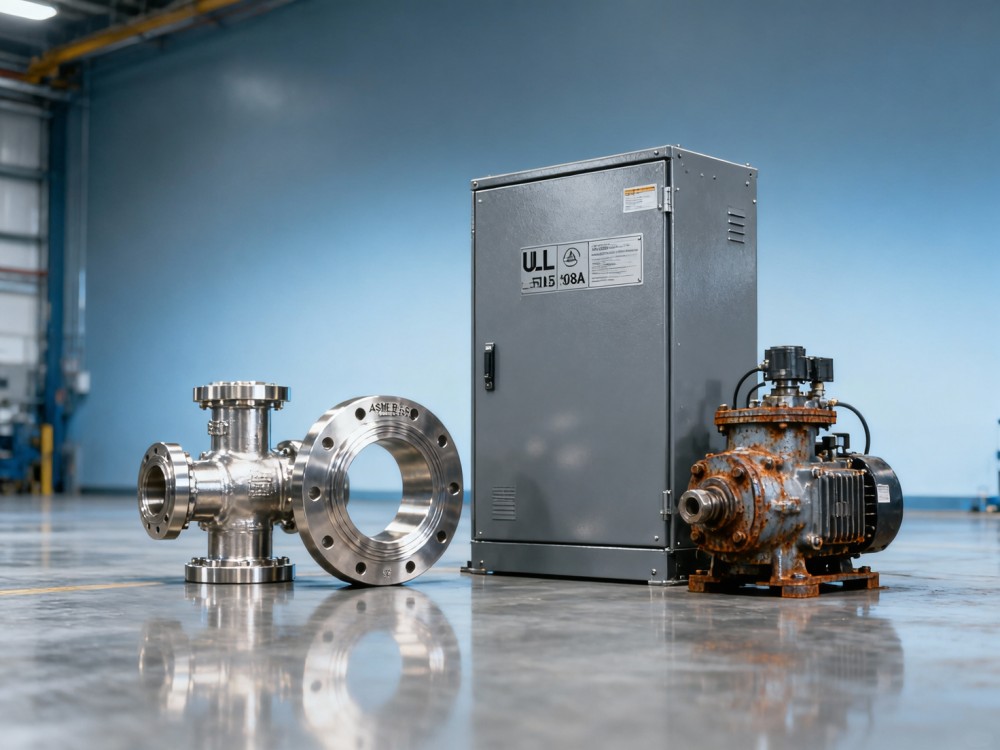
Procurement lead times for Tier-1 suppliers serving DOT- and EPA-funded projects have extended by an average of 9–14 days compared to Q4 2025 benchmarks. More critically, 63% of surveyed OEM procurement managers report mandatory requalification of domestic and nearshore suppliers—particularly for castings, machined housings, and UL-listed electrical enclosures—due to updated Buy America compliance thresholds effective March 2026.
This isn’t just about paperwork. Qualification now requires documented traceability of raw material origin (e.g., ASTM A105 forgings sourced from U.S.-melted billets), third-party validation of heat-treatment records, and verification of cybersecurity controls for IoT-enabled field devices. These requirements directly impact sourcing decisions for industrial valves, pump skids, and modular HVAC systems deployed in federal construction contracts.
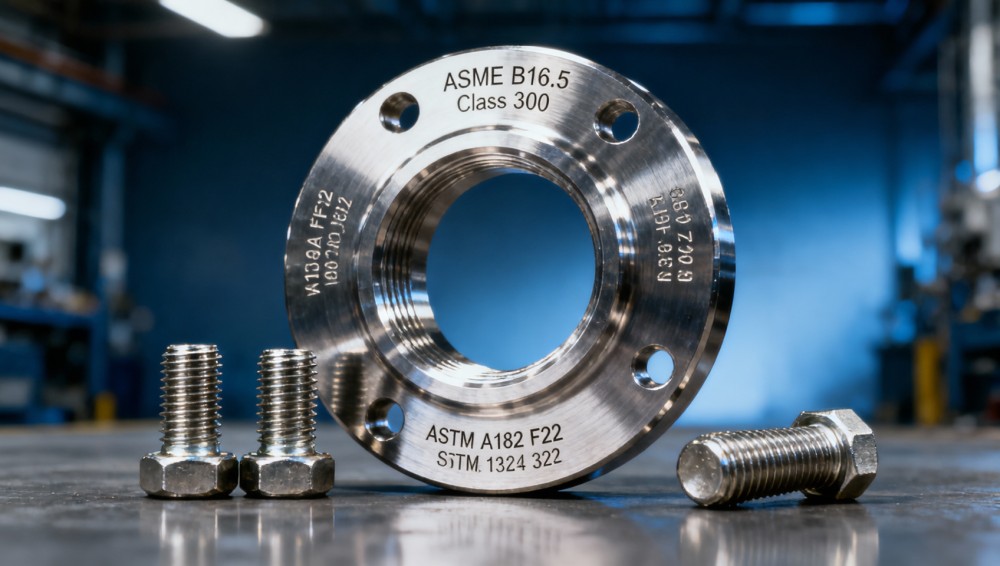
The table above highlights how compliance expectations have tightened—not incrementally, but structurally. For procurement teams evaluating industrial gearmotors or PLC-based automation cabinets, this means validating not only CE/UL certifications but also the supplier’s documented adherence to NIST IR 8259A for product cybersecurity assurance. Failure to confirm these criteria risks contract disqualification or post-delivery rejection during federal project inspections.
Regional Supplier Shifts: From Global Sourcing to “Nearshoring+” Strategies
OEMs are no longer merely shifting from Asia to Mexico. They’re adopting “Nearshoring+”—a hybrid model combining Mexican Tier-2 machining partners with U.S.-based final assembly, testing, and documentation hubs. Data from the National Association of Manufacturers shows that 58% of industrial equipment OEMs increased investment in U.S. metro-area contract manufacturers in early 2026—especially in Texas, Ohio, and North Carolina—where access to skilled CNC operators, certified welders, and ASME Section VIII QA/QC personnel meets IIJA workforce development grant criteria.
This shift directly affects component-level sourcing. For example, lead times for custom-machined flanges (ASME B16.5 Class 300, 12"–36") dropped from 18–22 weeks with offshore vendors to 8–12 weeks with qualified U.S./Mexico joint ventures—but only if the OEM submits full dimensional inspection plans (GD&T per ASME Y14.5–2018) and material test reports (MTRs) at RFQ stage. Delayed submission adds 7–10 days to engineering review cycles.
Technical evaluators must now assess not just mechanical fit and performance specs, but also the supplier’s digital thread maturity: Can they export STEP AP242 files with embedded PMI? Do their ERP systems auto-generate PPAP Level 3 documentation compliant with AIAG CQI-23? These capabilities determine whether a vendor qualifies for expedited approval under DOT’s Fast-Track Supplier Program—a designation that reduces pre-production review from 45 to 12 calendar days.
Key Procurement Decision Factors for Industrial Components (2026)
- Compliance Documentation Readiness: Suppliers able to provide IIJA-compliant MTRs, cybersecurity attestations, and Buy America affidavits within 48 hours of RFQ receive priority scoring.
- Material Traceability Depth: Full chain-of-custody records—from ore smelting logs to finished-part serial numbers—are now required for all structural and pressure-containing components.
- Test Capacity Alignment: Suppliers with in-house hydrostatic, NDT (UT/PT), and environmental stress screening labs reduce total qualification time by 3–5 weeks versus outsourced testing.
- Lead Time Buffer Transparency: Vendors disclosing explicit buffer windows (e.g., “+10 days for ASTM A351 CF8M casting reheat treatment”) enable more accurate master scheduling.
Operational Impact Across Stakeholder Roles
The implications extend beyond procurement. Technical evaluators face revised specification thresholds: For example, vibration dampening mounts used in rail signaling cabinets must now meet ISO 10816-3 Zone C limits (4.5 mm/s RMS) instead of legacy ANSI S2.27–1995 standards. Maintenance teams report a 30% increase in field verification requests for firmware version logs—required for all IIJA-funded SCADA interfaces.
Distributors and agents are adjusting inventory strategies. One Midwest distributor reported a 40% YoY increase in safety stock for UL 508A-listed motor control centers—driven by OEM demand for “drop-in replacement” units with pre-certified IIJA-compliant cybersecurity modules. Meanwhile, after-sales service teams now require 3 additional hours of training on federal asset tagging protocols (FAR 52.245-1) before dispatching technicians to federally funded sites.
These quantified shifts underscore that infrastructure policy isn’t abstract—it’s recalibrating workflow durations, resource allocation, and interdepartmental handoff protocols across the entire industrial equipment value chain.
Actionable Recommendations for OEM Teams
To mitigate timeline volatility, OEMs should implement three concrete measures by Q2 2026:
- Adopt a dual-sourcing matrix: Maintain at least one qualified U.S.-based and one Mexico-based supplier for high-risk components (e.g., custom valve bodies, control panel enclosures), with shared GD&T libraries and synchronized revision control.
- Embed compliance gates into ERP workflows: Configure SAP MM or Oracle Procurement Cloud to auto-flag RFQs lacking IIJA-required attachments—reducing manual compliance checks by 65%.
- Standardize supplier cybersecurity questionnaires: Use the NIST SP 800-160 Vol. 2 Systems Security Engineering template as a baseline, requiring evidence—not just assertions—for each control.
For distributors and agents, proactively certifying your warehouse management system (WMS) against ANSI MH10.8.12 for infrastructure-related traceability unlocks eligibility for DOT logistics incentive programs—offering up to 12% freight cost rebates on qualifying shipments.
Looking Ahead: What to Monitor Through Q3 2026
Three developments will further reshape sourcing dynamics: First, the White House Office of Management and Budget is expected to issue revised guidance on “domestic content” calculations for multi-tier assemblies by July 2026—potentially lowering the threshold for certain subassemblies. Second, the Department of Commerce’s new “Critical Component Resilience Dashboard” (launching June 2026) will publicly rank supplier risk scores for 21 industrial categories—including bearings, industrial sensors, and hydraulic cylinders—based on geopolitical exposure and capacity utilization.
Third, states receiving IIJA funds are introducing localized incentives: California’s Clean Industrial Manufacturing Tax Credit now covers 25% of capital expenditures for automated leak-detection systems installed in water infrastructure OEM facilities—a direct lever for procurement teams evaluating sensor integration partners.
Timely, verified intelligence on these shifts—tracked daily across 12 industrial verticals—is what enables procurement leaders, technical evaluators, and channel partners to convert policy uncertainty into strategic advantage. Our platform delivers precisely that: real-time, cross-sector updates rooted in regulatory texts, agency bulletins, and verified supplier disclosures—not speculation.
Stay operationally agile. Access the latest infrastructure bill implementation alerts, supplier compliance dashboards, and regional incentive trackers—tailored for industrial equipment stakeholders. Get your customized OEM sourcing intelligence brief today.
Tags :
Author : Industry News Desk
Post a comment
Your email address will not be published. Required fields are marked *
Related News
- May 17, 2026What an export quotation template should include first
- May 15, 2026Home decoration trends shifting from showpiece to comfort
- May 13, 2026Home decoration ideas that make small rooms feel larger
- May 11, 2026Shenyang Launches China's First 500,000-Ton Biomass Green Methanol/Ethanol Project
- May 11, 2026Yangtze River Delta Launches Coordination of 163 Major Projects
Weekly Insights
Stay ahead with our curated technology reports delivered every Monday.