
Automation Equipment Trends: From Labor Gaps to Smart Workstations




Global Shift in Automation Equipment: From Labor Shortages to Smart Workstations
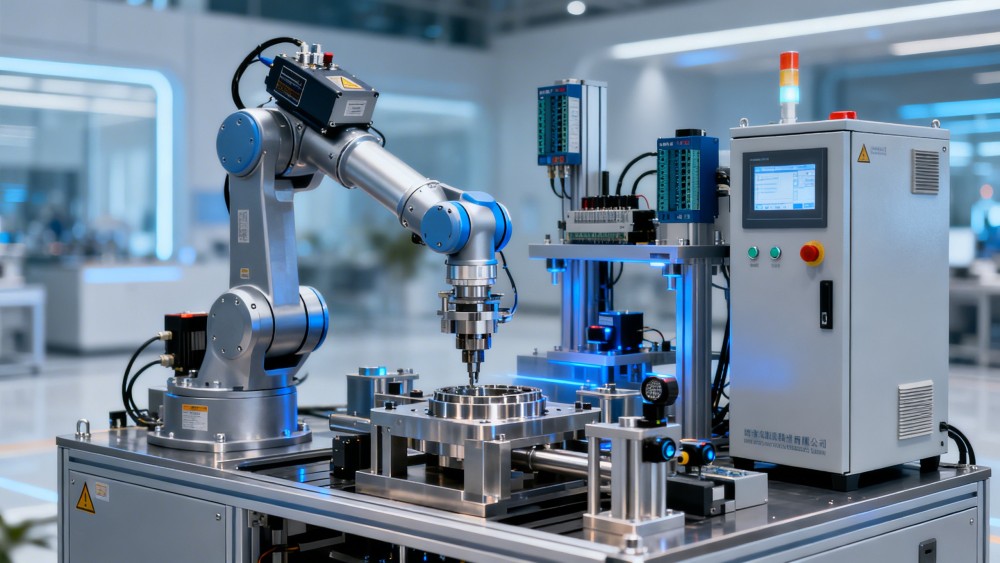
As automation equipment trends reshape global manufacturing, businesses are shifting from labor gaps to smart workstations that drive efficiency and innovation. This feature industry report explores how automation, robotics, and digital intelligence are transforming production dynamics, with insights drawn from business intelligence news, global sourcing trends, and smart manufacturing news. For decision-makers tracking export policy news, industrial equipment updates, and product innovation, this analysis delivers timely context for smarter strategies and investment trends across international supply chains.
In recent years, rising labor costs, demographic shifts, and demand for continuous production have driven factories to reconfigure operations through automation. Approximately 68% of small and medium-sized manufacturers now report difficulty in finding skilled technicians, pushing them to adopt robotics and PLC-based automation systems. Consequently, industrial components—such as servo motors, pneumatic actuators, and programmable controllers—have become central to capacity scaling and cost reduction strategies.
According to global supply chain analysts, automated workstation installations grew by nearly 14% annually between 2019 and 2023. This trajectory is expected to accelerate by 2026 as integrated AI sensors and IoT connectivity make maintenance prediction and remote diagnostics commercially viable for many production lines. This transformation not only fills labor gaps but also redefines value creation through intelligent coordination between humans and machines.
1. Market Drivers Behind Automation Equipment Evolution
Automation equipment once served primarily in assembly and textiles. Now, its applications extend to logistics hubs, medical component manufacturing, and energy processing. Four structural factors have accelerated this evolution: labor availability, sustainability demands, digital transition, and safety compliance. Each of these elements forces companies to rethink production investments and select smarter, modular industrial equipment systems.
The first driver is workforce imbalance. Global manufacturing employment dropped by roughly 7% between 2020 and 2023 in major export economies. As a result, automation compensates for personnel shortages in repetitive and precision tasks. For example, packaging plants replacing two manual assembly lines with one automated cell typically report 25–40% cycle-time reduction within six months.
Secondly, sustainability targets—reducing emissions by 30% per unit output by 2030—require intelligent power management within machines. Variable frequency drives, high-efficiency motors, and load-sensing hydraulic pumps are now baseline components in green factories. The industrial parts market for such components has expanded by nearly USD 5.2 billion in the past three years.
Finally, digital transformation reshapes industrial maintenance. Through predictive analytics, vibration sensors identify anomalies at 0.01 mm tolerance deviations and trigger alerts up to 72 hours in advance. These data-driven systems reduce unplanned downtime by up to 18%. The resulting ROI convinces plant managers to scale automatic inspection units even in mid-sized facilities.
2. Components and Technology Core of Smart Workstations
Smart workstations combine precision hardware and adaptive software platforms. Their architectures typically include motion control, data acquisition, and intelligent interface modules. Each subsystem communicates via protocols such as EtherCAT, Modbus-TCP, or OPC-UA to ensure compatible integration. Choosing suitable components significantly affects long-term availability and total cost of ownership.
Servo systems provide fast motion within ±0.02 mm accuracy across 4–6 axes. They respond to sensor feedback loops operating at up to 2 kHz frequency. In parallel, PLC controllers manage logic sequences with cycle times below 10 ms. Human-machine interfaces (HMI) now include energy monitoring dashboards and multilingual fault diagnosis to assist operators with limited programming background.
The following table illustrates typical configurations of smart workstation equipment based on production type and performance objective:
This comparison reveals how automation architecture directly impacts yield stability. For instance, vision-assisted assembly reduces rework rates by about 60% compared to manual inspection. For B2B suppliers, conveying factual efficiency metrics aligns with procurement teams’ technical evaluation checklists.
3. Implementation Strategies and Phased Deployment Models
Transitioning from manual processes to automated production lines typically occurs in four stages: feasibility assessment, pilot integration, scale deployment, and optimization feedback. Each stage spans 3–8 weeks depending on workshop size and data availability. System integrators and component vendors jointly support calibration, wiring, and PLC programming during these phases.
A data-first approach ensures measurable outcomes. Manufacturers who implement stepwise monitoring—tracking throughput variation within ±5% margin—achieve smoother adoption curves and lower cost overruns. Staff retraining should be built into phase three, allocating approximately 40 training hours per operator to handle new safety protocols and interface configurations.
Maintenance and lifecycle planning also require integration. The average service interval for motion components is 6–12 months, aligned with lubrication cycles of bearings operating under high loads (above 2.5 kN). Implementing digital twin simulations during commissioning shortens ramp-up time by roughly 20% since potential collision paths are identified in virtual models before physical setup.
Table below outlines a structured deployment reference for new automation projects:
Structured deployment reduces resource waste and assures ROI transparency. For enterprise planners, aligning automation phases with financial quarters allows better alignment between capital expenditure forecasts and procurement cycles.
4. Procurement Considerations for Industrial Automation Equipment
For decision-makers and sourcing teams, selecting automation equipment requires evaluating not only unit price but also lifecycle cost, scalability, and vendor reliability. Procurement frameworks in B2B manufacturing commonly assess vendors on four criteria: performance ratio, compatibility, service network, and delivery compliance. Each criterion carries a weight of 20–30% in total scoring systems.
Typical delivery cycles vary by complexity: standard controllers are shipped within 7–10 days, robotic joints within 2–4 weeks, and fully integrated systems require 8–12 weeks for commissioning. Buyers should benchmark suppliers’ spare parts availability to maintain downtime below 3% annually. For global supply chains, ensuring compliance with CE, UL, and ISO 13849-1 functional safety standards mitigates certification risks for exported machinery.
Sourcing managers often implement dual-supplier strategies to balance cost and logistics exposure. Maintaining a 60/40 supply split between regional and international vendors helps counter fluctuations in component lead times, which can range from 10 days to 6 weeks. Smart procurement platforms now integrate live ERP feeds to track material usage and forecast buffer stock thresholds.
These procurement insights reinforce the principle that equipment automation is a continual optimization cycle—each purchase decision feeds into longer asset productivity timelines and risk management frameworks.
5. Outlook: Integrating Intelligence for the Next Decade of Smart Manufacturing
Looking forward to 2030, automation equipment will combine deep learning analytics with modular architecture. Predictive visual AI can already recognize tool wear patterns with over 93% accuracy, suggesting parts replacement two hours before vibration thresholds exceed safety limits. This exponentially reduces mechanical failures and unplanned maintenance budgets.
By integrating advanced IoT connectivity, factories will maintain over 90% of their assets connected online for diagnostics within the next five years. Adaptive workstations will balance energy loads autonomously, adjusting power draw between 5 kW and 15 kW per operational mode, helping factories achieve net energy reductions of 12–18% annually.
For senior executives and research professionals, the value of business intelligence platforms lies in cross-sector data visibility. Comparing industrial automation adoption rates across electronics, packaging, and chemical sectors allows early signal detection of demand surges. Incorporating policy monitoring—such as import tariff changes and environmental compliance updates—further informs decision-making and strategic sourcing planning.
Automation is no longer a single investment—it is an evolving ecosystem built on data, precision engineering, and human-computer synergy. Organizations that couple intelligent automation with data readiness will capture higher value chains and more resilient growth during the next manufacturing decade.
Conclusion and Next Steps
From compensating for labor gaps to enabling fully connected smart workstations, automation equipment continues to define the new industrial equilibrium. The transformation influences sourcing, investment, and operational intelligence across all verticals—from machinery and energy to packaging and electronics. Decision-makers who proactively gather and interpret automation insights can identify market shifts before they fully materialize.
Our industry intelligence platform delivers structured updates on technology innovations, global trade, and industrial equipment advancements, supporting research professionals and corporate strategists in sustainable planning. For a detailed consultation, component specification guide, or sourcing roadmap, contact our expert team today to explore custom automation insights that align with your sector strategy.
Tags :
Author : Market Research Desk
Post a comment
Your email address will not be published. Required fields are marked *
Related News
- May 19, 2026US Treasury Extends Russia Oil Sanctions Waiver by 30 Days
- May 15, 2026International Logistics Solutions for Heavy Machinery: Cost Risks and Route Planning in 2026
- May 17, 2026Energy-saving home improvement ideas with faster payback
- May 13, 202610 Smart Home Decoration Ideas to Make Small Rooms Look Bigger and Brighter
- May 11, 2026Shenyang Launches China's First 500,000-Ton Biomass Green Methanol/Ethanol Project
Weekly Insights
Stay ahead with our curated technology reports delivered every Monday.