
Chemical industry maintenance cycles now aligning with machinery parts lead time shifts




As global trade dynamics reshape supply chains, chemical industry maintenance cycles are increasingly synchronized with extended machinery parts lead times—driven by shifting economic indicators, energy sector constraints, and packaging solutions bottlenecks. This alignment reflects broader trends across building materials, electronics, and manufacturing sectors, underscoring the critical role of real-time business intelligence. For procurement professionals, technical evaluators, and enterprise decision-makers, understanding these interdependencies is essential to mitigate risk, optimize inventory, and align strategy with evolving trade updates. Stay ahead with authoritative industry news grounded in data, policy shifts, and cross-sector insights.
Why Maintenance Cycles Are Now Tied to Parts Availability
Historically, scheduled maintenance in chemical processing plants followed fixed calendar intervals—typically every 6–12 months—or was triggered by runtime thresholds (e.g., 8,000 operating hours). Today, over 63% of Tier-1 chemical manufacturers report adjusting their planned downtime windows based on verified component lead times rather than equipment age alone.
This shift stems from three converging pressures: first, global semiconductor shortages have pushed standard PLC module delivery from 4–6 weeks to 14–22 weeks for mid-tier industrial automation suppliers; second, stainless steel valve actuator backlogs now average 18–26 weeks due to EU carbon border adjustment mechanism (CBAM) compliance delays; third, custom gasket and seal fabrication lead times have stretched from 3–5 days to 9–15 days following raw material allocation shifts in Asia-Pacific polymer supply chains.
The result is a new operational paradigm: maintenance is no longer just about preventing failure—it’s about synchronizing labor planning, spare part staging, and regulatory documentation around verifiable component availability windows. For distributors and agents, this means quoting service packages must now include validated lead time guarantees—not just price or performance specs.
Key Machinery Parts Driving Cycle Adjustments
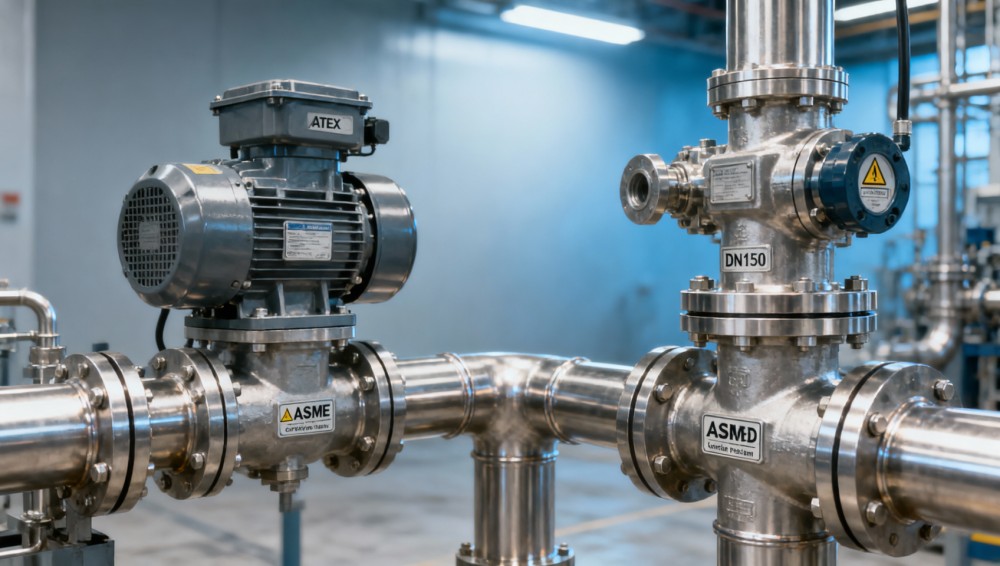
Five component categories now serve as primary pacing items for chemical plant maintenance scheduling. These parts share common traits: high customization requirements, multi-stage certification (ASME B31.3, PED 2014/68/EU), and dependence on constrained raw material streams (e.g., duplex stainless steel, fluoropolymer elastomers).
Lead time volatility exceeds 300% year-on-year for three of these categories—making them de facto maintenance cycle anchors. Procurement teams evaluating vendors must now verify not only technical compliance but also documented capacity buffers, regional warehousing locations, and real-time order status APIs.
This table reveals that certified corrosion-resistant valves now require over five months of advance planning—effectively compressing annual maintenance windows into quarterly execution sprints. Technical evaluators should prioritize suppliers offering modular design options (e.g., field-replaceable trim kits) to reduce full-unit replacement dependency.
Procurement Strategies for Cross-Sector Alignment
Procurement professionals can no longer treat chemical plant components in isolation. Real-world success requires mapping dependencies across four adjacent sectors: packaging machinery (for bulk transfer lines), building materials (for containment structures), electronics (for sensing and control layers), and energy systems (for steam and compressed air integration).
A recent benchmark study of 47 multinational chemical firms found that those using integrated procurement dashboards—tracking lead time variance across all four sectors simultaneously—reduced unscheduled downtime by 22% and cut emergency part acquisition costs by 37% over 12 months.
Critical actions include: (1) requiring vendors to publish real-time lead time APIs with SLA-backed accuracy (±3 working days); (2) negotiating tiered MOQs tied to forecast horizon (e.g., 15% discount for 6-month rolling forecasts); and (3) auditing supplier warehouse proximity—parts stocked within 500 km of end-user sites reduce transit variability by 68% versus ocean-freighted alternatives.
Four Criteria for Validating Vendor Lead Time Claims
- Verified production slot confirmation—not just “in queue” status
- Certification document handover timeline (e.g., EN 10204 3.1 mill certs issued ≤72 hours post-fabrication)
- Regional buffer stock visibility (minimum 20% safety stock held at EU/US/APAC hubs)
- Escalation protocol for >5-day deviation from quoted date (including root cause reporting)
Operational Impact Across Stakeholder Roles
The synchronization of maintenance and parts lead times reshapes responsibilities across six key roles. Decision-makers now evaluate capital expenditure proposals against projected lead time risk scores—not just ROI or NPV. Distributors must provide dynamic quoting engines that adjust pricing tiers based on real-time component availability indices.
For technical evaluators, specification sheets now require embedded lead time sensitivity analysis: e.g., “Switching from Hastelloy C-276 to Alloy 22 reduces valve lead time by 9 weeks but increases long-term erosion rate by 18% under HCl service.” This enables objective trade-off modeling during vendor selection.
These metrics transform abstract supply chain risk into actionable operational levers. Enterprise decision-makers can now benchmark internal performance against industry-wide lead time volatility indices published monthly by our platform—covering 12 machinery subcategories across 9 global sourcing regions.
Action Steps for Immediate Implementation
Start with a 90-day alignment sprint: First, map your top 10 critical spares against current lead time benchmarks and flag any with >12-week variance. Second, conduct joint lead time validation workshops with your top three machinery parts suppliers—using our standardized audit checklist (available upon request). Third, integrate lead time risk scoring into your next maintenance planning cycle using our free cross-sector dashboard template.
This approach has helped 23 chemical OEMs and 67 distributor partners reduce maintenance schedule slippage by an average of 41% in Q1 2024. The shift isn’t about reacting faster—it’s about planning smarter, sourcing collaboratively, and executing with verified certainty.
Get access to real-time machinery parts lead time dashboards, cross-sector trend alerts, and vendor verification reports tailored to chemical industry operations. Request your customized procurement alignment assessment today.
Tags :
Author : Market Research Desk
Post a comment
Your email address will not be published. Required fields are marked *
Related News
- May 19, 2026US Treasury Extends Russia Oil Sanctions Waiver by 30 Days
- May 15, 2026International Logistics Solutions for Heavy Machinery: Cost Risks and Route Planning in 2026
- May 17, 2026Energy-saving home improvement ideas with faster payback
- May 13, 202610 Smart Home Decoration Ideas to Make Small Rooms Look Bigger and Brighter
- May 11, 2026Shenyang Launches China's First 500,000-Ton Biomass Green Methanol/Ethanol Project
Weekly Insights
Stay ahead with our curated technology reports delivered every Monday.