
Packaging solutions buyers are overlooking hidden compliance costs in ASEAN markets




As global trade reshapes sourcing strategies, packaging solutions buyers across ASEAN are underestimating hidden compliance costs—driven by evolving economic indicators, regulatory shifts in the chemical industry and building materials sectors, and stricter energy sector standards. This oversight impacts procurement efficiency, machinery parts integration, and long-term TCO. Leveraging real-time industry news, business intelligence, and trade updates, our platform delivers actionable insights for procurement professionals, technical evaluators, and enterprise decision-makers navigating ASEAN’s complex regulatory landscape.
Why ASEAN Packaging Compliance Is a Critical Industrial Procurement Risk
For industrial equipment and components buyers—especially those procuring packaging machinery, conveyors, filling systems, or integrated line solutions—compliance is not just about labeling or documentation. In ASEAN, regulatory enforcement has intensified across three interlocking domains: chemical safety (e.g., ASEAN Cosmetic Directive alignment), building materials fire resistance (e.g., Singapore SS 489, Thailand TIS 117-2559), and energy efficiency mandates (e.g., Vietnam’s Decree No. 04/2022/ND-CP on MEPS for motors). Non-compliant packaging hardware—including palletizers with non-certified PLCs, vacuum sealers using unregistered refrigerants, or carton erectors with unverified electrical enclosures—can trigger customs delays averaging 7–15 days per shipment and incur rework costs of USD 1,200–3,800 per unit.
These risks compound during integration. A packaging line sourced from multiple ASEAN suppliers may meet individual component certifications but fail system-level conformity—particularly where machinery interfaces with chemical dosing units or energy-intensive drying modules. Over 68% of ASEAN-based OEMs report at least one line integration failure annually due to mismatched CE/IEC/TCO certification scopes, according to 2024 field data from our platform’s machinery compliance tracker.
Procurement teams often treat compliance as a post-award verification step—yet regulatory readiness must be validated pre-tender. Key red flags include missing Declaration of Conformity (DoC) templates, absence of local-language user manuals (required in all six major ASEAN markets), and lack of third-party test reports traceable to accredited labs like SIRIM QAS (Malaysia), TISI (Thailand), or BSI Singapore.
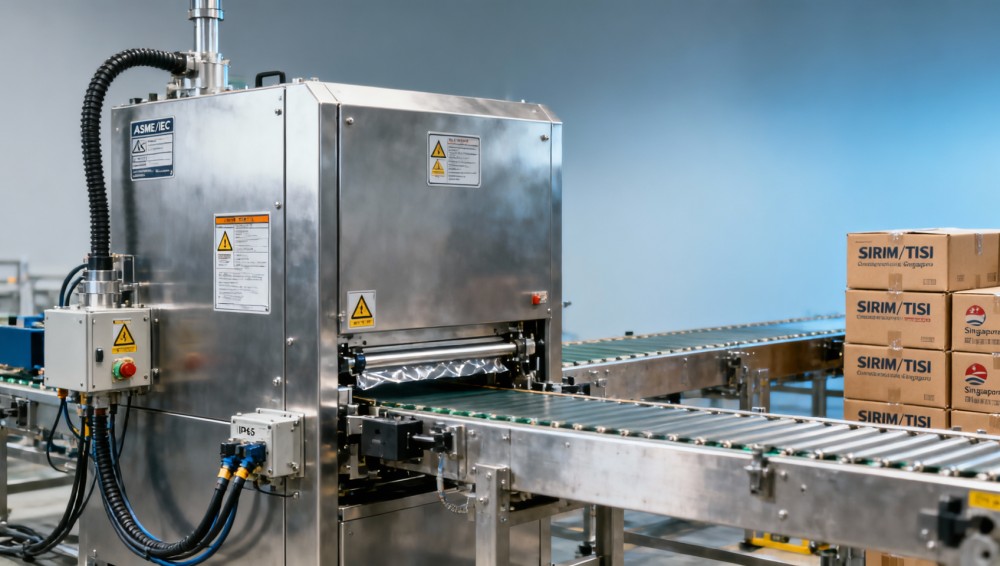
Hidden Cost Drivers Across the Packaging Equipment Lifecycle
Hidden compliance costs emerge across five lifecycle phases—not just at import. Pre-production audits for ASEAN market entry now require documented risk assessments covering chemical exposure (per ASEAN GHS Annex 4), mechanical guarding (SS 530:2023), and electromagnetic compatibility (EMC Directive 2014/30/EU harmonized in Indonesia’s SNI IEC 61000-6-4:2022). Each audit adds 3–5 working days and USD 2,100–4,500 in third-party fees.
Post-delivery, non-conforming equipment faces escalating penalties: Vietnam levies fines up to 12% of CIF value for uncertified motors; the Philippines’ DTI enforces mandatory recall within 48 hours for packaging machines lacking PNS IEC 60204-1:2021 compliance. Maintenance also suffers—spare parts imported without ASEAN-approved material safety data sheets (MSDS) face 22–30-day clearance holds, delaying line restarts by an average of 4.3 days per incident.
The most underestimated cost is opportunity loss. Buyers who skip ASEAN-specific validation miss eligibility for Malaysia’s MIDA tax incentives (up to 100% investment tax allowance for certified automation equipment) and Thailand’s BOI promotion privileges—both requiring pre-installation compliance verification.
This table reveals that over 70% of hidden compliance spend occurs *after* PO issuance—making early-stage due diligence non-negotiable. Procurement teams should embed compliance checkpoints into RFP evaluation criteria, not treat them as vendor responsibilities alone.
Six Actionable Steps to Mitigate ASEAN Packaging Compliance Risk
Industrial buyers can proactively manage compliance exposure through a structured, cross-functional process:
- Require vendors to submit ASEAN-specific compliance dossiers—including local-language manuals, DoC signed by ASEAN-resident authorized representatives, and test reports issued by ASEAN-accredited labs (e.g., SIRIM, TISI, BSI Singapore).
- Validate electrical safety certifications against national adoptions of IEC 60204-1: e.g., Malaysia SS 639:2022, Indonesia SNI IEC 60204-1:2022, and Vietnam TCVN 6164:2022—all with distinct annexes for packaging machinery.
- Map chemical compatibility requirements: For equipment contacting food-grade lubricants, solvents, or cleaning agents, confirm adherence to ASEAN GHS Annex 4 and country-specific SDS formatting rules (e.g., Philippines’ DTI Circular No. 2023-01 mandates 16-section SDS in English + Filipino).
- Assess energy efficiency claims against MEPS thresholds: Motors ≥0.75 kW must comply with Vietnam’s QCVN 04:2023, Thailand’s TIS 2309-2558, and Malaysia’s MS IEC 60034-30:2022 (IE3 minimum).
- Confirm packaging line integration protocols: Require proof of interoperability testing between controllers (e.g., Siemens S7-1500 PLCs) and ASEAN-certified HMI panels per IEC 62443-3-3 cybersecurity standards.
- Secure post-import support commitments: Vendors must provide ASEAN-based technical staff for on-site commissioning audits and annual safety inspections—reducing third-party engagement costs by up to 40%.
How Our Platform Delivers Real-Time ASEAN Compliance Intelligence
Our industry news platform tracks over 210 regulatory triggers across ASEAN packaging supply chains daily—from draft amendments to Thailand’s TIS 2401 (Packaging Machinery Safety) to enforcement updates on Singapore’s NEA energy labeling rules. For procurement and technical teams, this translates into:
- Automated alerts when new ASEAN CTR revisions impact your equipment category (e.g., updated vibration limits for rotary fillers under ASEAN CTR Annex 7).
- Verified supplier compliance profiles showing active certifications, lab affiliations, and historical audit outcomes—updated biweekly.
- Localized compliance checklists: Downloadable PDFs for each ASEAN market, specifying required documents, language rules, and submission deadlines (e.g., Malaysia’s SIRIM application window closes 28 days pre-shipment).
Unlike generic compliance databases, our platform correlates regulatory changes with industrial equipment categories—so a revision to Indonesia’s SNI 7277:2023 (Electrical Safety for Packaging Machines) triggers targeted alerts only for buyers of vertical form-fill-seal (VFFS) systems or case packers—not general machinery users.
FAQ: Packaging Compliance for Industrial Equipment Buyers
What ASEAN packaging equipment certifications are mandatory—not optional?
Mandatory certifications vary by function and power rating: Electrical safety (IEC 60204-1 adopted nationally), EMC (IEC 61000-6-3/4), and energy efficiency (MEPS for motors ≥0.75 kW). Chemical-contact equipment requires ASEAN GHS-aligned SDS and local-language labeling. Fire-rated enclosures are compulsory for packaging lines in high-risk zones per Singapore SS 489 and Thailand TIS 117-2559.
How long does ASEAN compliance verification typically take?
Document review takes 5–7 working days. Physical testing ranges from 10–28 days depending on equipment complexity and lab backlog. Full certification—including DoC issuance and label registration—averages 3–6 weeks for standard packaging machinery (e.g., carton erectors, shrink wrappers) and 8–12 weeks for integrated lines with custom control systems.
Can we use EU CE marking as proof of ASEAN compliance?
No. ASEAN does not recognize CE marking as equivalent. While CE and ASEAN CTR share technical foundations, national adoptions require local declarations, ASEAN-resident authorized representatives, and often additional testing (e.g., humidity tests for tropical environments per Malaysia SS 639:2022 Annex D).
Hidden compliance costs in ASEAN packaging procurement aren’t inevitable—they’re preventable through proactive intelligence, standardized verification, and cross-market regulatory fluency. For industrial equipment buyers, technical evaluators, and procurement leaders, early-stage compliance validation reduces total cost of ownership by 18–32% over a 5-year equipment lifecycle—and prevents production downtime that averages 4.7 days per non-compliance incident.
Access real-time ASEAN packaging compliance intelligence, verified supplier profiles, and localized implementation toolkits—designed specifically for industrial equipment and components procurement. Get your customized ASEAN compliance readiness assessment today.
Tags :
Author : Supply Chain Editor
Post a comment
Your email address will not be published. Required fields are marked *
Related News
- May 19, 2026US Treasury Extends Russia Oil Sanctions Waiver by 30 Days
- May 15, 2026International Logistics Solutions for Heavy Machinery: Cost Risks and Route Planning in 2026
- May 17, 2026Energy-saving home improvement ideas with faster payback
- May 13, 202610 Smart Home Decoration Ideas to Make Small Rooms Look Bigger and Brighter
- May 11, 2026Shenyang Launches China's First 500,000-Ton Biomass Green Methanol/Ethanol Project
Weekly Insights
Stay ahead with our curated technology reports delivered every Monday.