
Company Developments in Automation Reveal Rush for In-House Robotics Capabilities




Emerging Automation Strategies and the Drive for Internal Robotics Integration
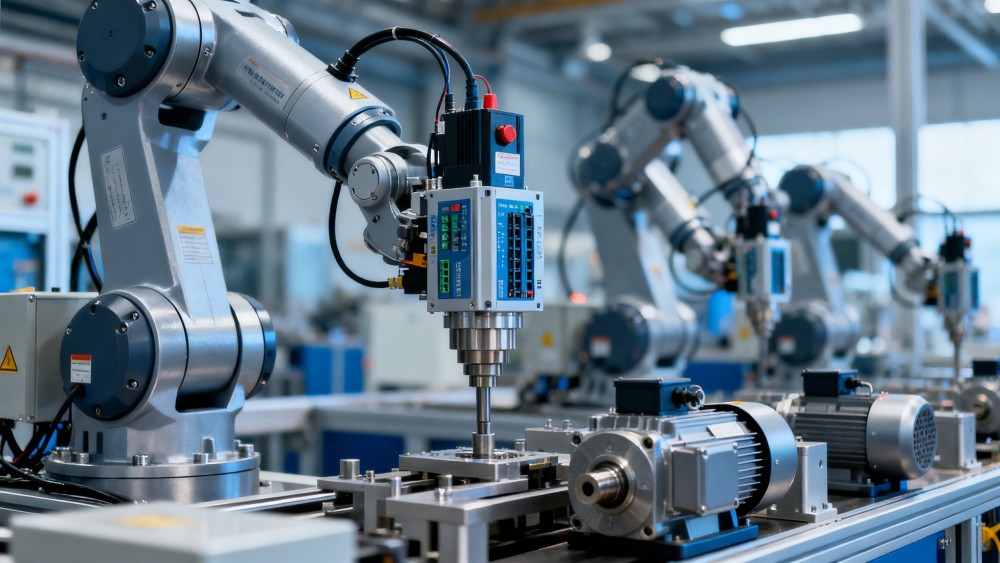
As global industries race to upgrade their automation systems, company developments in robotics technology are unveiling a surge in in-house capabilities that reshape production and sourcing landscapes. This feature explores key automation equipment trends, smart manufacturing news, and industrial equipment news while connecting business intelligence news, investment trends, and supply chain updates to reveal how enterprises are redefining their competitive edge in a rapidly evolving global market.
The industrial equipment and components sector is undergoing a structural shift, fueled by escalating demand for automation in manufacturing, packaging, and logistics. Over the past five years, automation equipment investment has grown at an average annual rate of 12–15%, highlighting a decisive move toward advanced robotics integration. Companies now prioritize developing in-house robotics capabilities as a core competency. This trend reflects not only the pursuit of efficiency but also the strategic intent to control proprietary processes and intellectual assets critical for competitiveness.
The shift is particularly evident among electronics, machinery, and energy equipment manufacturers striving to reduce production costs by 8–20% and minimize supply chain dependencies. By aligning in-house automation engineering with digital twins and precision components, enterprises can significantly shorten lead times—often by 10–30%—and enhance adaptability to market disruptions.
Key Technological Trends Shaping Automation Equipment Development
Industrial robotics integration is evolving beyond single-task automation towards interconnected, data-driven systems. In 2024, more than 60% of industrial suppliers plan to embed robotics capabilities directly into the equipment they offer, ranging from 5-axis machining centers to automated packaging lines. AI-enabled sensors, servo controllers, and collaborative robotic arms are becoming essential components in smart manufacturing systems.
Adoption is particularly accelerated in mid-sized manufacturing enterprises that previously relied on external integrators. They now opt for modular automation kits with typical specifications ranging from 0.5–5kW servo drives, ±0.03mm positional accuracy, and centralized PLC controllers. These digitalized units allow internal engineering teams to build tailored robot cells capable of on-demand reconfiguration, supporting production of diversified SKUs without major retooling.
At the same time, predictive maintenance and AI-based quality control are redefining how factories operate. Through real-time data analytics, equipment downtime can be reduced by 25–40%, while predictive algorithms detect component wear thresholds in as little as 15 milliseconds per cycle. This shift not only boosts operational stability but also enhances part lifecycle predictability, driving superior return on automation expenditure.
Automation Component Comparison Table
The following table contrasts typical component specifications and integration impact in industrial automation projects:
Through coordinated deployment of components with matching specifications, factories improve synchronization and responsiveness in automation lines. Such data consistency also supports uniform product quality and faster cycle times across multi-line setups.
Business Drivers Behind the In-House Robotics Movement
From a managerial perspective, the shift toward in-house robotics capabilities is fueled by cost savings, supply chain resilience, and intellectual property protection. Typical outsourcing contracts in automation integration cost 20–35% more over a 3-year period compared to internal system development. Enterprises are finding that developing proprietary robotics solutions shortens procurement cycles by 15–30 days and eliminates vendor dependency risks affecting productivity continuity.
Another core driver is knowledge retention. As specialized engineering knowledge becomes a key competitive asset, businesses are investing in internal teams capable of mechanical design, control programming, and data simulation. Around 48% of surveyed manufacturers now maintain dedicated robotics labs employing 5–15 engineers focusing on iterative hardware optimization. This structure ensures continuous innovation without leaking design data to third-party contractors.
Additionally, government policies promoting intelligent manufacturing—such as tax deductions up to 10% for automation investment—accelerate internal R&D. Combined with shorter amortization periods for automation equipment, companies achieve ROI typically within 18–24 months. When applied across a multi-factory network, these improvements can yield annual efficiency gains of over 12%.
Implementation Pathways and Integration Challenges
Building internal robotics capabilities requires a phased approach combining equipment acquisition, training, and digital infrastructure alignment. A standard implementation roadmap includes five stages: assessment, design, piloting, rollout, and optimization. Each stage may take 4–8 weeks depending on plant scale and automation complexity.
Industrial engineers face typical challenges such as interoperability between legacy machines and new robot modules, voltage mismatches (commonly between 24V and 48V systems), and workspace calibration within ±1.5mm tolerance. Overcoming these requires meticulous layout planning and adaptive control logic. Furthermore, enterprises often adopt layered integration frameworks using OPC-UA and Ethernet/IP protocols to achieve unified data flow between machines.
A second challenge is workforce adaptation. Approximately 30–40% of production staff require retraining for robot operation and maintenance. Firms now design modular training programs of 40–80 hours covering mechanical setup, control parameters, and troubleshooting cycles. The long-term payoff is substantial: improved safety records, better preventive maintenance scheduling, and system uptime exceeding 95% annually.
Automation Implementation Steps Overview
The table below summarizes standard steps for enterprises transitioning to in-house robotics:
Timely execution of each phase ensures smoother integration and quantifiable ROI measurement. When paired with targeted training and support, enterprises can minimize risk of cost overrun or workflow interruption during rollout.
Procurement Strategies and Selection Metrics for Automation Components
In manufacturing automation, procurement strategies increasingly emphasize component adaptability, vendor stability, and after-sales support. Decision-makers typically assess suppliers using four critical metrics: reliability score (>98% uptime), integration flexibility, maintenance responsiveness (<48 hours lead time), and total cost of ownership over 3–5 years.
Procurement teams are also advised to evaluate safety standards compliance such as ISO 10218 for robotic systems and CE certifications for electrical assemblies. A mismatch between specifications can result in downtime costs averaging USD 5,000–15,000 per hour for high-speed production lines. Hence, pre-verification of conformity and communication protocols is vital in supplier selection.
The growing availability of digital twin simulations further supports procurement assessment. Using 3D modeling environments, buyers can project component behavior under loads ranging from 10–200 kg or with linear motion speeds of up to 1.5 m/s. Such simulation reduces risk and enables design optimization before purchase.
Industry Outlook and Strategic Recommendations
Industrial automation will remain a decisive factor in global competitiveness. By 2028, over 70% of equipment manufacturers are expected to internalize at least part of their robotics integration process. This will lead to a more decentralized innovation landscape, where plants operate as both producers and technology developers.
For decision-makers, the key lies in balancing in-house investment with partnership opportunities. Early adopters that align robotics strategy with data-driven analytics are likely to achieve 10–18% higher asset utilization and reduced maintenance costs. Continuous collaboration with component suppliers ensures access to firmware upgrades, spare parts within 3–5 days, and cross-system compatibility improvements that sustain long-term efficiency.
As supply chains become more digitized, information intelligence becomes the bridge connecting policy tracking, market analysis, and investment planning. Platforms capable of aggregating reliable industry data empower corporate leaders and research professionals to anticipate automation trends, plan capital expenditures effectively, and derive actionable insights that reinforce operational excellence.
Conclusion and Call to Action
The transformation of automation and robotics has ushered in an era where in-house capabilities define manufacturing agility. Businesses that integrate robotics gradually, prioritize data coherence, and cultivate talent pipelines will navigate this transition with optimal performance and sustainable ROI.
For organizations seeking to refine their automation strategy or identify component solutions aligned with modern industrial demands, customized consultation and continuous information tracking are vital. Engage with leading industry intelligence platforms today to access verified automation insights, explore component sourcing opportunities, and design a robotics roadmap tailored to your business objectives.
Contact our expert network to receive tailored analysis and begin developing your in-house robotics capability roadmap that enhances competitiveness in the new industrial era.
Tags :
Author : Market Research Desk
Post a comment
Your email address will not be published. Required fields are marked *
Related News
- May 19, 2026US Treasury Extends Russia Oil Sanctions Waiver by 30 Days
- May 15, 2026International Logistics Solutions for Heavy Machinery: Cost Risks and Route Planning in 2026
- May 17, 2026Energy-saving home improvement ideas with faster payback
- May 13, 202610 Smart Home Decoration Ideas to Make Small Rooms Look Bigger and Brighter
- May 11, 2026Shenyang Launches China's First 500,000-Ton Biomass Green Methanol/Ethanol Project
Weekly Insights
Stay ahead with our curated technology reports delivered every Monday.