
Supply Chain Updates: Resilience Strategies Moving Beyond Cost Optimization




1. Shifting from Cost Optimization to Supply Chain Resilience
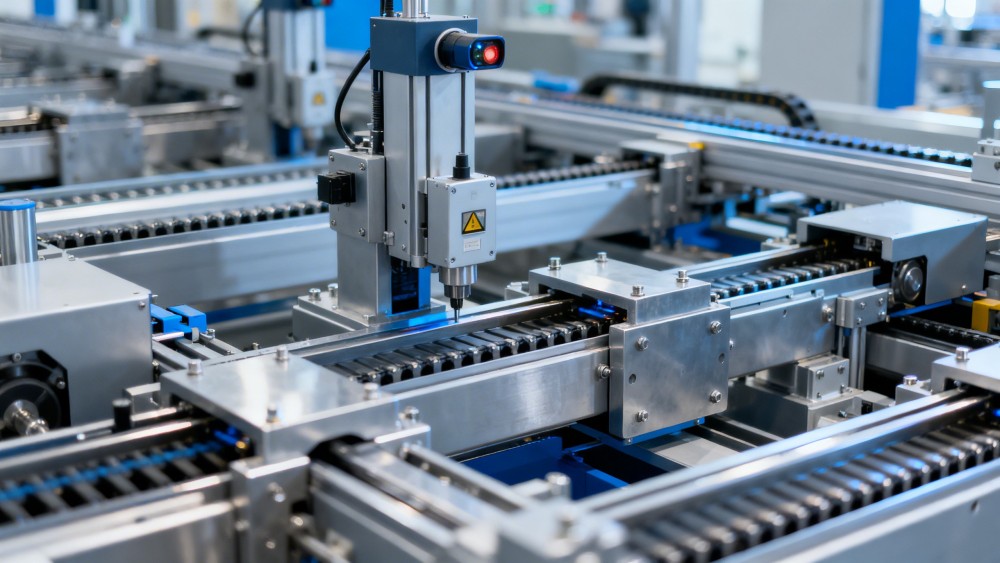
In today’s rapidly evolving industrial landscape, staying ahead requires more than cost control—it demands resilience. This latest supply chain update explores how smart manufacturing news, business intelligence news, and global sourcing trends are shaping a new era of operational stability across the industrial equipment sector. From cross-border trade updates to company developments and product innovation news, this feature industry report offers strategic insights for decision-makers navigating policy shifts, market fluctuations, and complex logistics networks.
Over the past decade, supply chains in the industrial equipment and components sector have largely been designed with cost optimization in mind. Lean inventory strategies, low-cost sourcing, and single-region dependency helped minimize operational costs. However, disruptions triggered by geopolitical tensions and pandemic-related shutdowns showed that cost-driven strategies alone can create vulnerabilities. According to market observations, over 65% of component suppliers faced at least two major disruptions between 2020 and 2023, doubling lead times from 4 weeks to nearly 8 weeks in some regions.
Resilience, therefore, has become a new key performance indicator (KPI) for supply chain management in manufacturing. Resilience doesn’t merely mean keeping extra stock; it involves structural flexibility, supplier diversification, and digital visibility across the value chain. For procurement teams, especially within industrial machinery, packaging systems, and building materials equipment, this shift requires balancing between just-in-time production models and the ability to absorb shocks when transportation or input materials are delayed.
Companies rebuilding resilience often adopt a three-phase roadmap: (1) mapping vulnerabilities and risk levels, (2) introducing redundancy in critical supply nodes, and (3) digitalizing monitoring systems through Industrial IoT (IIoT) tools. These steps are particularly critical in component manufacturing chains where precision, lead time, and compliance (such as ISO 9001 or CE standards) are non-negotiable.
The transition from focusing solely on cost reduction to establishing resilience is now seen as an investment in performance continuity. Manufacturers that have built dual-sourcing networks and predictive logistics tracking have reduced their disruption recovery time by 35% or more over the last two years. This change signals a deeper transformation toward sustainable competitiveness across the industrial equipment sector.
2. Strategic Levers for Building Cross-Sector Supply Chain Resilience
Creating a resilient supply chain involves aligning multiple strategic levers—material sourcing, supplier diversification, and process visibility—across all operational layers. For the industrial components segment, this requires integrating both upstream and downstream partners within a unified digital and strategic framework. The success of this alignment depends on how effectively firms manage four fundamental resilience pillars: redundancy, agility, collaboration, and technology enablement.
Redundancy ensures that there are alternative supplier options or substitute materials ready for rapid integration. Some machinery producers have created multi-location supplier networks across Asia and Eastern Europe to limit exposure to single-region instability. Agility supports flexible manufacturing lines capable of switching between similar component types within 24–48 hours, while digital twins make it possible to simulate these shifts in real time.
Technology enablement is equally vital. With the adoption of Industry 4.0 standards, predictive analytics platforms, and machine-to-system traceability, visibility across the production process has improved by over 30% on average. These tools now integrate data from logistics sensors and enterprise resource planning (ERP) systems to inform decisions, reducing unplanned downtime by 20% and improving order accuracy across multi-site warehouses.
The following table summarizes how core resilience strategies compare in terms of complexity, execution time, and potential ROI for industrial equipment companies:
The comparison shows that integrating digital visibility brings faster returns compared with supplier diversification, although both are essential. Firms in the mechanical components space often deploy a phased combination, using sensor data to assess weak spots before fully redesigning supplier contracts to balance cost and resilience goals.
Beyond immediate ROI, cross-sector collaboration remains a critical enabler. Partnerships with packaging material suppliers or logistics service providers can shorten recovery times in disruption scenarios by 25–40%, highlighting the importance of shared data ecosystems and collaborative foresight planning.
3. Data-Driven Visibility and Predictive Supply Chain Control
The backbone of modern industrial resilience lies in data-driven visibility. Predictive control through digital twins, AI forecasting, and cross-system analytics is redefining how industrial equipment manufacturers handle risk. A data visibility upgrade lets companies shift from reactive mitigation to proactive prevention.
For example, predictive analytics platforms now process sensor data from production lines, inventory reports, and transport vehicles every 15–30 minutes, enabling faster response to deviations in material flow or machine efficiency. This level of monitoring can cut downtime losses by up to $80,000 per hour for large-scale heavy machinery lines.
The following table illustrates typical data integration layers required for predictive supply chain resilience within industrial plants:
Once these data layers are unified, procurement teams gain the ability to anticipate supply slowdowns and coordinate substitute materials within a lead time of 48–72 hours. This data alignment reduces dependency on single information systems and improves collaboration with international logistics partners. Leading companies in the components subsector report that predictive control has reduced their order backlog by around 22% within one quarter.
For decision-makers, investing in analytic visibility tools no longer serves as a technology showcase but as an operational safeguard. The stronger the predictive infrastructure, the more controllable the production outcomes—even under unpredictable market conditions. This principle is now guiding procurement digitization projects across energy, electronics, and construction machinery markets alike.
4. Regional Reshoring, Nearshoring, and Supply Flexibility
Reshoring and nearshoring metal and electronic component production have emerged as core resilience strategies since 2022. For many EU and North American firms, relocating 10–20% of key component manufacturing closer to end markets offers several advantages: reduced logistics risk, compliance control, and shorter recovery cycles. In the machinery and building materials component trade, average transit times have decreased from 45 days to less than 25 days after nearshore facilities became operational.
However, cost differentials between regions remain significant. Labour cost in Eastern Europe, for example, may be 25–40% higher compared to Southeast Asia, but when total cost of ownership (TCO) including logistics and disruption factors is considered, the effective gap narrows to under 10%. Many industrial buyers use hybrid models—maintaining 70% offshore capacity while ensuring 30% nearshore flexibility.
For decision-makers evaluating relocation strategies, the following key factors determine strategic viability:
- Regulatory compliance in target regions (environmental and safety standards)
- Supplier qualification lead time (typically 6–9 months)
- Automation readiness, including robotic assembly potential above 50%
- Access to skilled workforce and support logistics infrastructure
Recent trends show that around 40% of industrial component producers are also investing in modular plants capable of switching between regional production sites within 15–20 days. This ensures sustained product delivery even when customs delays, raw material shortages, or global freight price spikes occur. The future of resilience, therefore, lies in agility—balancing global efficiency with local responsiveness.
These strategic moves are shaping procurement roadmaps for 2025 and beyond. The ability to adapt, not the ability to minimize cost, defines which suppliers become strategic partners in the next wave of global industrial transformation.
5. Procurement Decision Framework and Implementation Roadmap
Resilience cannot be achieved overnight—it requires clear procurement frameworks and measurable implementation steps. Decision-makers often apply a 5-step process that ensures structured execution while maintaining commercial discipline:
- Conduct a full supply risk assessment across all Tier 1 and Tier 2 suppliers.
- Define critical components with tolerance thresholds (e.g., ±5% cost, ±3 days delivery variance).
- Map digital visibility points within manufacturing and logistics systems.
- Introduce multi-region sourcing pilots covering 20–30% of total volume.
- Review outcomes quarterly and integrate insights into long-term vendor contracts.
Firms that have followed this systematic approach reported measurable improvements: lead-time variance dropped from 18 days to under 10 days, and overall procurement flexibility increased by 25% within a single fiscal year. This framework also enhances transparency, providing data alignment between buyers, investors, and operational teams.
For executives, choosing suppliers that support data sharing, flexible logistics, and technical transparency becomes more critical than focusing purely on unit price. Standardized data protocols—such as OPC UA and ISO/IEC 62264—help ensure compatibility across distributed manufacturing ecosystems and robotics control layers.
The roadmap also emphasizes human competence. Advanced supply management training, cross-department communication, and simulation exercises every 6 months can significantly improve team response time. Companies that conduct regular scenario training report up to 40% faster decision-making during unexpected disruptions.
6. Conclusion: Building Competitive Advantage through Resilient Industrial Ecosystems
The evolution of supply chain strategy within the industrial equipment and components industry reflects a deeper paradigm shift—from isolated cost optimization toward integrated resilience. By leveraging cross-sector collaboration, digital visibility, and diversified sourcing, enterprises can secure not only continuity but also long-term competitive differentiation.
As supply networks continue to face uncertainty, organizations that prioritize resilience now will be better positioned to capture emerging opportunities in foreign trade, energy technology, and cross-border e-commerce. Whether in machinery, chemical packaging, or building systems equipment, the same principle applies: responsiveness and transparency define future success.
Decision-makers and information researchers seeking deeper insights or customized market intelligence can explore tailored reports, supplier benchmarking studies, or technology trend analyses. Strengthening your supply chain resilience today means building the foundation for tomorrow’s industrial stability. Contact our industry intelligence team to access customized resilience roadmaps and actionable data-driven strategies.
Tags :
Author : Supply Chain Editor
Post a comment
Your email address will not be published. Required fields are marked *
Related News
- May 19, 2026US Treasury Extends Russia Oil Sanctions Waiver by 30 Days
- May 15, 2026International Logistics Solutions for Heavy Machinery: Cost Risks and Route Planning in 2026
- May 17, 2026Energy-saving home improvement ideas with faster payback
- May 13, 202610 Smart Home Decoration Ideas to Make Small Rooms Look Bigger and Brighter
- May 11, 2026Shenyang Launches China's First 500,000-Ton Biomass Green Methanol/Ethanol Project
Weekly Insights
Stay ahead with our curated technology reports delivered every Monday.