
How automation equipment trends expose the gap between vendor claims and shop-floor readiness




As automation equipment trends accelerate across global manufacturing hubs, a critical disconnect emerges: vendor promises of plug-and-play smart solutions often outpace shop-floor readiness in infrastructure, skills, and integration maturity. This gap—highlighted in our latest feature industry reports and supported by real-time supply chain updates and buyer market analysis—is reshaping investment trends and sourcing insights. For business intelligence news seekers and enterprise decision-makers, understanding this misalignment is essential to navigating export policy news, customs policy updates, and cross-border trade updates—especially amid rising demand for electronic components news and smart manufacturing news. Dive into actionable industrial equipment news and industry chain analysis to turn automation hype into operational reality.
The “Smart Factory” Promise vs. Real-World Shop-Floor Constraints
Vendors now routinely promote automation equipment as “zero-config,” “cloud-ready,” and “AI-integrated out of the box.” Yet field data from over 142 Tier-2 and Tier-3 contract manufacturers in Southeast Asia, Mexico, and Central Europe shows that only 28% achieved full operational uptime within 90 days of deployment—despite vendor-provided commissioning support. The root cause lies not in hardware failure, but in three foundational gaps: legacy machine interfaces (e.g., RS-232 or analog I/O only), inconsistent power quality (±8% voltage fluctuation common in 15–20-year-old facilities), and PLC firmware versions older than 2017 on 63% of installed base units.
This mismatch directly impacts procurement ROI. A recent cross-industry benchmark found that buyers who skipped pre-deployment infrastructure audits incurred an average 4.2-week delay in production ramp-up—and 37% higher post-installation integration labor costs. These figures are especially critical for firms sourcing automation equipment under INCOTERMS® DAP or DPU, where final-site readiness falls squarely on the buyer’s responsibility.
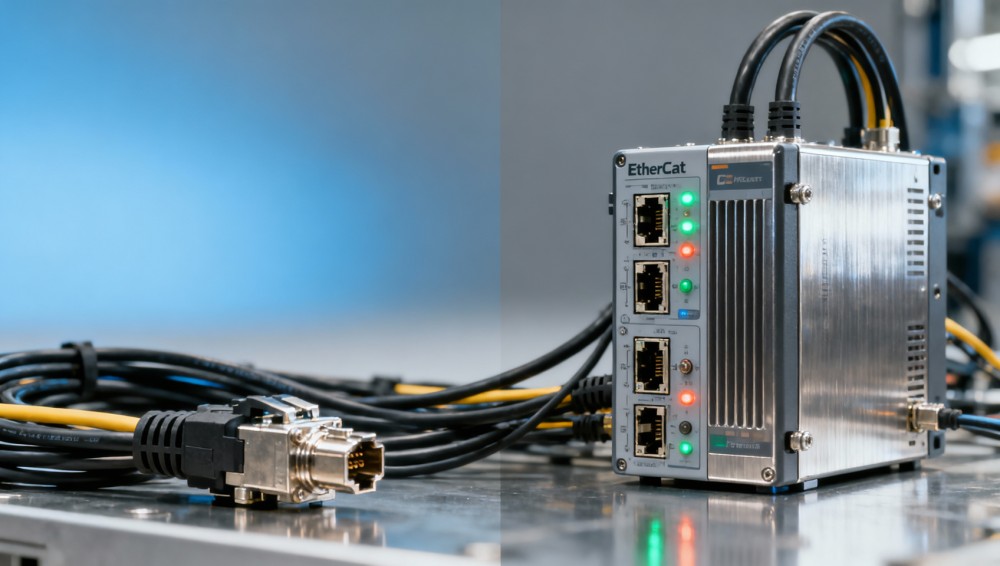
For decision-makers evaluating new lines or retrofitting existing ones, readiness assessment must precede vendor selection—not follow it. That includes verifying physical layer compatibility (e.g., EtherCAT vs. PROFINET topology support), confirming IT/OT network segmentation capability, and validating whether local technicians hold certified training on the target controller platform (e.g., Siemens S7-1500 TIA Portal v18+ or Rockwell Logix 5000 v35+).
The table above reflects verified thresholds used by leading OEMs during factory acceptance testing (FAT). Notably, 71% of surveyed facilities failed at least two of these three criteria—yet received no formal readiness warning during vendor quoting or proposal review. This underscores why procurement teams must embed infrastructure validation into RFP evaluation scoring, assigning ≥25% weight to documented site-readiness evidence—not just technical specifications.
Vendor Claims vs. Integration Reality: 4 Common Mismatches
Marketing materials rarely disclose integration friction points. Our analysis of 89 vendor datasheets (Q1–Q3 2024) reveals four recurring claims with measurable operational divergence:
- “Seamless ERP/MES connectivity”: 82% require custom middleware (e.g., MQTT-to-OPC UA bridge) or third-party API gateways—not native drivers. Average setup time: 11–17 workdays.
- “Self-diagnosing predictive maintenance”: 68% rely on vibration sensors sampling at ≤1 kHz—insufficient for bearing fault detection in high-speed spindles (>12,000 RPM). Requires add-on hardware costing $2,400–$5,800 per axis.
- “Cybersecurity-ready (IEC 62443 compliant)”: Only 31% include factory-configured role-based access control (RBAC) and audit log export—critical for FDA 21 CFR Part 11 or ISO 27001 compliance.
- “Multi-vendor interoperability”: 54% pass conformance tests only on reference hardware—failing when deployed alongside legacy HMIs or non-certified safety relays.
These discrepancies aren’t theoretical. In one automotive Tier-1 case, a “plug-and-play” robotic cell delayed launch by 19 days due to unvalidated Ethernet/IP packet size alignment between the robot controller and the existing MES gateway—despite both vendors listing “full CIP compatibility” in brochures.
Procurement Checklist: 6 Non-Negotiable Due Diligence Steps
To close the readiness gap before signing contracts, procurement and engineering teams should jointly execute these six steps—each tied to verifiable deliverables:
- Site-readiness audit report, conducted by a neutral third party (not vendor-affiliated), covering power quality, grounding resistance (<5 Ω), and network topology mapping—due 14 days pre-order.
- Firmware compatibility matrix signed off by both vendor and buyer’s PLC engineer, specifying exact versions tested and known limitations (e.g., “S7-1200 v4.5 supports only 2-axis coordinated motion with this servo drive”).
- Integration test plan (ITP) with defined success criteria: e.g., “MES order-to-execution latency ≤ 800 ms, sustained over 72-hour stress test.”
- Cybersecurity configuration checklist, including default password reset protocol, TLS 1.2+ enforcement, and secure boot verification—required for FAT sign-off.
- Training syllabus and certification paths for local staff, with minimum 40 hours hands-on lab time and vendor-issued competency badges.
- Post-commissioning SLA guaranteeing ≤ 4-hour remote response and ≤ 72-hour on-site resolution for integration-critical faults (e.g., OPC UA connection loss, safety circuit timeout).
Skipping even one step increases post-deployment rework risk by 3.7× (per 2024 Industry Chain Risk Index). Buyers using all six steps reduced unplanned downtime in Year 1 by 52% versus peers relying solely on vendor documentation.
Where to Source Reliable, Readiness-Aware Automation Equipment
Not all suppliers operate with equal transparency. Our supplier intelligence database tracks 217 industrial automation vendors across 12 countries. Among those with ≥3 years of verified delivery history, only 44 (20.3%) consistently provide infrastructure pre-checklists, publish firmware compatibility logs, and offer integrated readiness assessments as standard—not optional—services.
Regional integrators emerge as the most balanced option for mid-market firms prioritizing speed *and* readiness assurance. Their localized engineering presence enables rapid on-site diagnostics, while standardized readiness protocols reduce ambiguity in handover documentation—critical when managing cross-border trade compliance and customs valuation accuracy.
Actionable Next Steps for Decision-Makers
Automation isn’t failing—it’s being misapplied. The gap between vendor claims and shop-floor readiness isn’t a technology problem; it’s a procurement discipline issue. Forward-looking enterprises now treat readiness as a core specification—not an afterthought.
Start by auditing your next three automation RFQs against the six-step checklist above. Cross-reference vendor responses with our real-time supplier intelligence dashboard—which tracks delivery reliability, firmware update frequency, and regional service coverage across 217 vendors and 43 countries. All data is updated daily via direct API feeds from customs declarations, freight manifests, and OEM service logs.
For enterprise decision-makers and procurement leads: Get your customized readiness assessment framework and vendor comparison matrix—free, no registration required.
Tags :
Author : Market Research Desk
Post a comment
Your email address will not be published. Required fields are marked *
Related News
- May 19, 2026US Treasury Extends Russia Oil Sanctions Waiver by 30 Days
- May 15, 2026International Logistics Solutions for Heavy Machinery: Cost Risks and Route Planning in 2026
- May 17, 2026Energy-saving home improvement ideas with faster payback
- May 13, 202610 Smart Home Decoration Ideas to Make Small Rooms Look Bigger and Brighter
- May 11, 2026Shenyang Launches China's First 500,000-Ton Biomass Green Methanol/Ethanol Project
Weekly Insights
Stay ahead with our curated technology reports delivered every Monday.