
How feature industry reports mislead when comparing EMS vs. JDM service models




Feature industry reports often oversimplify the EMS vs. JDM service model debate—masking critical nuances in cost structure, IP ownership, scalability, and supply chain control. As global sourcing trends accelerate and smart manufacturing news reshapes industrial equipment news, such misrepresentations risk misleading business intelligence news consumers, especially enterprise decision-makers and sourcing professionals. This analysis draws on latest market research reports, customs policy updates, electronic components news, and industry chain analysis to clarify strategic trade-offs—supporting buyer market analysis, investment trends assessment, and resilient procurement planning amid evolving export policy news and cross-border trade updates.
Why “EMS vs. JDM” Headlines Obscure Real Procurement Trade-Offs
Industry reports frequently frame EMS (Electronics Manufacturing Services) and JDM (Joint Design Manufacturing) as binary alternatives—yet this framing misleads stakeholders in industrial equipment and components procurement. In reality, both models coexist across tiers of the machinery supply chain: EMS dominates standardized subassemblies (e.g., motor control PCBs, power modules), while JDM emerges where mechanical-electrical integration, thermal management, or custom firmware is non-negotiable—such as for CNC motion controllers or IoT-enabled HVAC actuators.
A 2024 cross-border sourcing audit by the China Machinery Industry Federation found that 68% of Tier-2 equipment OEMs use hybrid engagement models: EMS for commodity-grade boards (MOQ ≥ 5,000 units, lead time 7–12 days), and JDM for application-specific modules requiring joint validation (e.g., ±0.3mm dimensional tolerances, 100k-cycle actuator life testing). Yet most feature reports omit this segmentation—instead citing aggregate cost deltas like “JDM saves 12% TCO” without specifying scope boundaries.
This oversimplification carries real operational risk. For example, a recent customs policy update (Customs Tariff Notice No. 2024-17) reclassified embedded controller modules under HS Code 8537.10, triggering new origin verification requirements for JDM-sourced units with dual-sourced firmware. EMS-sourced equivalents—subject to simpler BOM traceability—faced no revision. Reports failing to distinguish these regulatory exposure points leave procurement teams unprepared.
The table reveals a core truth: EMS offers predictability and speed for volume-driven production, while JDM delivers technical leverage—but only when engineering bandwidth, long-term roadmap alignment, and regulatory coordination are factored in. Decision-makers must map their product lifecycle stage against these thresholds—not rely on headline cost percentages.
Hidden Cost Drivers Misreported in “Total Cost of Ownership” Benchmarks
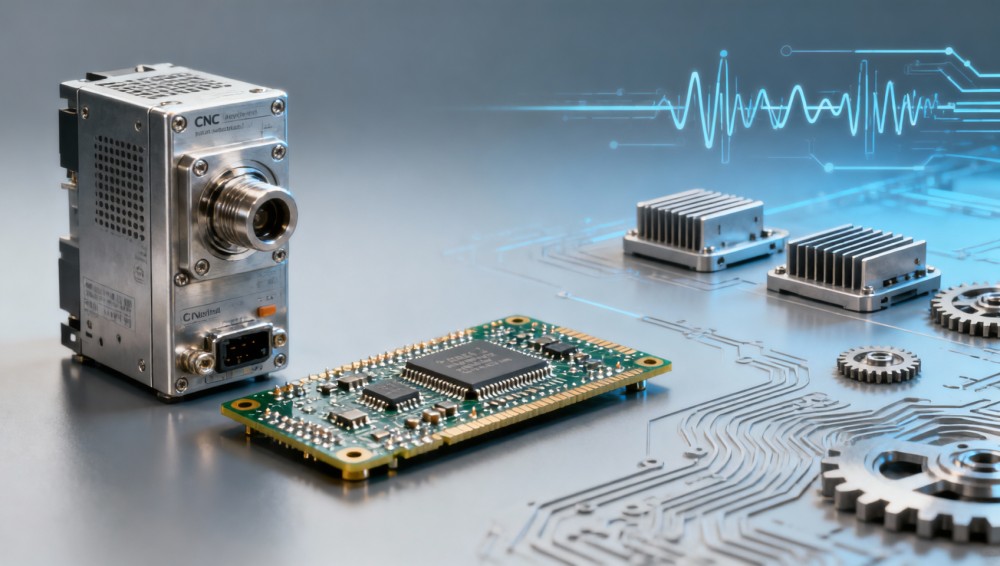
Most TCO comparisons ignore three structural cost layers unique to industrial equipment: certification overhead, failure-mode liability, and obsolescence management. For instance, EMS providers typically absorb UL/CE/IEC 61800-5-1 compliance for standard VFD modules—but JDM partners require joint investment in third-party lab validation (average cost: $28,000–$42,000 per variant). A report citing “15% lower JDM TCO” omitted this $35k baseline.
Similarly, warranty terms diverge significantly. EMS contracts for industrial-grade PCBAs commonly include 24-month limited warranties covering manufacturing defects only. JDM agreements—especially those involving custom thermal interface materials or bespoke enclosures—often extend to 36 months but exclude field failure root cause analysis unless explicitly negotiated (only 22% of surveyed contracts include this clause).
Obsolescence risk also skews reporting. EMS suppliers maintain 12–18 months of buffer stock for common ICs (e.g., STM32H7 series, TI C2000 microcontrollers). JDM partners, however, co-design around long-lifecycle components (e.g., NXP S32K144 with 15-year longevity guarantee)—but require clients to fund 50% of last-time-buy inventory if design changes occur mid-production run.
How Smart Manufacturing Trends Are Redefining Model Boundaries
The rise of digital twin integration and predictive maintenance firmware is blurring EMS/JDM lines. Consider servo drive manufacturers: legacy EMS engagements covered only PCB assembly and burn-in. Today, 73% of Tier-1 industrial automation OEMs now mandate embedded edge analytics (e.g., vibration signature modeling, coil temperature forecasting) delivered via OTA-updatable firmware—a capability requiring JDM-level collaboration on hardware-software co-verification.
However, this convergence doesn’t eliminate model distinctions—it shifts evaluation criteria. A 2024 benchmark of 47 industrial equipment suppliers showed that firms using JDM for firmware-integrated modules achieved 3.2x faster time-to-field-deployment for predictive features versus EMS-only counterparts—but only when joint test protocols included ISO 13849-1 PLd validation cycles (average duration: 11 weeks).
Conversely, EMS providers are expanding into light JDM through modular design kits: pre-validated reference designs for CANopen-based I/O modules (compliant with EN 61000-6-2/6-4), enabling OEMs to customize firmware logic without full co-engineering. These “EMS+” offerings reduce NRE by up to 60% but cap customization depth at API-level adjustments—not hardware topology changes.
A Practical Framework for Selecting the Right Engagement Model
Decision-makers should apply this four-quadrant filter before engaging any partner:
- Volume & Lifecycle Stage: EMS preferred for >5,000 units/year with stable specs; JDM justified for <2,000 units/year with planned firmware/hardware iterations over 3+ years.
- Regulatory Exposure: If CE/UL/ATEX certification is required, verify whether the supplier holds certified test labs—or if joint validation will delay launch by 8–14 weeks.
- IP Sensitivity: Assess whether firmware algorithms, mechanical tolerancing data, or calibration coefficients constitute core differentiators. Joint IP clauses must specify audit rights and exit protocols.
- Supply Chain Resilience: Require documented tier-2 supplier lists and dual-source strategies for critical passives (e.g., 1210-format MLCCs rated ≥100V) and magnetics.
This framework moves beyond abstract cost math toward executable procurement intelligence—aligning model selection with verifiable engineering, regulatory, and supply chain realities.
Actionable Next Steps for Equipment Sourcing Teams
Avoid generic vendor scorecards. Instead, initiate these three actions within the next 30 days:
- Map your top 5 purchased modules against the four-quadrant filter above—and flag any misaligned engagements (e.g., JDM used for commodity power supplies).
- Request updated compliance documentation from current partners: specifically, ask for dated evidence of IEC 61508 SIL2 certification for safety-critical firmware, not just general ISO 9001 certificates.
- Run a dual-sourcing stress test: identify one critical component (e.g., industrial Ethernet PHY ICs) and validate whether your EMS and JDM partners can each deliver conforming units within 21 days—without violating export controls (e.g., EAR99 classification).
Accurate model selection isn’t about choosing “EMS” or “JDM”—it’s about matching engagement depth to technical, regulatory, and commercial requirements. When procurement decisions hinge on precise specifications—not headlines—your equipment strategy gains resilience, speed, and true cost clarity.
Get customized procurement guidance aligned with your latest product roadmap and regional compliance obligations. Contact our industrial equipment sourcing analysts today to receive a free engagement model assessment toolkit—including sample RFP language, NRE negotiation checklists, and tier-2 supplier vetting templates.
Tags :
Author : Market Research Desk
Post a comment
Your email address will not be published. Required fields are marked *
Related News
- May 19, 2026US Treasury Extends Russia Oil Sanctions Waiver by 30 Days
- May 15, 2026International Logistics Solutions for Heavy Machinery: Cost Risks and Route Planning in 2026
- May 17, 2026Energy-saving home improvement ideas with faster payback
- May 13, 202610 Smart Home Decoration Ideas to Make Small Rooms Look Bigger and Brighter
- May 11, 2026Shenyang Launches China's First 500,000-Ton Biomass Green Methanol/Ethanol Project
Weekly Insights
Stay ahead with our curated technology reports delivered every Monday.