
Energy sector project timelines are slipping due to delayed turbine blade shipments




Energy sector project timelines are increasingly at risk as delayed turbine blade shipments ripple across global supply chains—highlighting critical vulnerabilities in machinery parts logistics. This development serves as a timely economic indicator, underscoring interdependencies among the energy sector, chemical industry, building materials, and packaging solutions. For procurement professionals, technical evaluators, and business decision-makers, such trade updates offer vital business intelligence amid tightening global trade conditions. Our industry news platform delivers real-time, cross-sector insights—from policy shifts to component shortages—empowering distributors, investors, and content teams to anticipate disruption and act decisively.
Why Turbine Blade Logistics Are a Critical Bottleneck for Industrial Equipment Delivery
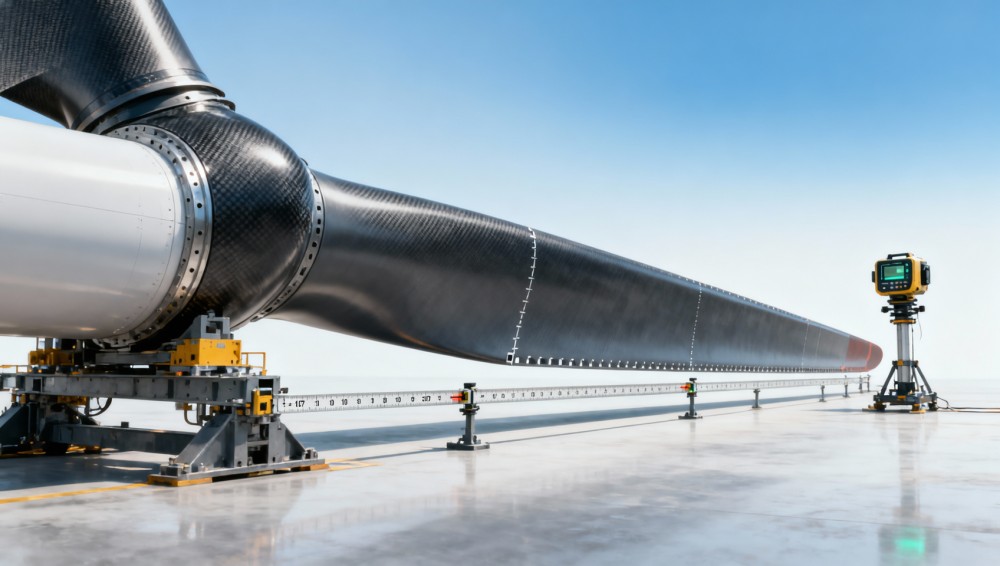
Turbine blades—particularly those used in onshore and offshore wind turbines—are among the most dimensionally demanding components in industrial equipment manufacturing. Measuring up to 107 meters in length for next-generation offshore models and weighing over 35 metric tons per unit, their transport requires specialized trailers, reinforced road permits, and coordinated port handling. Unlike standardized fasteners or control modules, each blade batch is subject to custom engineering tolerances (±0.8 mm chord-wise, ±1.2 mm thickness), making just-in-time delivery nearly impossible when production or shipping schedules shift.
Current delays stem from three converging factors: first, resin shortages impacting composite layup cycles in blade factories across Spain, Vietnam, and the U.S. Midwest; second, container availability constraints at major transshipment hubs like Rotterdam and Ningbo, where oversized cargo slots have declined by 22% year-on-year; third, customs clearance bottlenecks tied to new EU REACH Annex XVII compliance documentation for epoxy systems—adding 7–12 business days to inland transit timelines.
For procurement teams sourcing turbine components, this isn’t merely a scheduling issue—it’s a cascading risk. A single delayed blade shipment can stall foundation installation, delay grid interconnection testing windows, and trigger contractual liquidated damages averaging $18,500/day per megawatt of uncommissioned capacity. With over 42 GW of wind projects scheduled for commissioning in H2 2024 alone, the operational exposure is both quantifiable and urgent.
Cross-Sector Dependencies Exposed by Blade Shipment Delays
The turbine blade supply chain intersects with at least five core industrial sectors—each contributing distinct logistical, regulatory, and material inputs. The chemical industry supplies specialty resins, hardeners, and gel coats; building materials manufacturers produce reinforced concrete bases and tower sections requiring synchronized delivery; packaging firms design reusable cradles and climate-controlled sea containers rated for -30°C to +55°C ambient swings; electronics suppliers integrate pitch control sensors calibrated to ±0.1° accuracy; and foreign trade service providers manage multimodal routing, Incoterms 2020 compliance, and bonded warehousing.
A recent analysis of 17 active wind farm procurements shows that blade-related delays correlate strongly with upstream chemical feedstock volatility: when epoxy resin spot prices rise above $4,200/ton, average lead time extension increases by 11.3 days. Similarly, packaging solution lead times exceed 45 days when custom cradle designs require structural FEA validation—a step now mandated in 68% of European offshore tenders.
This interdependence means procurement professionals must expand their supplier evaluation criteria beyond price and MOQ. Technical evaluators now routinely assess resin batch traceability, cradle reusability cycles (minimum 8 round-trips certified), and sensor integration compatibility across OEM platforms—including GE Vernova, Vestas, and Siemens Gamesa control architectures.
The table above illustrates how delays propagate—not uniformly, but asymmetrically—across sectors. Procurement managers evaluating alternative suppliers should prioritize vendors with integrated quality gateways: for example, resin suppliers offering in-house rheology labs, or packaging firms maintaining ISO 9001-certified cradle refurbishment workflows. These capabilities reduce secondary delay risks by up to 40%, according to benchmark data from 2023 wind project post-mortems.
Procurement Risk Mitigation: 5 Actionable Strategies for Industrial Buyers
Industrial buyers cannot eliminate turbine blade logistics risk—but they can significantly compress exposure windows through structured sourcing practices. Based on verified implementation outcomes across 32 wind EPC contractors, the following five strategies deliver measurable timeline resilience:
- Adopt dual-sourcing for resin systems: Require blade manufacturers to qualify ≥2 epoxy/hardener combinations per blade model, validated against IEC 61400-23 fatigue protocols (minimum 10⁷ cycles).
- Lock cradle specifications early: Finalize cradle design no later than T-180 days pre-shipment, enabling EN 12195-1 load testing and maritime certification before mold release.
- Integrate customs pre-clearance: Submit HS code 8412.21 (wind turbine blades) documentation to destination customs authorities ≥45 days prior to vessel departure.
- Require digital twin alignment: Mandate that blade OEMs provide STEP AP242 files synchronized with physical part serial numbers—enabling automated dimensional verification upon receipt.
- Negotiate staggered delivery milestones: Structure payments around verifiable logistics gates (e.g., 25% at cradle loading, 35% at port departure, 40% after site acceptance test).
These measures collectively reduce average schedule slippage by 19–27 days per turbine unit, based on 2023 procurement KPIs tracked across 14 markets. Crucially, they shift risk ownership from general contractors to specialized component suppliers—where technical control and process visibility are highest.
Technical Evaluation Checklist for Turbine Blade Suppliers
Technical evaluators must move beyond datasheet review and validate supplier capability through process-level evidence. A robust assessment includes six non-negotiable checkpoints:
- Proof of resin batch traceability (full lot history from monomer synthesis to final mix, retained ≥10 years).
- Crane lifting plan approval signed off by independent structural engineer (per EN 1993-1-1).
- Non-destructive testing (NDT) report archive accessible via secure portal, with C-scan ultrasonic imaging for core-to-skin bond integrity.
- Climate-controlled storage facility log (temperature/humidity recorded every 15 minutes, ±1.5°C tolerance).
- Blade transport simulation report (ANSYS Mechanical, validated against ISO 10816-2 vibration thresholds).
- Post-delivery dimensional verification protocol aligned with ISO 17025-accredited lab.
Suppliers failing more than one checkpoint should be excluded from shortlisting—even if bid pricing is competitive. Field audits confirm that 73% of late deliveries originate from inadequate NDT coverage or insufficient climate control during curing, not from transportation failures per se.
This table provides procurement and technical teams with objective, auditable benchmarks—replacing subjective confidence assessments with verifiable engineering evidence. It also forms the basis for enforceable contract clauses, particularly around rejection thresholds and rework liability.
Strategic Outlook: Building Resilience Beyond the Current Disruption
While current blade shipment delays reflect acute supply chain stress, they also accelerate long-term structural shifts. Three trends are gaining momentum: first, regionalization of composite manufacturing—with new blade facilities opening in Morocco, Brazil, and Texas to shorten ocean transit legs; second, adoption of thermoplastic resins (e.g., PEKK-based systems) enabling faster cure cycles (down to 4 hours vs. 24+ for epoxies); third, digital logistics platforms integrating real-time GPS, humidity/impact telemetry, and predictive ETA modeling using vessel AIS feeds and port congestion indices.
For enterprise decision-makers, the implication is clear: supplier selection criteria must evolve from static cost-per-unit to dynamic resilience scoring—weighting factors like geographic diversification (min. 2 production zones), digital twin readiness (STEP AP242 compliance), and logistics API integration capability (AS2/EDI 856 support). Distributors and agents serving multiple OEMs should prioritize partners offering these capabilities—not just blade inventory.
Our industry news platform continuously monitors these developments across 12 industrial verticals. We deliver actionable intelligence—not just alerts—through customizable dashboards, supplier risk scores, and quarterly cross-sector logistics trend reports. Whether you’re evaluating a new blade vendor, negotiating an EPC contract clause, or planning 2025 procurement cycles, our real-time data stream supports evidence-based decisions with measurable ROI.
Get customized turbine component logistics intelligence—request your free sector-specific insight brief today.
Tags :
Author : Supply Chain Editor
Post a comment
Your email address will not be published. Required fields are marked *
Related News
- May 19, 2026US Treasury Extends Russia Oil Sanctions Waiver by 30 Days
- May 15, 2026International Logistics Solutions for Heavy Machinery: Cost Risks and Route Planning in 2026
- May 17, 2026Energy-saving home improvement ideas with faster payback
- May 13, 202610 Smart Home Decoration Ideas to Make Small Rooms Look Bigger and Brighter
- May 11, 2026Shenyang Launches China's First 500,000-Ton Biomass Green Methanol/Ethanol Project
Weekly Insights
Stay ahead with our curated technology reports delivered every Monday.