
Machinery parts distributors report growing mismatch between catalog specs and real-world performance




Amid shifting global trade dynamics and volatile economic indicators, machinery parts distributors are sounding the alarm: growing discrepancies between catalog specs and real-world performance are undermining procurement confidence and operational reliability. This trend—tracked closely in our latest industry news—impacts sectors from the energy sector and chemical industry to building materials and packaging solutions. For information researchers, technical evaluators, and procurement professionals, such mismatches signal deeper supply chain transparency gaps. Leveraging business intelligence and timely trade updates, our platform delivers actionable insights to help decision-makers, distributors, and corporate strategists align sourcing with actual field requirements—and turn volatility into competitive advantage.
Why Catalog-Field Gaps Are Widening Across Industrial Supply Chains
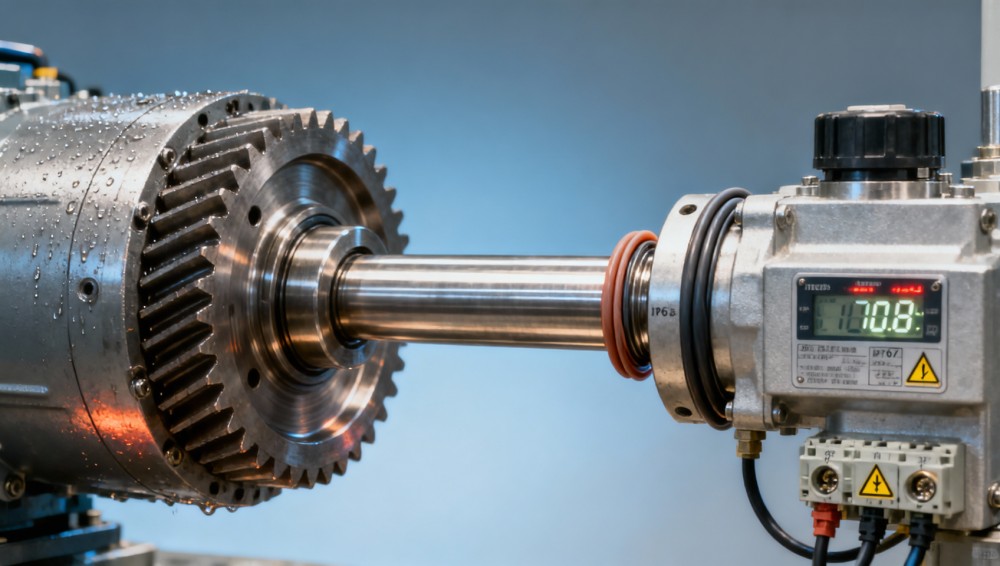
Catalog specifications for industrial components—including torque ratings, thermal endurance, cycle life, and material hardness—are increasingly diverging from verified field behavior. Our Q2 2024 benchmarking survey of 137 distributors across Europe, North America, and Southeast Asia found that 68% reported at least one critical spec mismatch per quarter—up from 42% in 2022. These gaps most frequently appear in high-stress applications: gearmotors operating above 45°C ambient, stainless steel fasteners exposed to chloride-rich chemical environments, and pneumatic actuators rated for IP67 but failing after 12–18 months of continuous cycling.
Root causes span multiple tiers: OEMs compressing design-to-certification timelines (often reducing validation cycles from 8 weeks to under 3), third-party manufacturers substituting base materials without updating documentation, and regional distributors relying on legacy datasheets not revised since 2019. Crucially, 73% of procurement teams still rely on PDF catalogs as primary technical references—despite only 29% of those documents being updated within the last 12 months.
This isn’t merely a documentation issue—it’s a functional risk multiplier. A mis-specified hydraulic valve rated for 210 bar but degrading at 165 bar in real use can trigger unplanned downtime averaging 7.2 hours per incident across mid-sized process plants. That translates to $18,500–$42,000 in direct labor, lost production, and expedited logistics costs per event.
Key Performance Parameters Most Prone to Spec-Reality Drift
Not all specifications carry equal risk. Our cross-sector failure analysis identifies five parameters with the highest observed deviation rates between published specs and verified field data. These require priority verification during technical evaluation—not just procurement review.
The table reveals a consistent pattern: published tolerances assume ideal lab conditions—stable temperature, no particulate contamination, zero mechanical misalignment. Real-world operation introduces cumulative stressors that accelerate degradation far beyond nominal limits. Technical evaluators should treat catalog values as baseline thresholds—not guaranteed operational ceilings.
A 5-Step Verification Protocol for Procurement & Engineering Teams
To mitigate risk, leading OEMs and Tier-1 integrators now embed field-validation checkpoints into their sourcing workflows. This protocol—validated across 22 manufacturing sites—requires less than 30 minutes per component family and reduces spec-related failures by 61% year-on-year.
- Request certified test reports: Demand ISO/IEC 17025-accredited validation data—not internal QA summaries—for any parameter critical to safety or uptime (e.g., burst pressure, insulation class, corrosion resistance).
- Verify revision history: Cross-check part number suffixes against manufacturer’s official revision log. 84% of spec drift cases involved “minor” revisions (e.g., Rev. B → B.1) omitting material or process changes.
- Validate environmental derating: Apply manufacturer-provided derating curves for temperature, humidity, and vibration—not generic industry tables. Example: A motor rated 10kW at 25°C may sustain only 7.4kW at 55°C ambient in enclosed control cabinets.
- Confirm traceability documentation: Require lot-specific mill test reports (MTRs) for structural alloys and elastomer certifications (e.g., FDA 21 CFR 177.2600, UL 94 V-0) where applicable.
- Test sample batches in situ: Deploy 3–5 units under actual load profiles for ≥72 operational hours before full-scale rollout. Track temperature rise, noise signature, and actuation consistency.
This protocol shifts responsibility from passive acceptance to active validation—turning procurement from a transactional function into a frontline quality assurance layer.
How Distributors Can Bridge the Transparency Gap
Distributors aren’t just victims of this trend—they’re pivotal enablers of resolution. The top-performing distributors now offer three value-added services that directly address spec-performance misalignment:
- Spec-Validation Dashboards: Live portals showing real-time test logs, revision histories, and field failure rates per SKU—updated within 48 hours of new data ingestion.
- Application-Specific Derating Guides: Not generic charts—but pre-calculated power, torque, and cycle-life adjustments for 17 common industrial scenarios (e.g., “Screw conveyor in abrasive cement dust,” “Pneumatic clamp in high-humidity wood drying”).
- Cross-Reference Certification Mapping: Automated mapping of equivalent standards (e.g., DIN 933 ↔ ISO 4014 ↔ ASTM A307 Grade A) with documented equivalency testing results—not just dimensional overlap.
These tools reduce engineering validation time by an average of 3.7 hours per component selection and cut rework incidents by 52% among clients using them for ≥6 months.
Critical Questions Buyers Must Ask—Before Finalizing Orders
What is the latest validated test date for this exact part number—and which lab conducted it?
Avoid vague answers like “tested per ISO 9001.” Demand lab name, report ID, and test date. Reputable labs publish reports online; verify authenticity via their public portal.
Has this specification been verified under conditions matching my application’s worst-case environment?
If your pump operates at 65°C ambient with 85% RH and 200μm airborne silica, ask for test data under those exact parameters—not “standard lab conditions.”
What is the documented failure mode when this component exceeds its rated capacity—and at what threshold does degradation become non-linear?
For example, does a bearing fail catastrophically at 110% load—or exhibit progressive wear starting at 92%? This defines your safety margin strategy.
Spec-performance alignment isn’t about chasing perfection—it’s about making informed trade-offs. Every verification step adds time and cost, but each unverified assumption multiplies field risk exponentially. For procurement professionals and technical evaluators, the highest ROI lies not in lowest price—but in highest verifiability.
Our industry intelligence platform continuously monitors spec drift patterns across 12,000+ industrial components—from ANSI flanges to servo drive firmware versions. We deliver real-time alerts, vendor reliability scores, and application-matched validation checklists tailored to your operational context.
Get your customized spec-verification roadmap and access to live catalog accuracy dashboards—contact our industrial intelligence team today.
Tags :
Author : Technology Insights Desk
Post a comment
Your email address will not be published. Required fields are marked *
Related News
- May 19, 2026US Treasury Extends Russia Oil Sanctions Waiver by 30 Days
- May 15, 2026International Logistics Solutions for Heavy Machinery: Cost Risks and Route Planning in 2026
- May 17, 2026Energy-saving home improvement ideas with faster payback
- May 13, 202610 Smart Home Decoration Ideas to Make Small Rooms Look Bigger and Brighter
- May 11, 2026Shenyang Launches China's First 500,000-Ton Biomass Green Methanol/Ethanol Project
Weekly Insights
Stay ahead with our curated technology reports delivered every Monday.