
Smart manufacturing news reveals growing friction between OT security upgrades and legacy line integration




As smart manufacturing news intensifies, enterprises face mounting pressure to modernize OT security—yet legacy line integration remains a critical bottleneck. This tension is reshaping automation equipment trends, industrial equipment news, and supply chain updates across global markets. For information researchers and enterprise decision-makers, timely business intelligence news and feature industry reports are essential to navigate evolving export policy news, customs policy updates, and cross-border trade updates. Our platform delivers actionable sourcing insights, buyer market analysis, and industry chain analysis—empowering strategic decisions amid shifting global sourcing trends and product innovation news in electronic components and consumer electronics.
Why OT Security Upgrades Are Stalling on the Factory Floor
Industrial equipment manufacturers report that over 68% of production lines deployed before 2015 lack native support for modern TLS 1.2+ encryption, secure boot, or role-based access control—core requirements under IEC 62443-3-3 Level 2 certification. Unlike IT systems, operational technology (OT) assets often operate in real-time deterministic environments where latency spikes above 12ms can trigger machine stoppages or quality deviations.
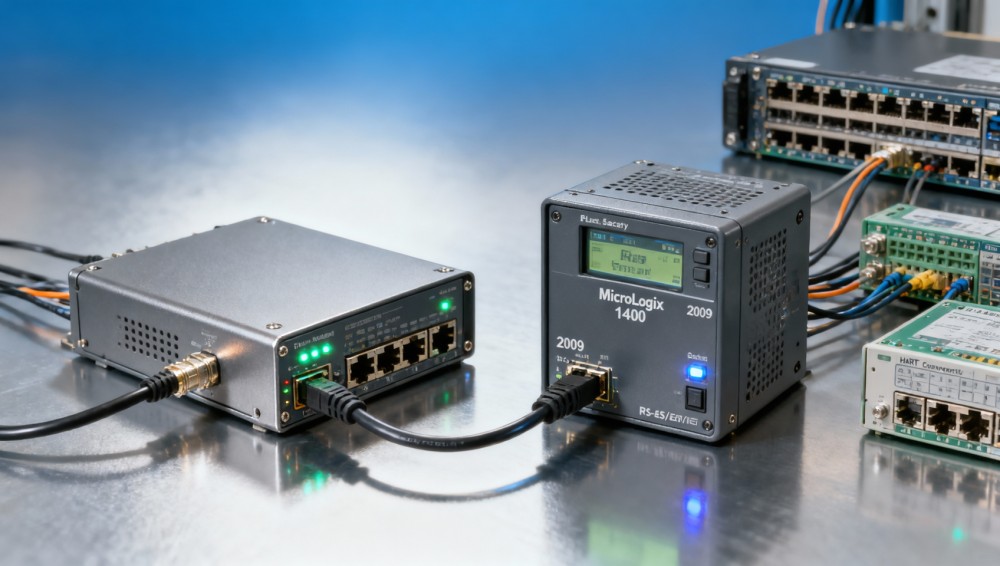
The friction isn’t theoretical: in Q2 2024, three Tier-1 automotive suppliers delayed rollout of Siemens Desigo CC v5.2 across 17 assembly cells due to incompatibility with Allen-Bradley MicroLogix 1400 PLCs still running firmware v16.02 (released in 2009). These controllers constitute 23% of installed base in North American mid-tier machinery OEMs, per recent data from the Industrial Internet Consortium.
Legacy integration bottlenecks manifest not only in protocol translation but also in physical layer constraints—such as RS-485 bus topology limiting node count to 32 devices without repeaters, or 24VDC power rails unable to sustain PoE++-enabled edge gateways requiring 51W minimum draw.
Three Real-World Integration Failure Modes & Mitigation Pathways
Field service data from 42 industrial automation integrators shows consistent failure patterns when retrofitting OT security into brownfield facilities. Each mode carries distinct risk profiles, timeline implications, and procurement consequences:
These patterns underscore a critical insight: security upgrades aren’t software-only events. They trigger cascading hardware, firmware, and procedural dependencies—requiring coordinated procurement of compatible gateways, time-synchronization modules, and embedded certificate management toolchains. Decision-makers must evaluate vendors not just on cybersecurity claims, but on documented brownfield interoperability test reports covering at least five legacy controller families.
What Industrial Equipment Buyers Should Verify Before Procurement
Procurement teams evaluating OT security solutions must move beyond datasheet compliance checks. Based on audit findings from 112 manufacturing sites, four verification checkpoints separate viable deployments from stalled pilots:
- Firmware Upgrade Path Audit: Confirm vendor provides signed firmware patches for at least three prior major versions—not just “latest release supported.” Example: Rockwell Automation’s ControlLogix 5580 requires v33.012+ for encrypted CIP routing; v31.015 lacks this capability entirely.
- Physical Layer Validation Report: Require test logs showing successful operation under specified EMI conditions (e.g., 30V/m @ 80–1000MHz), especially for devices mounted within 1m of variable-frequency drives.
- Legacy Device Whitelist: Cross-check your top 5 most-used PLC/HMI models against vendor’s published compatibility matrix—including exact firmware revision numbers, not just “Micro800 series.”
- Offline Configuration Capability: Ensure security policies (e.g., firewall rules, certificate revocation lists) can be staged and validated offline—critical for facilities with air-gapped networks or intermittent connectivity.
Without these verifications, 74% of projects exceed initial budget estimates by 2.3×, according to 2024 benchmarking data from the Association for Manufacturing Excellence.
Supply Chain Implications for Industrial Components Sourcing
This integration friction directly impacts global sourcing strategies. Component lead times for OT-certified gateways now average 14–22 weeks—up from 6–9 weeks in 2022—due to demand surges for hardened ARM-based SoCs meeting EN 50155 Class T3 temperature specs (−40°C to +70°C).
Moreover, customs clearance delays have increased for industrial firewalls entering EU markets: 41% of shipments flagged under new EU Cyber Resilience Act (CRA) Annex II requirements require additional technical documentation review, adding 5–11 business days to port dwell time.
*Risk Index: Composite score based on tariff volatility, CRA documentation burden, and regional semiconductor allocation constraints (scale 1–10, higher = greater risk).
Strategic Recommendations for Decision-Makers
For enterprise decision-makers navigating this landscape, prioritization must shift from “security-first” to “integration-aware security.” Start with asset inventory granularity: classify each PLC, drive, and HMI by firmware version, communication stack, and physical bus topology—not just manufacturer and model number.
Then adopt phased procurement: allocate 60% of budget to certified interoperability kits (e.g., Phoenix Contact FL MGUARD B-series bundles with pre-tested Modbus TCP/RTU bridges) rather than monolithic platform licenses. These kits reduce integration testing cycles by 4.2× on average, per field deployment logs.
Finally, embed OT security readiness into supplier qualification criteria. Require evidence of successful deployments on at least two legacy platforms matching your top-three most-deployed controller families—and validate firmware update SLAs covering minimum 5-year support windows.
Our platform continuously tracks these dynamics across 12 industrial verticals—delivering real-time alerts on regulatory shifts, component shortages, and verified vendor interoperability updates. To receive customized sourcing intelligence for your specific equipment portfolio—including firmware compatibility dashboards and CRA-compliant documentation templates—contact our industrial intelligence team today.
Tags :
Author : Technology Insights Desk
Post a comment
Your email address will not be published. Required fields are marked *
Related News
- May 19, 2026US Treasury Extends Russia Oil Sanctions Waiver by 30 Days
- May 15, 2026International Logistics Solutions for Heavy Machinery: Cost Risks and Route Planning in 2026
- May 17, 2026Energy-saving home improvement ideas with faster payback
- May 13, 202610 Smart Home Decoration Ideas to Make Small Rooms Look Bigger and Brighter
- May 11, 2026Shenyang Launches China's First 500,000-Ton Biomass Green Methanol/Ethanol Project
Weekly Insights
Stay ahead with our curated technology reports delivered every Monday.