
World's Largest 24,000 TEU Dual-Fuel Container Ship 'CMA CGM Champs Elysées' Delivered Ahead of Schedule, Featuring Chinese-Made High-Pressure FGSS




World's Largest 24,000 TEU Dual-Fuel Container Ship 'CMA CGM Champs Elysées' Delivered Ahead of Schedule, Featuring Chinese-Made High-Pressure FGSS
Introduction
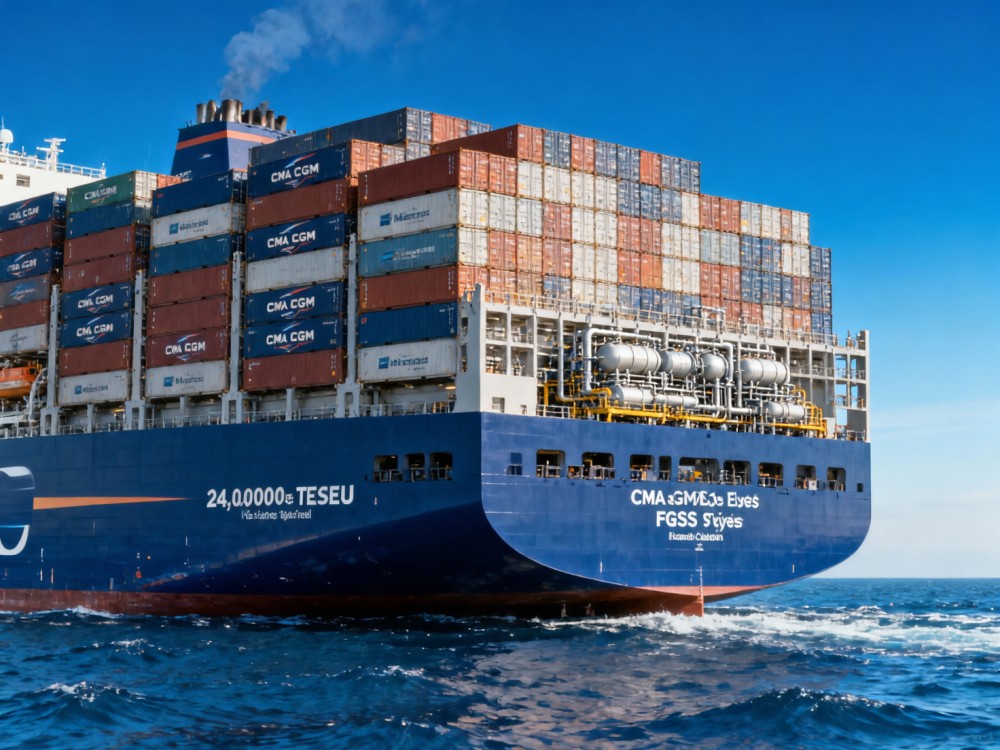
On March 17, 2026, Hudong-Zhonghua Shipbuilding delivered the world's largest LNG dual-fuel container ship, the 'CMA CGM Champs Elysées,' seven and a half months ahead of schedule. The vessel's core component—a domestically produced high-pressure Fuel Gas Supply System (FGSS)—was supplied by CIMC ENRIC and received a Type Approval Certificate from DNV. This breakthrough signifies China's entry into the international mainstream shipowner supply chain for high-end marine industrial systems, providing a tangible case for global shipbuilders and energy equipment integrators to evaluate the reliability of Chinese-made high-end components. Industries such as shipbuilding, LNG equipment manufacturing, and maritime logistics should pay close attention to this development, as it marks a significant step in China's capability to compete in the high-end marine equipment market.
Event Overview
The 'CMA CGM Champs Elysées,' with a capacity of 24,000 TEU, is the world's largest LNG dual-fuel container ship. Its early delivery highlights the efficiency of Hudong-Zhonghua Shipbuilding and the reliability of the Chinese-made high-pressure FGSS system by CIMC ENRIC. The DNV Type Approval Certificate further validates the system's compliance with international standards. This event underscores China's growing competitiveness in the high-end marine equipment sector.
Impact on Sub-Industries
Shipbuilding and Marine Equipment Manufacturing
The successful deployment of the Chinese-made FGSS system demonstrates China's ability to produce high-end marine components that meet global standards. This could disrupt the dominance of traditional suppliers in Europe and South Korea, prompting shipowners to reconsider their supply chain strategies.
LNG Fuel and Energy Equipment
The adoption of LNG dual-fuel technology in large container ships aligns with global decarbonization trends. The reliability of Chinese-made FGSS systems may accelerate the shift toward LNG-powered vessels, influencing energy equipment procurement decisions.
Maritime Logistics and Shipping
The early delivery of such a large vessel could improve operational efficiency for shipping companies, reducing downtime and enhancing fleet utilization. This may pressure competitors to adopt similar technologies or risk falling behind.
Key Takeaways for Industry Stakeholders
Monitor Supply Chain Shifts
Shipbuilders and equipment suppliers should assess the growing competitiveness of Chinese manufacturers and consider diversifying their supply chains to include reliable Chinese partners.
Evaluate LNG Dual-Fuel Adoption
Shipping companies should weigh the benefits of LNG dual-fuel technology, especially as Chinese-made systems become more viable, to stay compliant with tightening emissions regulations.
Track Regulatory Developments
Industry players should stay updated on certifications like DNV's Type Approval, as these will influence procurement decisions and market dynamics.
Editor's Perspective
From an industry standpoint, this event is more than a milestone—it signals China's emergence as a credible player in high-end marine equipment. While it’s too early to predict a full-scale shift, the DNV certification and early delivery suggest that Chinese suppliers are becoming serious contenders. The industry should watch for further validations and market responses to gauge the long-term impact.
Conclusion
The delivery of the 'CMA CGM Champs Elysées' with a Chinese-made FGSS system marks a significant step in China's marine industry. It highlights the country's ability to produce high-end, reliable components for global markets. For now, this development should be viewed as a strong signal of China's growing capabilities, prompting industry stakeholders to reassess their strategies in shipbuilding, energy equipment, and logistics.
Source Information
Primary Source: Official announcement by Hudong-Zhonghua Shipbuilding and CIMC ENRIC on March 17, 2026. DNV's Type Approval Certificate details are based on publicly available information. Further developments in the adoption of Chinese-made FGSS systems should be monitored for long-term trends.
Tags :
Author : Technology Insights Desk
- Last One:Four Departments Issue Implementation Plan for High-Quality Development of Energy-Saving EquipmentMar 29, 2026
- Next Article:Yangtze River Delta MEMS Pressure Sensor Cluster Achieves 92% Yield Rate, Suzhou MEMSensing and Wuxi CSMC Launch New Production Lines with Bosch and Continental as Key ClientsMar 29, 2026
Post a comment
Your email address will not be published. Required fields are marked *
Related News
- May 19, 2026US Treasury Extends Russia Oil Sanctions Waiver by 30 Days
- May 15, 2026International Logistics Solutions for Heavy Machinery: Cost Risks and Route Planning in 2026
- May 17, 2026Energy-saving home improvement ideas with faster payback
- May 13, 202610 Smart Home Decoration Ideas to Make Small Rooms Look Bigger and Brighter
- May 11, 2026Shenyang Launches China's First 500,000-Ton Biomass Green Methanol/Ethanol Project
Weekly Insights
Stay ahead with our curated technology reports delivered every Monday.