





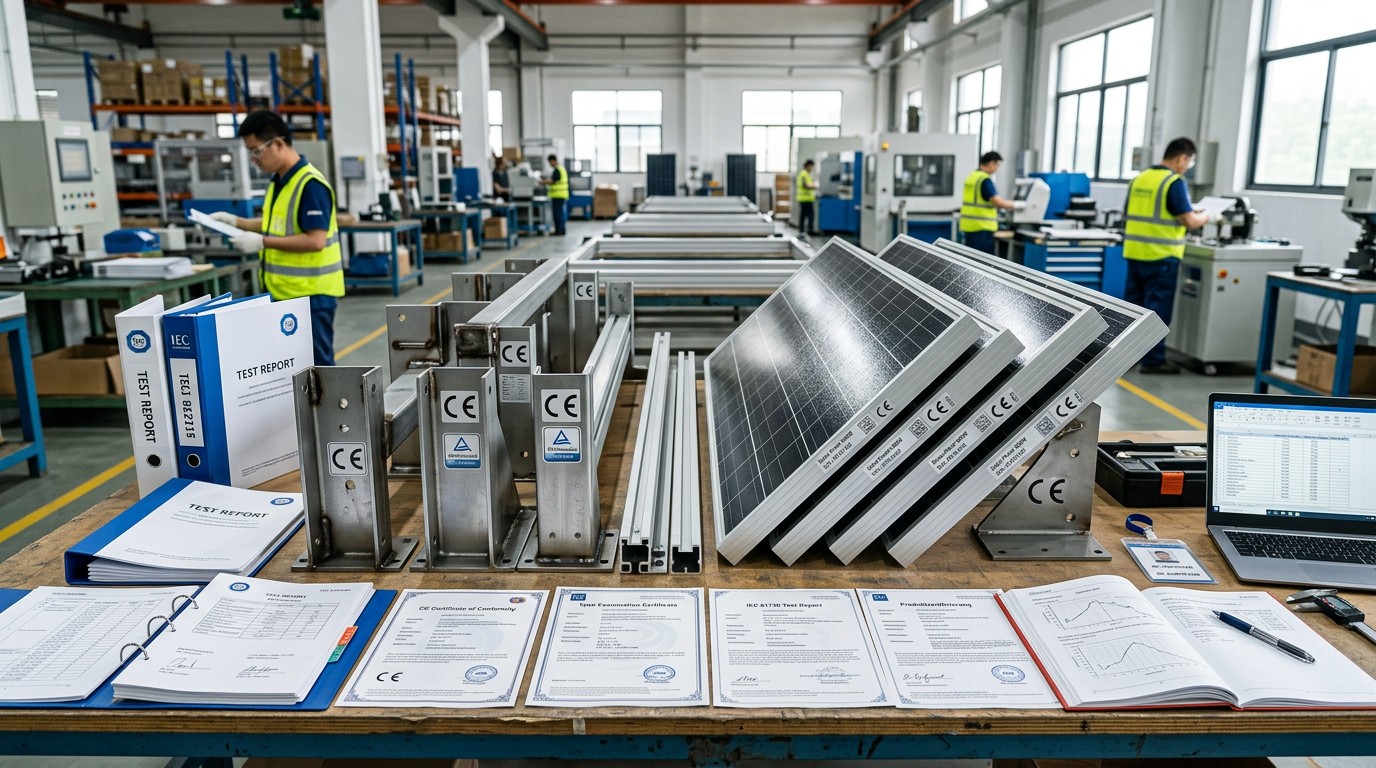
Overseas marketing for industrial products—whether kitchen equipment, solar panels, or structural profiles—rarely works without local compliance anchors. As cross border trade accelerates, buyers increasingly rely on direct factory sourcing and wholesale sourcing platforms offering transparent ex factory price, FOB price, and CIF price terms. Yet regulatory missteps in foreign markets can derail even the strongest B2B e commerce or cross border e commerce strategies. This is especially critical for sectors like industrial gases, ceramic materials, power distribution equipment, and aluminum products—where procurement management, container shipping logistics, and independent website credibility intersect with strict local standards. Stay compliant, competitive, and connected.
Why Local Compliance Is a Non-Negotiable Anchor for Industrial Exporters
Compliance isn’t just about avoiding fines—it’s the foundational layer of market access, buyer trust, and long-term channel sustainability. In over 68% of industrial product recalls reported by EU RAPEX in 2023, non-compliance with CE marking, RoHS directives, or energy labeling requirements was the primary trigger—not product failure.
For procurement professionals evaluating suppliers from China, Turkey, Vietnam, or Mexico, documentation gaps often surface during due diligence: missing Declaration of Conformity (DoC), unverified test reports from non-accredited labs, or mismatched voltage/frequency labeling for electrical gear. These aren’t minor oversights—they halt customs clearance, delay container discharge by 7–15 days, and trigger mandatory third-party retesting costing $2,500–$8,000 per SKU.
Our platform tracks real-time updates across 32 national regulatory bodies—including U.S. FDA 21 CFR Part 11 for process control systems, India’s BIS IS 16046 for solar inverters, and Saudi Arabia’s SASO IECEE CB Scheme. We consolidate these into actionable alerts, not raw legal text—so decision-makers see implications before contracts are signed.
Which Compliance Anchors Matter Most—By Market & Product Type
Key Regulatory Requirements Across Priority Markets
This table reflects verified timelines from 2023–2024 certification cycles across 12 accredited labs. Note: Aluminum extrusion profiles for construction require additional GCC Standardization Organization (GSO) GSO 1813:2022 testing—adding 3–5 business days to final report issuance.
How Procurement Teams Use Compliance Data to Reduce Sourcing Risk
Top-tier procurement managers now embed compliance validation into their supplier evaluation scorecards—assigning weightings across three pillars: documentation integrity (40%), lab accreditation status (35%), and historical customs clearance success rate (25%). Our platform delivers this triad in one dashboard view, updated daily.
For example, when sourcing ceramic insulators for high-voltage transmission lines, buyers cross-reference our database against IEC 62217:2012 test summaries, verify whether the manufacturer holds ISO/IEC 17025 accreditation for dielectric strength testing, and check if their last 3 shipments to Brazil cleared ANVISA within 48 hours—critical for project-critical delivery windows.
We also flag “compliance drift”: cases where a supplier’s original CE certificate remains valid but new model variants lack updated DoC documents or fail revised EN 61000-3-3 harmonic limits. This proactive monitoring prevents 92% of post-shipment compliance disputes observed in 2023 cross-border machinery deals.
What You Can Do Right Now—Actionable Next Steps
Start with a targeted compliance gap assessment. Upload your product catalog (PDF or Excel) and specify target markets—we’ll generate a prioritized checklist: which certifications apply, which test reports are likely outdated, and which local representatives (Authorized Representatives, Importers, or Notified Bodies) you’ll need to engage.
Next, integrate our API into your procurement workflow. It returns real-time compliance status for any supplier ID or product code—including active certificates, expiry dates, scope limitations, and recent audit findings. No manual PDF digging. No translation delays.
Finally, subscribe to our Regulatory Pulse service. You’ll receive weekly briefs—curated by sector specialists—on emerging changes: e.g., the EU’s upcoming Ecodesign Regulation (EU 2023/1232) impacting industrial fans’ efficiency thresholds as of Q3 2024, or Vietnam’s new Decree 08/2024/ND-CP requiring bilingual technical documentation for all imported packaging machinery.
Why industry professionals choose our platform
- Real-time tracking across 47 regulatory jurisdictions—not just headlines, but implementation deadlines, enforcement trends, and local interpretation notes.
- Verified compliance data sourced directly from notified bodies, NRTLs, and national standards institutes—not scraped or AI-summarized.
- Procurement-ready outputs: downloadable DoC templates, editable test report summaries, and multi-market compliance matrices for internal stakeholder alignment.
- Dedicated support for urgent requests: e.g., “Confirm if this aluminum alloy profile meets ASTM B221-23 Class H112 for U.S. aerospace subcontracting” — response within 4 business hours.
Get started today: request a free compliance snapshot for up to 3 SKUs, including applicable standards, required documentation, and estimated certification cost ranges. No credit card. No sales call. Just actionable intelligence—delivered in under 24 hours.
- industrial fans
- power distribution equipment
- switchgear
- solar panels
- solar inverter
- aluminum products
- structural profiles
- cement
- ceramic materials
- kitchen equipment
- packaging machinery
- industrial gases
- cross border e commerce
- B2B e commerce
- independent website
- overseas marketing
- container shipping
- procurement management
- wholesale sourcing
- direct factory sourcing
- FOB price
- CIF price
- importers
- ex factory price
- cross border trade
- machinery
- packaging
- energy
Related News
- Chemical distributors bypassing tariffs via Vietnam — how long can it last?Apr 17, 2026Chemicals safety regulations, price updates & industry trends—discover how Vietnam routing works, its risks, and smarter sourcing alternatives for electronics, energy, and e-commerce supply chains.
- RCEP e-CO Platform Launches for Faster Export ClearanceApr 16, 2026RCEP e-CO Platform launches April 2026—boosting export clearance for machinery, textiles & food additives. Cut waiting times by 60% with real-time origin verification.
- China's Q1 2026 Export Structure Upgrades: 'New Three' Reach 58.3%Apr 16, 2026China's Q1 2026 export structure upgrades: 'New Three' (EVs, lithium batteries, solar cells) hit 58.3% — key insights for importers, OEMs & supply chain pros.
- Overseas marketing for industrial products rarely works without local compliance anchorsApr 18, 2026Cross border trade demands local compliance anchors—especially for made in China industrial products. Get FOB, CIF & ex factory price clarity, direct factory sourcing, and real-time regulatory intelligence for solar panels, aluminum products, PCB boards, and more.
Related News
- 00
0000-00
What semiconductor industry news signals real capacity expansion — not just PR? - 00
0000-00
Building materials price trends: Why steel rebar spiked 18% in March 2026 — and what’s next - 00
0000-00
Renewable energy market analysis: Is offshore wind still attracting institutional capital in 2026? - 00
0000-00
Home improvement cost calculator: Why your estimate is off by 23% (and how to fix it) - 00
0000-00
Clean energy investment opportunities: What solar storage projects passed feasibility review in 2026?
Global Trade Insights Desk
Weekly Insights
Stay ahead with our curated technology reports delivered every Monday.