




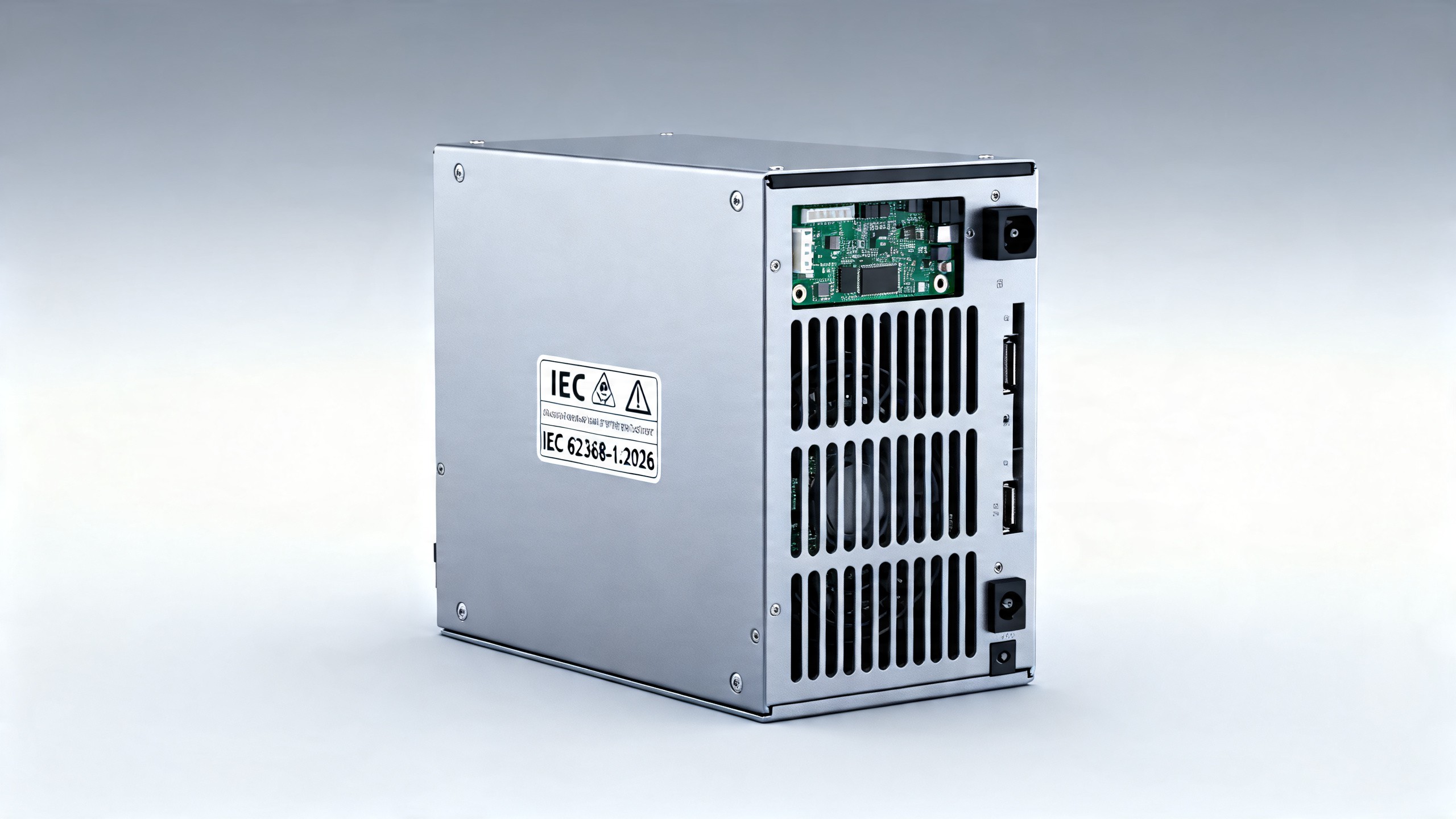
International Electrotechnical Commission (IEC) released the updated safety standard IEC 62368-1:2026 on April 15, 2026, replacing the 2014 edition. This update directly impacts manufacturers and exporters of audio/video and information technology equipment—particularly those supplying to the EU, UK, South Korea, Singapore, and over 30 other countries that have initiated adoption procedures. The deadline for certification transition is set for Q1 2027, making timely compliance critical to avoid market access disruption.
Event Overview
The International Electrotechnical Commission (IEC) officially published IEC 62368-1:2026 on April 15, 2026. This revision supersedes IEC 62368-1:2014. At least 30 countries—including the European Union, United Kingdom, South Korea, and Singapore—have publicly begun harmonization or adoption processes. Chinese exporters of audio/video (AV) and IT equipment must complete product testing and certification renewal by the end of Q1 2027 to maintain uninterrupted access to these markets. The new edition introduces requirements related to thermal management, arc fault protection, and AI-driven power supply systems.
Industries Affected by the Update
Direct Exporters of AV and IT Equipment
These enterprises face immediate regulatory exposure: non-compliant products may be rejected at customs or withdrawn from shelves post-deadline. Impact manifests in mandatory retesting, updated technical documentation, and potential design modifications—especially for devices incorporating adaptive power control or high-density thermal layouts.
Contract Manufacturers and OEMs
OEMs and EMS providers supplying finished goods or subassemblies must verify design alignment with the 2026 edition’s new clauses—e.g., arc tracking resistance in PCB layout or temperature rise thresholds under sustained AI workload. Failure to validate early may delay customer certification timelines and trigger contractual liability.
Suppliers of Power Management and Thermal Components
Component vendors—especially those providing AI-optimized DC-DC converters, smart battery modules, or advanced heat sinks—must ensure their datasheets and test reports support claims relevant to the new standard’s requirements on dynamic load response and localized hot-spot mitigation.
Certification and Testing Service Providers
Laboratories and conformity assessment bodies are adjusting test protocols and capacity planning to accommodate increased demand for verification against the updated thermal, arc, and AI-related clauses. Lead times for full-system evaluation are expected to lengthen as early adopters submit applications ahead of the Q1 2027 deadline.
What Enterprises and Practitioners Should Focus On Now
Monitor official national transposition timelines
While IEC publishes the base standard, adoption depends on national standards bodies (e.g., CENELEC in the EU, BSI in the UK). Enterprises should track publication dates of EN/BS/KN/KS adoptions—not just the IEC release—to confirm exact applicability windows and transitional provisions.
Prioritize product categories with AI-integrated power systems or compact thermal designs
Analysis来看, devices featuring real-time power throttling, edge inference accelerators, or fanless enclosures are most likely to require design iteration. Start with high-volume or high-risk SKUs—not blanket re-evaluation across entire portfolios.
Distinguish between regulatory signal and operational readiness
From industry perspective, the April 2026 publication marks the start of a 9–12 month implementation runway—not an immediate enforcement date. However, certification bodies are already accepting pre-assessment submissions; delaying internal gap analysis until late 2026 risks bottlenecked lab access and missed deadlines.
Update supplier communication and procurement specifications
Current more appropriate than waiting for formal notices: revise component procurement specs to reference IEC 62368-1:2026 (not just “latest edition”), request updated test reports from key suppliers, and align internal design review checklists with the new thermal and arc fault clauses.
Editorial Perspective / Industry Observation
This update is best understood not as a sudden regulatory shock, but as a structured evolution reflecting convergence in safety expectations across intelligent electronics. Observation来看, the inclusion of AI-driven power behavior signals a broader shift—from static hazard modeling toward dynamic system-level risk assessment. Analysis来看, the 2026 edition functions less as a final standard and more as a foundation for future updates addressing generative AI hardware, distributed sensing, and autonomous thermal regulation. From industry angle, sustained attention is warranted not only for compliance but also for anticipating how next-generation safety frameworks will shape R&D investment cycles and supply chain governance.
Conclusion
IEC 62368-1:2026 represents a calibrated, internationally coordinated step—not a disruptive reset—in AV/IT equipment safety regulation. Its significance lies not in radical novelty, but in the operational discipline it demands across design, sourcing, and certification workflows. Current more suitable interpretation is that this is a near-term compliance milestone embedded within a longer-term trend toward performance-based, system-aware safety assurance.
Source Attribution
Main source: International Electrotechnical Commission (IEC), official publication notice for IEC 62368-1:2026 (April 15, 2026).
Areas requiring ongoing observation: National adoption status and transitional arrangements issued by CENELEC, BSI, KATS, and SPRING Singapore—none confirmed beyond initial announcement phase as of publication date.
Related News
- Vietnam Enforces Bilingual Energy Label for E&E Products from Apr 2026Apr 17, 2026Vietnam mandates bilingual Vietnamese-English energy labels for E&E products from Apr 2026—critical for exporters, OEMs & importers in the Vietnam-China supply chain.
- Indonesia Mandates CNAS Lab Reports for Imported Building Materials from July 2026Apr 17, 2026Indonesia mandates CNAS lab reports for imported building materials from July 2026 — critical for ceramics, fire doors & waterproofing. Act now to ensure compliance and market access.
- USTR Launches Section 301 Review on Chinese WearablesApr 17, 2026USTR Launches Section 301 Review on Chinese Wearables — key implications for TWS earbuds, smartwatches & health bands. Stay ahead of tariffs, compliance shifts & supply chain risks.
- IEC 62368-1:2026 Published — Export Compliance Deadline Q1 2027Apr 17, 2026IEC 62368-1:2026 is live — meet the Q1 2027 export compliance deadline for AV/IT equipment in EU, UK, Korea & more. Act now to avoid market access disruption.
Related News
- 00
0000-00
Red Sea Tensions Lift Asia-Europe Freight Costs 23% Weekly - 00
0000-00
Shanghai Port Launches Export Compliance Pre-Check Channel - 00
0000-00
Vietnam Enforces Bilingual Energy Label for E&E Products from Apr 2026 - 00
0000-00
Indonesia Mandates CNAS Lab Reports for Imported Building Materials from July 2026 - 00
0000-00
USTR Launches Section 301 Review on Chinese Wearables
Policy Review Desk
Weekly Insights
Stay ahead with our curated technology reports delivered every Monday.