
Energy Industry News: Policy and Supply Signals That Affect Power Costs





Energy Industry News: Policy and Supply Signals That Affect Power Costs
Power costs can shift before a supplier updates its quotation. For procurement teams, tracking energy industry news helps reveal the policy decisions and supply pressures behind those changes—from fuel availability and grid constraints to carbon pricing and electricity tariff adjustments. Understanding these signals can support better contract timing, supplier discussions, and production budgeting. The challenge is distinguishing developments that affect a purchase from headlines that merely sound significant.
A fall in wholesale electricity prices does not necessarily mean a manufacturer’s next invoice will be lower. Its energy contract may reset later, network charges may increase, or production may run during expensive peak hours. Useful market analysis follows the route from a policy or supply event to the actual cost exposure of a factory, processing plant, or warehouse.
Start with the electricity bill, not the headline
Industrial electricity costs usually contain several components: the energy consumed, transmission and distribution charges, taxes or levies, and sometimes demand or capacity charges. Their names and calculation methods vary by jurisdiction. In competitive electricity markets, a supplier’s contract also determines how wholesale movements reach the customer. Under regulated tariffs, approved rate changes may matter more than daily market prices.
This distinction matters when reviewing a supplier’s request for an energy surcharge. A manufacturer may face higher electricity costs even while fuel prices decline, but that explanation needs evidence. Ask which bill component changed, when it became effective, and whether it applies to the facility producing your goods. A national energy headline alone is not a defensible basis for a price adjustment.
Also separate electricity exposure from total energy exposure. Glass production, ceramics, chemicals, and other heat-intensive processes may use fuel directly. A gas price increase can therefore affect production through both process heating and electricity generation. Counting the same increase twice, however, can overstate the justification for a surcharge.
Policy signals: timing and eligibility determine the impact
Tariff revisions and the limits of price protection
A proposed tariff is not an effective tariff. Regulatory announcements should be read for approval status, implementation dates, customer categories, and transitional arrangements. An adjustment affecting residential users may have little relevance to an industrial connection. Likewise, support measures may depend on consumption levels, sector classification, or an application process.
Temporary price caps and subsidies deserve particular attention near their expiry dates. They may cushion costs while leaving the underlying exposure unchanged. When support is scheduled to end, check whether a supplier’s quotation assumes continuation. Otherwise, a seemingly stable price can become a renegotiation request during delivery.
Carbon costs do not reach every factory in the same way
Where emissions pricing applies, fossil-fuel generators may include carbon costs in their offers. How much reaches electricity buyers depends on market design, generation mix, contract structure, and any compensation arrangements. Some industrial facilities also face direct emissions obligations, separate from the carbon cost embedded in purchased power.
Cross-border carbon measures require a different analysis. They may create reporting obligations or import-related costs without directly changing a factory’s electricity tariff. Buyers should establish the product scope, reporting period, calculation rules, and applicable treatment of electricity-related emissions from official guidance. “Carbon regulation increased our costs” is too broad to evaluate without those details.
Longer-term policy signals include power-plant retirement plans, renewable-energy support, grid investment approvals, and connection rules. These can change future availability, but announcements are not operating capacity. Permitting, financing, equipment delivery, and commissioning determine when a project can actually affect supply.
Supply pressures are local, even when the news is global
Fuel availability is an obvious starting point. Gas storage, pipeline outages, liquefied natural gas deliveries, coal transport, and import restrictions can influence generation costs. In markets where gas-fired plants frequently set the marginal electricity price, gas-market changes can have a pronounced effect. Elsewhere, hydropower conditions, coal availability, or nuclear outages may be more relevant.
The question is not simply whether fuel is becoming more expensive. It is whether the affected fuel matters to the supplier’s regional power system during the hours when the facility operates.
Weather can create overlapping pressures. Heat may raise cooling demand while limiting the output of some thermal plants. Drought can constrain hydropower. Low wind output may increase reliance on dispatchable generation. None of these conditions guarantees a price spike: available reserves, imports, demand response, and transmission capacity influence the outcome.
Grid constraints can also separate nearby markets. Generation may be available nationally but difficult to deliver into a congested industrial area. Depending on local arrangements, that can appear through regional prices, network charges, curtailment, or connection restrictions. For sourcing decisions, a facility’s grid location can be more informative than the country’s average electricity price.
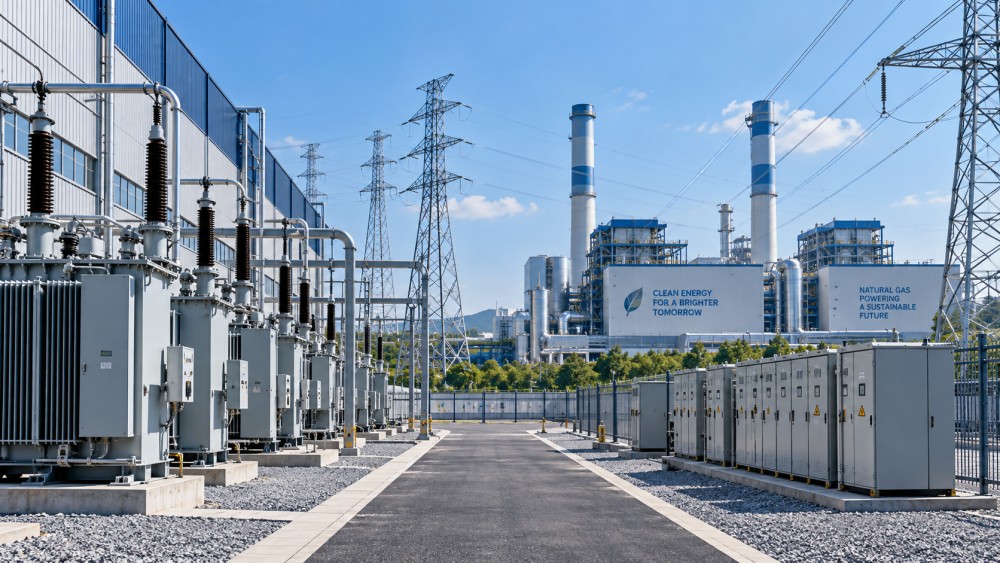
Reliability deserves its own assessment. A lower published tariff may be offset by backup generation, interrupted batches, restart losses, or missed shipments. Continuous-process manufacturers can be especially sensitive to outages. Buyers should examine continuity arrangements alongside price rather than treating reliable power as a separate operational detail.
Why more renewable generation does not guarantee a lower bill
Wind and solar can reduce wholesale prices when output is strong, but annual averages conceal hourly differences. A factory operating mainly outside solar production hours may capture less benefit than a daytime operation. Low or negative wholesale prices also do not necessarily flow through to fixed-price customers or offset network charges.
Renewable expansion therefore makes the consumption profile increasingly relevant in markets with time-sensitive pricing. Storage, flexible production schedules, and demand response may help, but their economics depend on tariff rules and operational constraints. Moving a shift is not worthwhile if labor costs, quality risks, or delivery disruption exceed the electricity saving.
Power purchase agreements can provide longer-term price visibility, although they are not automatically a complete hedge. Buyers need to understand volume commitments, generation variability, settlement arrangements, and exposure to the difference between generation and consumption locations. A renewable-energy certificate alone should not be treated as protection against electricity price changes.
Read market indicators against the purchasing calendar
Procurement needs a manageable monitoring routine, not an endless news feed. Match each signal to the decision it could change:
- Before quotation approval: check effective tariffs, quote validity, and the supplier’s stated basis for energy adjustments.
- Before contract renewal: review forward electricity prices where available, fuel-market conditions, and scheduled policy changes. Forward prices indicate current market expectations and risk pricing; they are not reliable forecasts.
- During production: follow grid notices, planned outages, curtailment warnings, and disruptions that could affect delivery.
- For longer-term sourcing: examine grid access, credible generation projects, and the facility’s ability to manage peak demand or interruptions.
Source quality matters. Regulators and utilities are the appropriate starting points for tariff decisions; system operators publish operational information; official market operators and exchanges provide relevant price data where available. Fuel inventories and trade statistics need their reporting dates and geographic coverage checked. An old storage figure can create a misleading impression of current security.
Hantecorg.com’s cross-industry coverage can help connect energy industry news with materials pricing, manufacturing conditions, export updates, and logistics pressures. That wider context is useful when a supplier faces several cost changes at once. Use industry reporting to identify developments worth investigating, then verify the applicable tariff, policy text, or contract provision before changing purchasing terms.
Turn energy claims into a commercial discussion
A credible discussion starts with exposure. Ask whether the supplier buys electricity under a fixed, indexed, regulated, or mixed arrangement, and when prices reset. A fixed contract may delay the impact of rising wholesale prices; equally, falling market prices may not immediately lower its costs. Suppliers may decline to disclose sensitive contracts, but they can often provide redacted bills or a documented adjustment method.
Then examine how electricity contributes to the purchased product. A tariff increase should not automatically produce the same percentage increase in the finished-goods price. The relevant factors include electricity consumption per unit, production volume, process efficiency, and the share of total cost attributable to power. Any estimate should use facility-specific information rather than a generic industry average.
Where energy volatility warrants an adjustment clause, define the reference source, baseline date, review frequency, and calculation method. Specify whether decreases are passed through as well as increases. Avoid a clause that refers vaguely to “market conditions,” and check for overlap with material-price adjustments that already contain energy-related costs.
Contract timing also involves a trade-off. Locking prices can improve budget certainty, but may sacrifice participation in later declines. Leaving everything open preserves flexibility while increasing exposure. Staggered commitments can spread timing risk where contract options permit, although smaller volumes may affect commercial terms. The right approach depends on cash-flow tolerance, order visibility, and available alternatives—not confidence in predicting the market’s lowest point.
The next decision should be specific
Useful energy monitoring ends with a defined action: request evidence for a surcharge, revise a budget assumption, review a contract reset, or assess continuity at an exposed facility. It does not require reacting to every fuel-price movement.
For the next sourcing review, identify the production location, applicable tariff, contract reset date, and interruption exposure for the most energy-sensitive suppliers. Those four details provide a practical filter for policy and supply news. Without them, even accurate reporting can lead to the wrong purchasing decision.
Industries
Related News
- 00
0000-00
US Treasury Extends Russia Oil Sanctions Waiver by 30 Days - 00
0000-00
International Logistics Solutions for Heavy Machinery: Cost Risks and Route Planning in 2026 - 00
0000-00
Energy-saving home improvement ideas with faster payback - 00
0000-00
10 Smart Home Decoration Ideas to Make Small Rooms Look Bigger and Brighter - 00
0000-00
Shenyang Launches China's First 500,000-Ton Biomass Green Methanol/Ethanol Project
Weekly Insights
Stay ahead with our curated technology reports delivered every Monday.