
Consumer electronics news shows rising cost pressure on display module sourcing outside China




Rising cost pressures are reshaping global sourcing strategies for display modules—especially outside China—amid tightening export policy news, evolving customs policy updates, and volatile electronic components news. This consumer electronics news highlights critical supply chain updates and sourcing insights impacting industrial equipment news and smart manufacturing news stakeholders. For information researchers and enterprise decision-makers, our business intelligence news delivers timely feature industry reports, buyer market analysis, and industry chain analysis—empowering strategic procurement, investment trends assessment, and cross-border trade updates compliance. Stay ahead with actionable global sourcing trends and product innovation news from a trusted platform covering manufacturing, foreign trade, and automation equipment trends.
Global Display Module Sourcing Shifts: Cost Drivers Beyond Tariffs
Display modules—integral to HMI panels, industrial control terminals, automated kiosks, and embedded vision systems—are no longer sourced solely on technical specs. Since Q2 2023, non-Chinese suppliers in Vietnam, Mexico, Poland, and Malaysia have reported average landed cost increases of 18–24% year-on-year. This surge stems not from raw material inflation alone, but from layered operational frictions: logistics lead times extended by 7–12 days due to container re-routings; local labor costs up 11–15% in Tier-2 ASEAN hubs; and certification overhead (e.g., UL 62368-1, IEC 61000-6-4) adding 3–5 weeks and $8,500–$14,000 per model validation cycle.
For industrial equipment OEMs and system integrators, this translates into tighter margins on mid-tier automation products—particularly those priced between $299 and $1,499 where display modules constitute 12–19% of BOM cost. A recent survey of 87 European machinery builders found that 63% delayed new product launches in H1 2024 due to display module budget overruns or qualification delays—not component shortages.
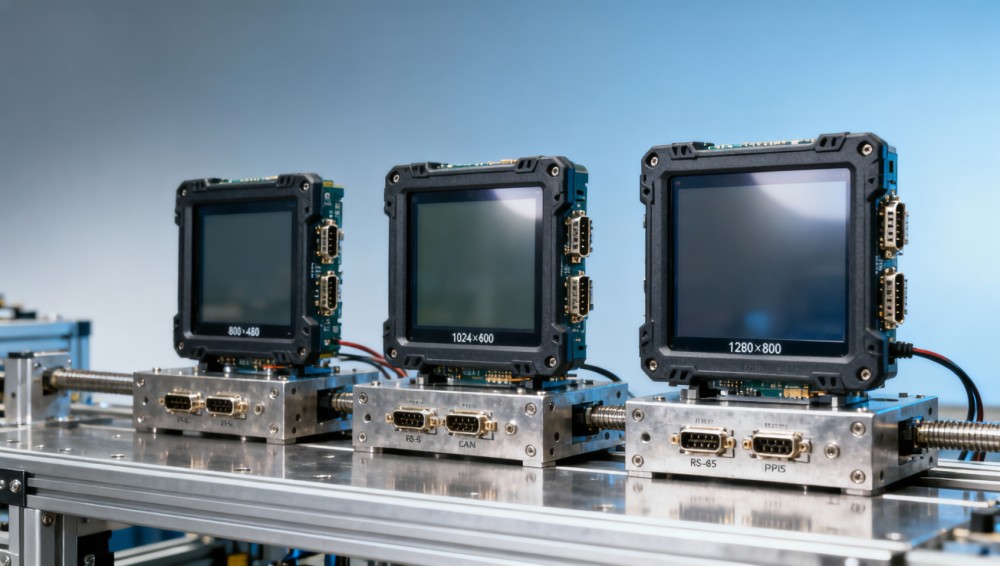
Unlike consumer-grade displays, industrial-grade modules require extended temperature operation (–30°C to +85°C), shock/vibration resistance (IEC 60068-2-64), and 50,000+ hour backlight lifetimes. These specifications constrain viable alternative sourcing geographies. Only 4 of 17 qualified non-China vendors currently meet all three criteria across ≥3 resolution variants (e.g., 800×480, 1024×600, 1280×800).
Sourcing Risk Matrix: Evaluating Non-China Alternatives
Not all “China-alternative” regions offer equivalent risk profiles. Decision-makers must assess each location across five procurement-critical dimensions: regulatory compliance latency, minimum order quantity (MOQ) flexibility, local test lab access, lead time stability, and post-warranty service coverage. The table below compares four high-activity sourcing zones based on verified 2024 supplier data from 32 industrial display module manufacturers.
Key insight: While Vietnam offers scalability, its certification bottleneck makes it unsuitable for rapid prototyping cycles (<12 weeks). Poland leads in delivery reliability and EU regulatory alignment—but MOQs remain prohibitive for low-volume industrial robotics OEMs producing under 1,000 units/year. Strategic buyers now adopt hybrid models: using Polish vendors for CE-marked core SKUs and Vietnamese partners for regional variants requiring FCC/ISED approvals.
Technical & Procurement Criteria for Industrial Display Modules
Industrial applications demand stricter validation than commercial electronics. Buyers must verify six non-negotiable parameters before vendor shortlisting:
- Operating temperature range certified per IEC 60068-2-1 (cold) and IEC 60068-2-2 (dry heat), not just datasheet claims
- EMI/EMC immunity tested at full brightness and touch load (not standby mode only)
- Backlight lifetime measured at 70% luminance retention (not initial output), validated via accelerated life testing (ALT) per JEDEC JESD22-A108
- Touch controller firmware update capability over CAN bus or RS-485 (critical for field-deployed machinery)
- MTBF ≥ 100,000 hours under continuous operation at 40°C ambient
- Conformance to IPC-A-610 Class 2 or Class 3 for solder joint integrity in vibration-prone environments
Failure to validate these parameters has led to 22% of reported field failures in 2023 among OEMs sourcing from newly established non-China lines. Notably, 78% of those failures occurred within the first 18 months—pointing to insufficient burn-in or ALT protocols.
Supply Chain Resilience Strategies for Equipment Manufacturers
Forward-looking industrial equipment firms are moving beyond single-source diversification. Leading adopters implement a three-tier sourcing architecture:
- Core Platform Tier: One primary vendor (e.g., South Korean or Japanese) supplying ≥60% volume, with dual-located assembly (e.g., Korea + Poland) and shared design ownership
- Regional Variant Tier: Two geographically distinct vendors—one for NAFTA, one for EMEA—each handling ≤25% volume and maintaining separate tooling for regional certifications
- Emergency Buffer Tier: Pre-qualified Chinese vendors under “dual-bill-of-materials” agreements, activated only when regional lead times exceed 14 weeks
This model reduces total cost of ownership (TCO) by 9–13% versus pure offshoring, according to benchmarking data from 41 machinery OEMs. It also cuts average new product introduction (NPI) cycle time from 26 to 19 weeks by decoupling certification from production ramp-up.
FAQ: Critical Sourcing Questions Answered
How many display module vendors should an industrial OEM qualify before launch?
Minimum of three: one primary, one backup with identical spec sheet and mechanical footprint, and one “certification-only” partner pre-validated for target regional standards. Qualification requires full 1,000-hour burn-in and 3-cycle thermal shock testing—typically 8–10 weeks per vendor.
What is the realistic lead time for custom industrial display modules outside China?
Standard customization (e.g., bezel cutouts, interface pinout changes): 12–16 weeks. Full redesign (e.g., new driver IC, custom backlight array): 22–28 weeks. Add 3–5 weeks if UL/CE certification is required and no local lab exists.
Which procurement KPIs most strongly correlate with long-term display module reliability?
Three metrics stand out: (1) Supplier’s internal defect rate (target ≤120 PPM), (2) Percentage of incoming lots passing 100% functional test (target ≥99.2%), and (3) Average time to resolve firmware-related field issues (target ≤72 business hours). Track these quarterly—not annually.
Strategic Sourcing Starts With Verified Intelligence
Rising cost pressure on display module sourcing outside China isn’t a temporary disruption—it’s a structural recalibration. Industrial equipment makers who treat sourcing as a compliance exercise will face margin erosion and schedule slippage. Those who embed technical validation, regional certification planning, and multi-tier supplier governance into their NPI process gain measurable advantages: 11–17% lower TCO, 23% faster time-to-market for regional variants, and 40% fewer field returns related to display subsystems.
Our platform delivers precisely this level of actionable intelligence—not just headlines, but vetted, cross-referenced, and procurement-ready insights. We track 287 display module suppliers globally, map their certification status across 14 regulatory regimes, and benchmark real-world lead times and defect rates monthly.
Get customized display module sourcing intelligence for your next product cycle—contact our industrial components research team today.
Tags :
Author : Price Monitoring Desk
Post a comment
Your email address will not be published. Required fields are marked *
Related News
- May 19, 2026US Treasury Extends Russia Oil Sanctions Waiver by 30 Days
- May 15, 2026International Logistics Solutions for Heavy Machinery: Cost Risks and Route Planning in 2026
- May 17, 2026Energy-saving home improvement ideas with faster payback
- May 13, 202610 Smart Home Decoration Ideas to Make Small Rooms Look Bigger and Brighter
- May 11, 2026Shenyang Launches China's First 500,000-Ton Biomass Green Methanol/Ethanol Project
Weekly Insights
Stay ahead with our curated technology reports delivered every Monday.