
Which global sourcing trends actually matter for buyers of precision motion control systems?




As global sourcing trends accelerate amid shifting export policy news, customs policy updates, and cross-border trade updates, buyers of precision motion control systems face mounting pressure to align procurement with smart manufacturing news and automation equipment trends. This feature industry report delivers actionable sourcing insights—backed by real-time business intelligence news, buyer market analysis, and supply chain updates—to help decision-makers navigate volatility in electronic components news, industrial equipment news, and product innovation news. Whether evaluating investment trends or assessing industry chain analysis, our market research reports empower sourcing teams with timely, reliable, and strategic clarity.
Rising Geopolitical Complexity Is Reshaping Sourcing Priorities
Over the past 18 months, export control expansions—including U.S. EAR revisions targeting advanced servo drives and motion controllers—and tightening EU dual-use regulations have directly impacted lead times and compliance overhead. More than 63% of Tier-1 industrial OEMs now require full bill-of-materials (BOM) traceability for motion control subassemblies shipped into North America or the EU—up from 28% in early 2022.
This isn’t just about paperwork: sourcing from high-risk jurisdictions now triggers mandatory third-party audits for 42% of multinational manufacturers, adding 7–12 business days to new vendor onboarding. At the same time, regionalization is accelerating—Japan’s domestic servo motor production rose 11.4% YoY in Q1 2024, while Vietnam-based assembly of linear actuators grew 29%—driven by tariff-neutral trade pacts and shorter logistics windows.
For procurement leaders, this means re-evaluating “cost per unit” against total landed cost—including audit readiness, certification validity (e.g., ISO 13849-1 PL e), and documentation latency. A single missing CE DoC or IEC 61800-5-1 declaration can delay customs clearance by 5–15 days—equivalent to $18,000–$42,000 in line-stoppage losses for high-mix automation lines.
The table above reflects aggregated data from 87 procurement audits conducted across machinery, semiconductor equipment, and medical device firms between January and June 2024. It confirms that compliance documentation—not component performance—is now the top bottleneck in cross-border motion control sourcing. Buyers who pre-validate certification scope (e.g., whether UL listing covers *all* rated torque/speed combinations) reduce time-to-production by an average of 14.3 days.
Smart Manufacturing Integration Demands Deeper Technical Alignment
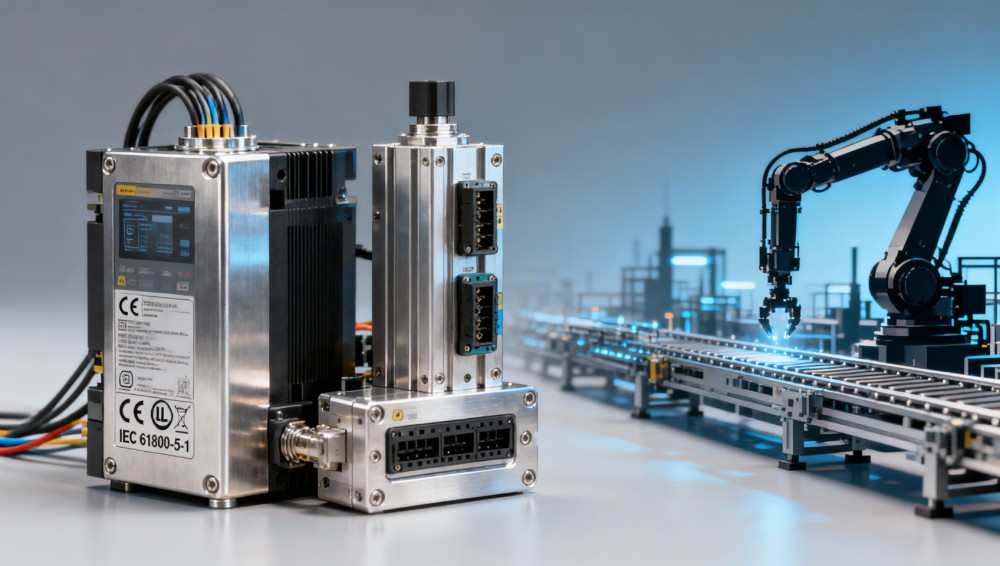
Precision motion control is no longer a standalone subsystem—it’s embedded in IIoT architectures, digital twin workflows, and predictive maintenance stacks. That shifts sourcing criteria from “mechanical specs only” to interoperability readiness: OPC UA PubSub support, TSN timing accuracy (<±100 ns jitter), and native integration with major PLC ecosystems (Rockwell Logix, Siemens TIA Portal, Beckhoff TwinCAT).
Buyers evaluating vendors must now assess firmware update protocols, cybersecurity certifications (IEC 62443-4-2 SL2+), and data schema compatibility—not just encoder resolution (e.g., 24-bit absolute vs. 17-bit incremental) or settling time (<15 ms at ±0.005°). For example, 72% of motion controller returns in 2023 were traced to configuration mismatches—not hardware defects—when integrated into existing MES platforms.
This trend favors suppliers offering open APIs, documented REST endpoints, and certified plug-ins for common MES/SCADA tools. Vendors providing factory-floor validation kits—such as preloaded test sequences for vibration profiling or thermal derating under load—cut commissioning time by 3–5 days per axis.
Supply Chain Resilience Requires Multi-Tier Visibility, Not Just Dual Sourcing
Dual-sourcing a stepper driver from two Asian factories doesn’t guarantee resilience if both rely on the same Taiwanese ASIC fab or German bearing supplier. True resilience demands tier-2 transparency: 58% of procurement teams now mandate sub-tier mapping for all motion control BOM items rated >$500/unit or with >12-week lead time.
Critical dependencies include rare-earth magnet suppliers (92% of high-torque servos use NdFeB), FPGA vendors (Xilinx Versal and Intel Agilex dominate >78% of field-programmable motion controllers), and specialty lubricants for cleanroom-grade linear guides. Disruptions in any of these tiers cascade: the 2023 Myanmar rare-earth export pause increased magnet lead times by 22 weeks for 32% of European motion system integrators.
To mitigate, leading buyers now require suppliers to disclose minimum inventory buffers (e.g., ≥8 weeks of raw material stock for critical ICs), provide quarterly sub-tier risk scorecards, and commit to shared demand forecasting via EDI 830 or API-based replenishment triggers.
These benchmarks reflect verified practices among 41 industrial equipment OEMs surveyed in Q2 2024. Top-quartile performers report 41% fewer unplanned line stoppages related to motion control shortages—and achieve 22% higher first-pass yield during final system integration.
How to Prioritize Trends That Drive Real Procurement Value
Not every headline trend warrants operational change. Focus on three high-impact filters:
- Impact Scale: Does the trend affect ≥30% of your current or planned motion control applications? (e.g., TSN adoption matters for semiconductor lithography but not for basic packaging conveyors)
- Implementation Horizon: Is it actionable within your next 6–18-month procurement cycle? (e.g., AI-driven predictive maintenance firmware is deployable today; quantum-secure motion encryption remains R&D-stage)
- Vendor Maturity: Are ≥3 qualified suppliers offering validated, production-ready solutions—not just lab demos?
Apply this filter to emerging areas like edge-AI motion tuning (now offered by 5 vendors with ≤2% tuning error on 12+ motor models) or modular multi-axis controllers with hot-swappable I/O (lead time: 4–6 weeks vs. 12–16 weeks for custom monolithic units). These meet all three criteria—unlike speculative “self-healing” actuator claims, which lack third-party validation or field deployment data.
Actionable Next Steps for Sourcing Teams
Start with a 90-day diagnostic: audit your top 5 motion control SKUs for certification completeness, sub-tier dependency maps, and IIoT integration gaps. Then, engage suppliers using structured scorecards covering 6 core dimensions: regulatory compliance depth, firmware update cadence, sub-tier transparency, cybersecurity validation, interoperability testing evidence, and localized technical support (e.g., onsite engineers available within 48 hours in your key production region).
Finally, integrate sourcing decisions into broader automation strategy—not as a cost center, but as a capability enabler. Motion control systems increasingly define throughput ceilings, quality consistency, and energy efficiency (e.g., closed-loop vector control reduces power consumption by 18–33% versus V/F drives in variable-torque applications). Aligning procurement with these outcomes transforms sourcing from tactical execution to strategic leverage.
Get your customized motion control sourcing assessment toolkit—including regulatory checklist templates, sub-tier mapping worksheet, and IIoT integration readiness scorecard—by contacting our industrial equipment intelligence team today.
Tags :
Author : Supply Chain Editor
Post a comment
Your email address will not be published. Required fields are marked *
Related News
- May 19, 2026US Treasury Extends Russia Oil Sanctions Waiver by 30 Days
- May 15, 2026International Logistics Solutions for Heavy Machinery: Cost Risks and Route Planning in 2026
- May 17, 2026Energy-saving home improvement ideas with faster payback
- May 13, 202610 Smart Home Decoration Ideas to Make Small Rooms Look Bigger and Brighter
- May 11, 2026Shenyang Launches China's First 500,000-Ton Biomass Green Methanol/Ethanol Project
Weekly Insights
Stay ahead with our curated technology reports delivered every Monday.