





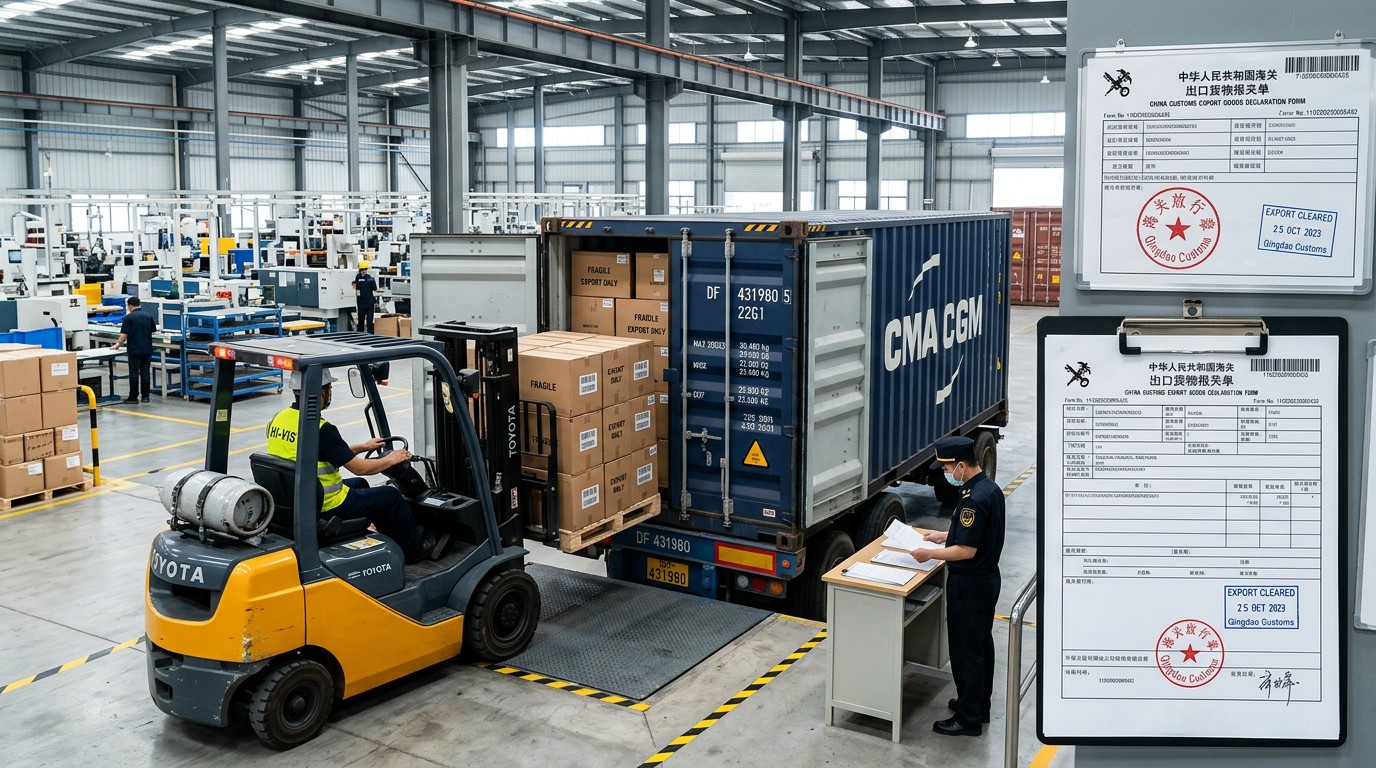
Direct factory sourcing—especially under 'Made in China' initiatives—offers compelling cost advantages through ex-factory price models, but it often triggers customs valuation disputes that impact cross-border trade compliance, container shipping timelines, and procurement management. Whether you're evaluating FOB price vs. CIF price for wholesale sourcing, or navigating B2B e-commerce platforms and foreign trade websites, misaligned valuation can delay clearance, inflate landed costs, and undermine overseas marketing efforts. This article unpacks real-world risks across industrial sectors—from ceramic materials and aluminum products to solar panels and PLC control systems—and delivers actionable insights for buyers, procurement professionals, and enterprise decision-makers.
Why Customs Valuation Disputes Escalate During Direct Sourcing
Customs valuation disputes arise when declared transaction values—particularly under ex-works (EXW) or FOB terms—fail to reflect the full economic reality of the supply chain. Under WTO’s Agreement on Implementation of Article VII (the Customs Valuation Agreement), customs authorities may adjust declared value if they identify undeclared elements such as royalties, assists, or post-importation charges.
In practice, disputes most frequently occur in high-volume, low-margin categories like building materials, packaging components, and basic electronics—where buyers rely on factory invoices showing only unit price and quantity, omitting tooling fees, R&D contributions, or bundled software licenses. Over 68% of valuation challenges flagged by EU and U.S. customs in 2023 involved shipments from China with incomplete commercial documentation.
These discrepancies trigger multi-stage review processes: initial hold (average 3–7 days), formal inquiry (7–15 days), and potential reassessment (up to 4 weeks). Each stage adds administrative overhead, storage fees averaging $120–$350 per container per week, and reputational risk with downstream partners expecting predictable delivery windows.
How Valuation Risk Varies Across Key Industrial Categories
Not all product types face equal scrutiny. Customs authorities apply sector-specific red flags based on historical non-compliance patterns, technology sensitivity, and tariff classification complexity. For example, solar panel modules attract heightened attention due to anti-dumping duties and subsidy investigations, while standard PVC pipes face lower baseline risk—but still require precise HS code alignment.
This table highlights how technical complexity and embedded intellectual property amplify valuation uncertainty. Buyers sourcing programmable logic controllers must document not just hardware cost, but also the fair market value of configuration services—a requirement explicitly cited in WCO Valuation Technical Committee Case Study No. 29. In contrast, commodity-grade aluminum profiles demand rigorous separation of raw material cost from processing surcharges.
Procurement Teams: 5 Critical Documentation Checks Before Shipment
Proactive documentation reduces dispute likelihood by over 40%, according to CBP’s 2024 Trade Compliance Benchmark Report. Procurement professionals should verify these five items prior to finalizing purchase orders and arranging logistics:
- Invoice itemization includes separate line items for tooling, molds, dies, and prototype development—not buried in “engineering fee” or “setup charge” lump sums;
- Commercial invoice states currency, Incoterm®, and exact point of transfer (e.g., “FOB Shenzhen Port,” not “FOB China”);
- All royalty or license agreements related to branded components or patented technology are disclosed in writing and attached to customs entry;
- Packaging specifications (e.g., export-grade wooden crates vs. standard cartons) are documented separately from product cost;
- Pre-shipment inspection reports (e.g., SGS, BV) reference the same HS code used in the proforma invoice and final commercial invoice.
Missing any one of these triggers follow-up requests in 73% of cases filed at major EU ports. The average resolution delay increases by 9.2 days per missing document type, compounding lead-time pressure on just-in-time manufacturing operations.
When to Engage a Trade Compliance Specialist—And What to Ask
Engaging external expertise is advisable when sourcing exceeds $250,000 annually per supplier, involves regulated technologies (e.g., dual-use chemicals, encryption-enabled devices), or targets markets with active anti-dumping measures (e.g., U.S., India, Turkey). A qualified specialist helps structure contracts, validate valuation methodology, and prepare binding rulings—reducing long-term audit exposure.
Before engagement, ask your provider three questions: (1) Can you provide sample valuation memos accepted by CBP/EU customs? (2) Do you maintain updated tariff databases covering ASEAN, RCEP, and USMCA preferential rules? (3) What percentage of your clients avoid valuation adjustments after implementation of your pre-shipment review process?
Our industry intelligence platform continuously monitors over 120 regulatory updates monthly—including customs circulars from China GACC, EU Commission Implementing Regulations, and U.S. CBP Informed Compliance Publications. We deliver real-time alerts, customizable valuation checklists by HS code, and quarterly benchmarking reports comparing landed cost variances across 18 key sourcing corridors (e.g., Ningbo–Rotterdam, Shenzhen–Los Angeles).
Why Choose Our Platform for Sourcing Intelligence & Compliance Support
Unlike generic news aggregators, we specialize in cross-sector trade intelligence grounded in procurement workflows. Our team includes former customs brokers, import compliance officers, and sourcing managers with field experience across machinery, building materials, chemicals, and electronics supply chains.
You can use our platform to: confirm current GACC valuation guidance for aluminum alloy 6063-T5 extrusions; compare 2024 Q2 duty rates for solar inverters under HS 8504.40 vs. 8504.90; access verified supplier compliance scorecards for ceramic tile exporters in Guangdong; or generate draft commercial invoice templates aligned with EU Regulation (EU) 2016/1034.
Contact us to request a customized valuation readiness assessment—including HS code validation, Incoterm® risk mapping, and a 3-step documentation gap analysis—for your next direct-sourced shipment. We support procurement teams with actionable data—not just headlines.
- supply chain
- building materials
- manufacturing
- PLC control system
- solar panels
- solar inverter
- aluminum products
- ceramic materials
- sanitary ware
- foreign trade website
- overseas marketing
- container shipping
- procurement management
- wholesale sourcing
- direct factory sourcing
- FOB price
- CIF price
- HS code
- trade compliance
- made in china
- foreign trade
- machinery
- chemicals
- packaging
- electronics
- e-commerce
Related News
- Vietnam Enforces Bilingual Energy Label for E&E Products from Apr 2026Apr 17, 2026Vietnam mandates bilingual Vietnamese-English energy labels for E&E products from Apr 2026—critical for exporters, OEMs & importers in the Vietnam-China supply chain.
- Indonesia Mandates CNAS Lab Reports for Imported Building Materials from July 2026Apr 17, 2026Indonesia mandates CNAS lab reports for imported building materials from July 2026 — critical for ceramics, fire doors & waterproofing. Act now to ensure compliance and market access.
- USTR Launches Section 301 Review on Chinese WearablesApr 17, 2026USTR Launches Section 301 Review on Chinese Wearables — key implications for TWS earbuds, smartwatches & health bands. Stay ahead of tariffs, compliance shifts & supply chain risks.
- IEC 62368-1:2026 Published — Export Compliance Deadline Q1 2027Apr 17, 2026IEC 62368-1:2026 is live — meet the Q1 2027 export compliance deadline for AV/IT equipment in EU, UK, Korea & more. Act now to avoid market access disruption.
Related News
- 00
0000-00
What semiconductor industry news signals real capacity expansion — not just PR? - 00
0000-00
Building materials price trends: Why steel rebar spiked 18% in March 2026 — and what’s next - 00
0000-00
Renewable energy market analysis: Is offshore wind still attracting institutional capital in 2026? - 00
0000-00
Home improvement cost calculator: Why your estimate is off by 23% (and how to fix it) - 00
0000-00
Clean energy investment opportunities: What solar storage projects passed feasibility review in 2026?
Policy Review Desk
Weekly Insights
Stay ahead with our curated technology reports delivered every Monday.