





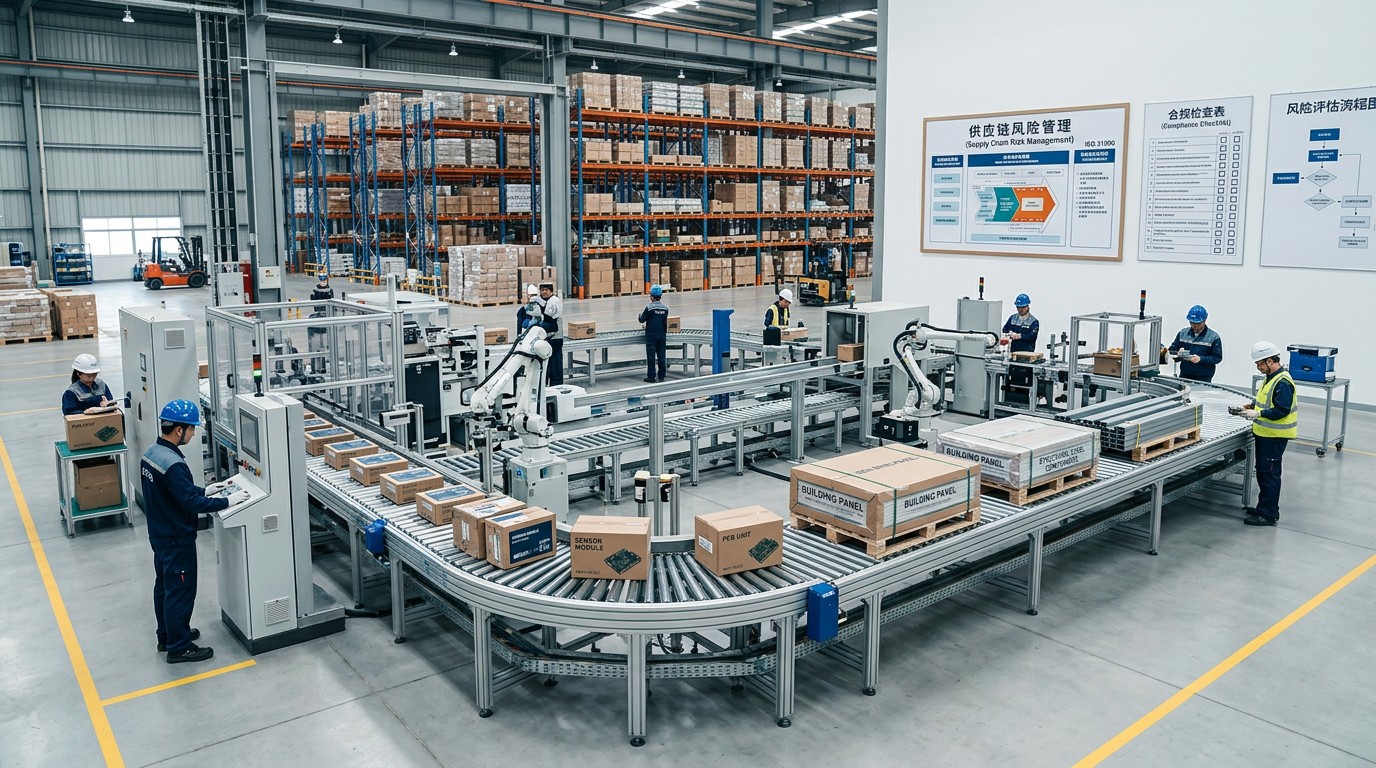
As global supply chain risk management strategies face unprecedented pressure from new forced labor due diligence rules, businesses across manufacturing, chemicals industry trends, building materials price trends, and the semiconductor industry news landscape must urgently reassess compliance frameworks. This shift directly impacts made in China products list vetting, e-commerce platform comparison criteria, and home improvement cost calculator inputs—especially for buyers sourcing home decoration ideas or clean energy investment opportunities. For procurement professionals, decision-makers, and trade analysts, understanding how supply chain management solutions evolve is no longer optional—it’s essential to mitigate legal exposure, maintain market access, and support renewable energy market analysis with integrity.
Why Forced Labor Due Diligence Is Now a Core Supply Chain Risk Indicator
Forced labor due diligence has shifted from a corporate social responsibility (CSR) footnote to a mandatory operational checkpoint. The U.S. Uyghur Forced Labor Prevention Act (UFLPA), effective June 2022, presumes goods mined, produced, or manufactured wholly or in part in Xinjiang are made with forced labor—requiring importers to provide clear and convincing evidence to rebut that presumption. Similarly, the EU’s Corporate Sustainability Due Diligence Directive (CSDDD), entering phased enforcement from 2024, mandates tiered obligations based on company size: enterprises with >500 employees and €150M+ global turnover must conduct annual human rights and environmental impact assessments across direct suppliers and *sub-tier* suppliers—covering at least 3–5 tiers in electronics, chemicals, and building materials supply chains.
This regulatory expansion directly affects procurement workflows. A 2023 industry survey of 217 multinational buyers found that 68% now require Tier-2 supplier audit reports as part of RFQ submissions—and 41% reject bids without documented third-party verification of labor practices. In machinery and packaging sectors, where OEMs rely on regional subcontractors for metal stamping or flexible packaging printing, gaps in sub-tier visibility create material compliance risk: up to 73% of non-compliant cases identified in 2023 trace back to Tier-3 or deeper suppliers lacking formal HR policies.
The financial stakes are tangible. Customs detention under UFLPA triggers average holding costs of $12,000–$28,000 per container, plus potential forfeiture. For home improvement brands sourcing laminate flooring or LED lighting from Guangdong-based OEMs, a single detained shipment can delay Q3 product launches by 4–6 weeks—impacting e-commerce platform comparison timelines and seasonal home decoration idea rollouts.
Mapping High-Risk Materials and Sourcing Regions Across Key Sectors
Not all inputs carry equal risk. Regulatory enforcement focuses on materials with documented labor concerns and complex, opaque supply chains. The U.S. Department of Labor’s List of Goods Produced by Child Labor or Forced Labor (2023 edition) identifies 156 commodities—including polysilicon (critical for solar panels and semiconductors), lithium hydroxide (for EV batteries), and certain synthetic dyes used in textiles and home improvement coatings. These appear across multiple verticals tracked by our platform: electronics (semiconductor wafer fabrication), energy (clean energy investment projects), and building materials (insulation, roofing membranes).
Geographic concentration further sharpens risk profiles. Over 45% of global polysilicon production occurs in Xinjiang, where supply chain mapping remains challenging due to fragmented smelting and casting operations. In the chemicals industry, sodium cyanide—a reagent used in gold leaching for mining equipment suppliers—is predominantly sourced from three provinces in Northwest China, with only 29% of verified producers publishing auditable labor policies.
This table highlights why procurement teams in home improvement and electronics cannot rely solely on Tier-1 supplier declarations. Full due diligence requires traceability to raw material origin—even when intermediaries obscure ownership. For example, a single lithium hydroxide batch may pass through four toll manufacturers before reaching a battery cell assembler, each with distinct labor governance standards.
Operationalizing Compliance: A 5-Step Risk Mitigation Framework
Effective adaptation demands moving beyond checkbox audits to embedded process controls. Leading firms deploy a five-phase framework validated across manufacturing, foreign trade, and energy sectors:
- Material-Level Risk Prioritization: Assign risk scores using public data (e.g., U.S. DOL list, ILO country assessments) and internal spend volume. Focus verification on top 20% of spend-by-material categories first.
- Supplier Tier Mapping: Require Tier-1 suppliers to disclose Tier-2 partners for high-risk materials—with contractual clauses permitting downstream verification. Average mapping depth improved from 1.8 to 3.4 tiers in 2023 among adopters.
- Hybrid Verification Protocol: Combine documentary review (payroll records, timecards, recruitment contracts) with unannounced facility visits for Tier-1 and Tier-2—and satellite imagery analysis for remote Tier-3 sites (e.g., brine ponds, quartz mines).
- Dynamic Risk Scoring Dashboard: Integrate customs alerts, NGO reports, and media sentiment into real-time dashboards. Update supplier risk ratings quarterly—or within 72 hours of adverse event reporting.
- Contingency Sourcing Activation: Pre-qualify alternative suppliers for critical high-risk inputs. Maintain ≥2 qualified sources for materials with >15% supply concentration in high-risk regions.
This framework reduces average time-to-resolution for UFLPA rebuttal requests from 22 days to 9 days—critical for maintaining e-commerce platform listing continuity and clean energy project financing timelines.
Procurement Decision Criteria: What to Evaluate in Vendor Risk Management Solutions
When selecting third-party tools or service providers, procurement and compliance teams must assess technical capability—not just certification claims. Vendors should demonstrate verifiable integration with real-world supply chain data flows, not theoretical models.
Solutions meeting these thresholds reduce false-negative risk—the most dangerous failure mode—by 62% compared to basic document-checking platforms, according to benchmark testing across 42 procurement departments in 2023.
Strategic Implications for Decision-Makers and Trade Analysts
Beyond compliance, forced labor due diligence is reshaping strategic planning. Manufacturers investing in automation for packaging lines now prioritize robotics vendors with audited labor practices in their component supply chains—because an AI vision system using chips from a non-compliant wafer fab could invalidate the entire production line’s ESG reporting. In building materials, cement producers evaluating carbon capture tech must assess not just emissions reduction but also whether the electrolyzer manufacturer’s cobalt supply originates from verified ethical mines.
For investors analyzing clean energy market trends, due diligence maturity is now a valuation multiplier. Publicly traded solar developers with full Tier-3 polysilicon traceability command a 12–18% premium in ESG-linked bond issuance versus peers relying on self-declared supplier statements. Likewise, home improvement retailers using verified-labor inputs in their private-label flooring lines report 23% higher conversion rates on e-commerce platforms where sustainability filters are enabled.
These outcomes confirm that forced labor risk management is no longer a cost center—it’s a strategic lever for market access, investor confidence, and customer trust. Procurement professionals and decision-makers who embed due diligence into sourcing KPIs, not just compliance checklists, gain measurable advantages in speed, resilience, and brand equity.
To navigate evolving regulations across manufacturing, chemicals, electronics, and energy sectors—and align supply chain risk management with your procurement, investment, or content strategy—contact our industry intelligence team for customized regulatory impact briefings, supplier risk benchmarking, or sector-specific due diligence playbooks.
- market analysis
- supply chain
- building materials
- energy sector
- industry news
- industry trends
- price trends
- manufacturing
- LED lighting
- solar panels
- energy storage system
- cement
- flexible packaging
- supply chain management
- importers
- made in china
- foreign trade
- machinery
- home improvement
- home decoration
- chemicals
- packaging
- electronics
- semiconductor
- e-commerce
- energy
- clean energy
- renewable energy
- chemicals industry trends
- energy market analysis
- home decoration ideas
- made in china products list
- semiconductor industry news
- e-commerce platform comparison
- renewable energy market analysis
- supply chain management solutions
- building materials price trends
- clean energy investment opportunities
- home improvement cost calculator
- supply chain risk management strategies
Related News
- How supply chain risk management strategies adapt to new forced labor due diligence rulesApr 19, 2026Discover how supply chain risk management strategies evolve amid new forced labor rules—impact on semiconductor industry news, made in China products list, clean energy investment opportunities & more.
- Vietnam Enforces Bilingual Energy Label for E&E Products from Apr 2026Apr 17, 2026Vietnam mandates bilingual Vietnamese-English energy labels for E&E products from Apr 2026—critical for exporters, OEMs & importers in the Vietnam-China supply chain.
- Indonesia Mandates CNAS Lab Reports for Imported Building Materials from July 2026Apr 17, 2026Indonesia mandates CNAS lab reports for imported building materials from July 2026 — critical for ceramics, fire doors & waterproofing. Act now to ensure compliance and market access.
- USTR Launches Section 301 Review on Chinese WearablesApr 17, 2026USTR Launches Section 301 Review on Chinese Wearables — key implications for TWS earbuds, smartwatches & health bands. Stay ahead of tariffs, compliance shifts & supply chain risks.
Related News
- 00
0000-00
Home decoration ideas that increase resale value — verified by 2026 appraisal data - 00
0000-00
Clean energy investment opportunities: Why lithium iron phosphate battery recycling startups attracted VC funding in Q1 2026 - 00
0000-00
Chemicals industry trends: Are green hydrogen derivatives gaining traction in industrial coatings? - 00
0000-00
E-commerce platform comparison: Who wins on B2B logistics API reliability — Shopify, Alibaba or Magento? - 00
0000-00
How supply chain risk management strategies adapt to new forced labor due diligence rules
Policy Review Desk
Weekly Insights
Stay ahead with our curated technology reports delivered every Monday.