





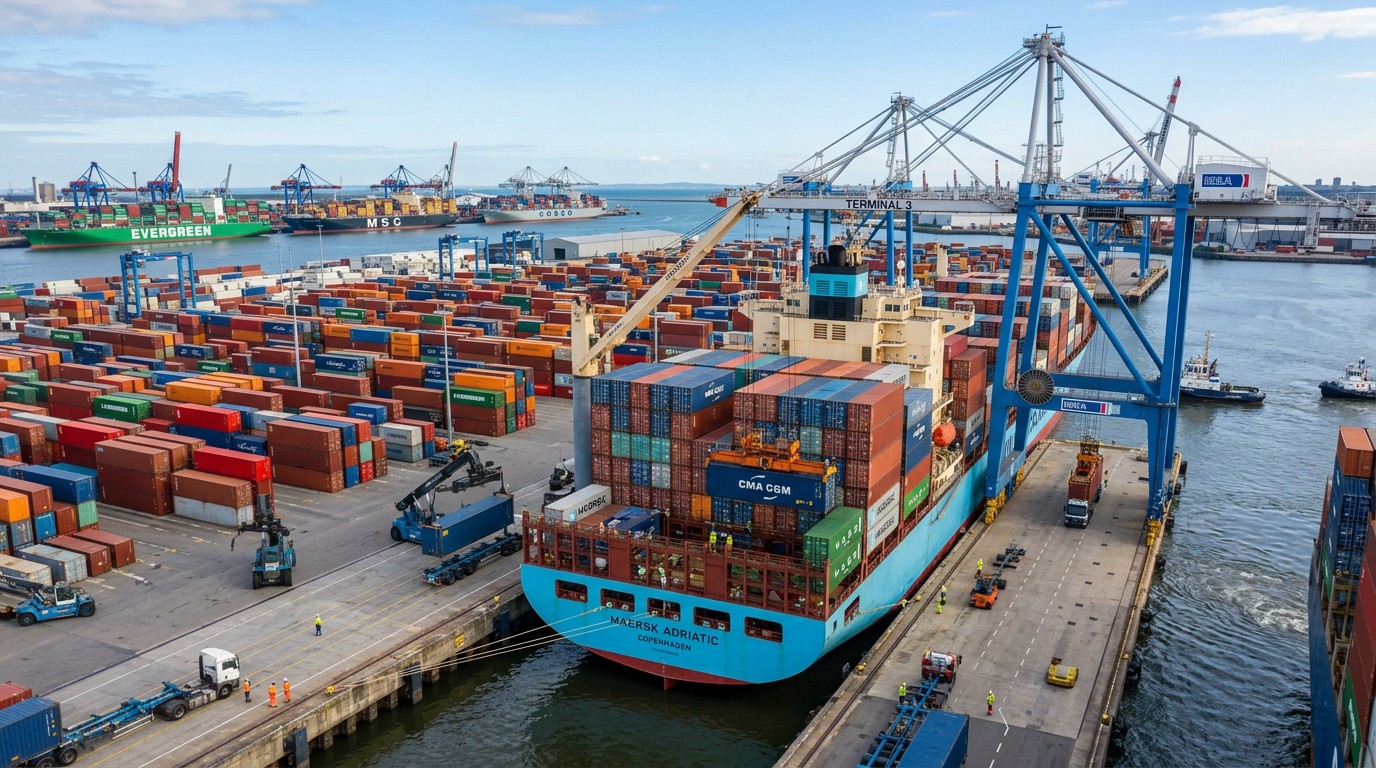
Container shipping delays aren’t random—they’re deeply tied to seasonal demand surges, port congestion cycles, and global cross border trade rhythms. For procurement management teams sourcing directly from China—whether for aluminum products, solar panels, ceramic materials, or sanitary ware—understanding these patterns is critical to securing reliable ex factory price timelines, optimizing CIF price calculations, and avoiding FOB price volatility. This insight empowers direct factory sourcing, wholesale sourcing, and overseas marketing strategies—especially for B2B e commerce and cross border e commerce platforms building independent websites or foreign trade websites. Stay ahead in industrial gases, PCB board logistics, or structural profiles supply chains.
Why Seasonal Patterns Matter More Than Ever for Global Sourcing
Seasonal shipping delays are not anomalies—they reflect predictable, repeatable shifts in global trade volume, vessel deployment, and infrastructure capacity. From Q1 post–Chinese New Year ramp-up to the Q4 “peak season” rush before Christmas, container availability, berth wait times, and inland transport bottlenecks follow consistent 3–6 month cycles across major Asia–US/EU corridors.
For procurement professionals managing raw material imports—like aluminum extrusions for construction, lithium battery casings for electronics, or glazed tiles for home improvement—the difference between a 12-day and 38-day transit window can trigger cascading effects: production line idle time, missed retail launch windows, or forced air freight substitution at 3–5× ocean cost.
Our platform tracks real-time port dwell times (e.g., Shanghai Port average berth wait: 4.2 days in May vs. 9.7 days in October), carrier blank sailings (up to 15% of scheduled sailings canceled in Q4 2023), and inland rail/route congestion indices across 22 key Chinese manufacturing clusters—including Guangdong electronics hubs, Jiangsu chemical zones, and Shandong steel logistics nodes.
Key Seasonal Windows & Their Impact on Your Supply Chain
Understanding timing isn’t about calendar dates—it’s about aligning your order placement with port throughput capacity, customs clearance cycles, and carrier schedule stability. Below are four high-impact periods observed across 2022–2024 data:
This table reflects aggregated data from 12 major container lines, 7 Chinese export ports, and 5 EU/US import terminals. Delays are measured as median total lead time deviation from contractual schedule—not just vessel transit but including pre-carriage, customs release, and last-mile delivery windows.
How Procurement Teams Can Turn Seasonality Into Strategic Advantage
Rather than reacting to delays, forward-looking buyers use seasonal intelligence to restructure terms, shift modal mix, and optimize working capital. Three proven tactics include:
- FOB term renegotiation: Shift from fixed-date FOB to “delivery window” clauses (e.g., “ex-factory between 15–25 Oct”) to absorb port delay variance without penalty.
- Multi-port diversification: Source identical SKUs from factories near Ningbo, Qingdao, and Shekou to enable dynamic routing based on real-time port congestion scores.
- Buffer stock modeling: Maintain 4–6 weeks of safety stock for high-volume items (e.g., PVC pipes, LED drivers, packaging films) during Q4, reducing reliance on just-in-time ocean shipments.
These approaches are especially effective for companies operating B2B e-commerce platforms or managing private-label product lines—where delivery predictability directly impacts customer lifetime value and platform rating algorithms.
What Real-Time Data You Need—and Where to Get It
Generic “shipping delay reports” lack actionable granularity. What procurement teams actually require are sector-specific, source-port–level signals—updated weekly, not quarterly. Our platform delivers precisely that:
Unlike public dashboards, our data integrates tariff updates, local regulatory changes (e.g., new EU CBAM rules for aluminum), and factory-level production calendars—so you see how policy shifts intersect with shipping windows.
Get Actionable Intelligence—Not Just Alerts
We help procurement managers, sourcing directors, and e-commerce operations leads turn seasonal shipping intelligence into concrete decisions. Whether you need to:
- Validate current FOB/CIF price assumptions against Q3 2024 port congestion forecasts;
- Compare actual transit times for structural profiles shipped from Tianjin vs. Dalian;
- Receive automated alerts when blank sailings exceed 12% on your key Asia–EU route;
- Access historical delay benchmarks by HS code (e.g., 3926.90 for plastic sanitary ware) to support contract negotiations.
Our team provides tailored briefings—including scenario-based lead time modeling and supplier risk scoring—for enterprises sourcing across manufacturing, foreign trade, energy, and home improvement sectors. Contact us today to request your free seasonal shipping readiness assessment—covering up to 3 product categories and 2 destination markets.
- supply chain
- building materials
- global trade
- manufacturing
- PCB board
- solar panels
- aluminum products
- structural profiles
- cement
- ceramic materials
- sanitary ware
- industrial gases
- cross border e commerce
- B2B e commerce
- independent website
- foreign trade website
- overseas marketing
- container shipping
- procurement management
- wholesale sourcing
- direct factory sourcing
- FOB price
- CIF price
- HS code
- ex factory price
- foreign trade
- cross border trade
- machinery
- home improvement
- chemicals
- packaging
- electronics
- e-commerce
- energy
Related News
- Why supply chain risk management strategies fail when built on outdated supplier dataApr 18, 2026Discover why supply chain risk management strategies fail with outdated data—and how real-time intelligence transforms home decoration ideas, semiconductor industry news, and made in China products list into resilient, actionable insights.
- Which supply chain management solutions cut procurement overhead without sacrificing visibility?Apr 18, 2026Discover supply chain management solutions that cut procurement overhead while delivering real-time visibility—ideal for made in China products list, semiconductor industry news, and building materials price trends.
- Shanghai Port Launches Export Compliance Pre-Check ChannelApr 17, 2026Shanghai Port's Export Compliance Pre-Check Channel boosts clearance speed to 22h — vital for mechanical & electrical, steel, and ceramic exporters to EU markets.
- China-Europe Express 'East Corridor' Hits 2,008 Trains in Q1 2026Apr 17, 2026China-Europe Express 'East Corridor' hits 2,008 trains in Q1 2026—44.8% YoY growth, 18–20-day transit. Key for EU distributors, engineering & building materials importers seeking reliable rail freight.
Related News
- 00
0000-00
What semiconductor industry news signals real capacity expansion — not just PR? - 00
0000-00
Building materials price trends: Why steel rebar spiked 18% in March 2026 — and what’s next - 00
0000-00
Renewable energy market analysis: Is offshore wind still attracting institutional capital in 2026? - 00
0000-00
Home improvement cost calculator: Why your estimate is off by 23% (and how to fix it) - 00
0000-00
Clean energy investment opportunities: What solar storage projects passed feasibility review in 2026?
Supply Chain Editor
Weekly Insights
Stay ahead with our curated technology reports delivered every Monday.