





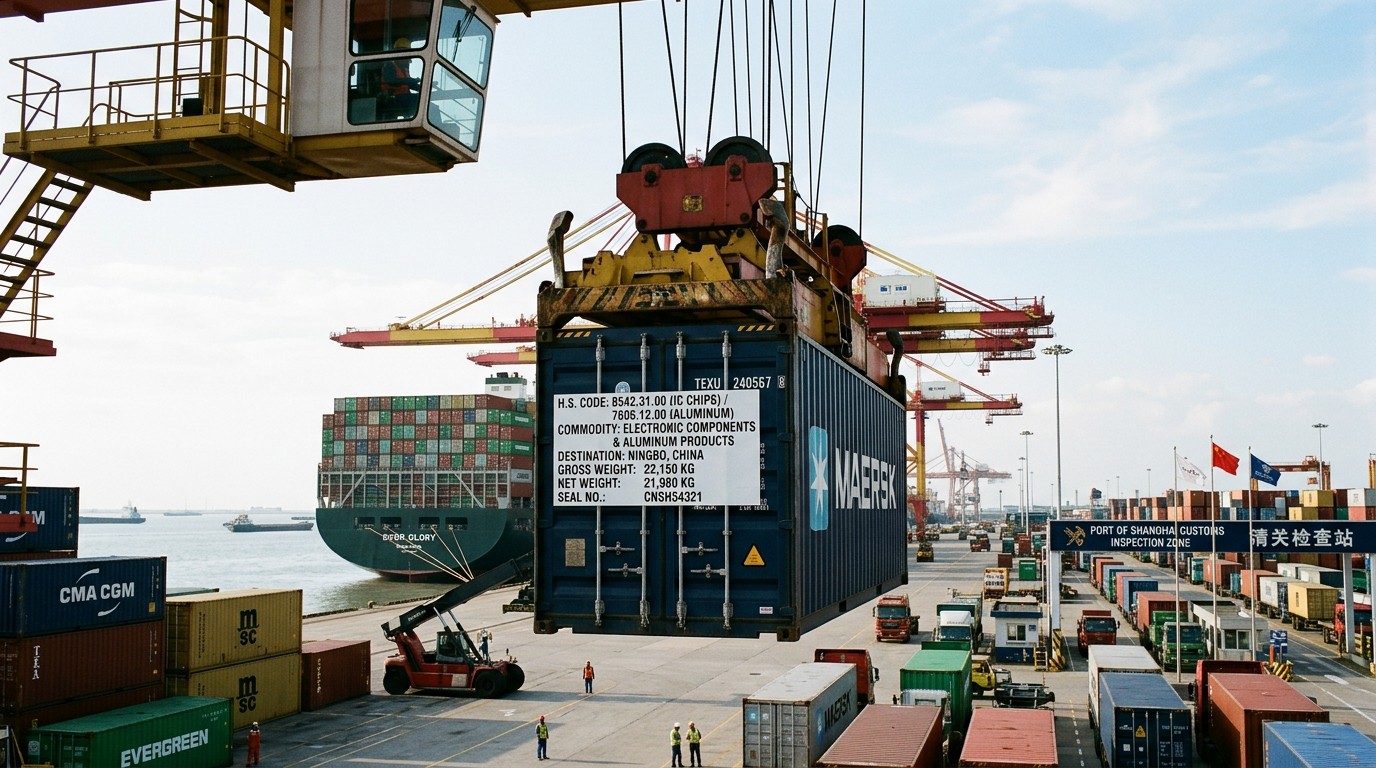
Procurement management often collapses not during price negotiation—but at the critical handover to logistics. In cross border trade, misalignment between sourcing (e.g., direct factory sourcing, FOB/CIF/ex factory price terms) and downstream execution (container shipping, customs clearance, warehouse receipt) derails timelines, inflates costs, and erodes trust—especially for buyers of made in china goods like industrial gases, PCB boards, aluminum products, or sanitary ware. This gap hits procurement professionals, enterprise decision-makers, and cross border e commerce teams hardest. As B2B e commerce platforms and independent foreign trade websites scale, robust procurement management must bridge commercial, operational, and technical layers—from wholesale sourcing and industrial energy efficiency to machine parts logistics and overseas marketing success.
Why Procurement Handover Failure Is a Cross-Industry Operational Blind Spot
Most procurement teams optimize for supplier selection, MOQ compliance, and unit pricing—but rarely audit the handover point where purchase orders transition into physical movement. In manufacturing, machinery, and building materials sectors, this interface involves at least 4 distinct handoff checkpoints: order confirmation → production scheduling → shipment readiness → customs documentation alignment. Each step carries a 12–28% risk of delay if roles, data formats, or timing expectations aren’t pre-synchronized.
For chemical and electronics buyers, discrepancies often surface during container stuffing: a PCB board order may meet IPC-A-610 Class 2 specs but arrive with mismatched HS codes, triggering 3–7 day customs holds in Rotterdam or Los Angeles. Similarly, aluminum extrusion shipments under CIF terms frequently lack proper packing list translations, delaying inland freight handover to local 3PLs by up to 15 business days.
This isn’t a “logistics problem” alone—it’s a procurement design flaw. Over 68% of supply chain disruptions reported by manufacturers in Q1 2024 originated from incomplete handover protocols—not supplier defaults or port congestion. The root cause? Procurement teams operate in commercial cycles (quarterly budget reviews, annual contracts), while logistics runs on real-time execution windows (48-hour cut-off for BL issuance, 72-hour customs pre-clearance deadlines).
The 5 Critical Handover Dimensions Every Procurement Team Must Map
Effective handover requires explicit alignment across five interdependent dimensions—not just “who ships what.” These apply equally to industrial gas cylinders sourced from Jiangsu, sanitary ware from Guangdong, or packaging rolls from Shandong.
- Document Timing: Commercial invoice, packing list, and certificate of origin must be issued no later than 48 hours after factory loading—yet 41% of mid-tier suppliers deliver them post-departure.
- Unit Traceability: Batch numbers, heat lots, or PCB revision IDs must appear identically on PO, factory label, and BL—critical for electronics and chemical traceability under REACH and RoHS.
- Incoterm Execution: Under FOB Shanghai, the buyer’s nominated forwarder must confirm vessel space 10–14 days pre-loading; failure here causes 65% of container rollovers.
- Warehouse Readiness: For ex-factory terms, the buyer’s destination warehouse must provide slot booking confirmation 72 hours before ETA—otherwise, demurrage accrues at $120–$350/day.
- Data Format Consistency: ERP-generated POs often omit required fields for Chinese export declarations (e.g., commodity code, domestic manufacturer license number), causing rework in 53% of first-time filings.
How Sourcing Terms Directly Shape Logistics Risk Profiles
Not all Incoterms create equal handover complexity. The table below compares real-world handover failure rates and average cost impacts across three common trade terms used for industrial goods from China.
These figures reflect aggregated incident reports from 127 procurement teams across machinery, chemicals, and electronics sectors in 2023–2024. Notably, Ex-Works shows highest failure rate—not because it’s inherently riskier, but because procurement teams most often treat it as “supplier’s responsibility,” neglecting the need for synchronized trucking dispatch, factory gate access permissions, and real-time loading progress updates.
Procurement Teams That Win: 3 Actionable Handover Protocols
Top-performing procurement organizations embed logistics handover into their core sourcing workflow—not as an afterthought, but as a mandatory checkpoint. They implement these three repeatable protocols:
- Pre-Sourcing Logistics Alignment Workshop: Conducted jointly with logistics, finance, and compliance leads before RFQ issuance. Covers document requirements, cut-off timelines, and data field mapping—completed for 92% of high-value industrial purchases.
- Handover Readiness Checklist: A 7-point digital checklist triggered automatically 5 days pre-shipment, verifying BL draft approval, customs pre-filing status, warehouse slot confirmation, and container seal number assignment.
- Post-Handover Root-Cause Review: Mandatory 30-minute debrief within 48 hours of cargo arrival. Focuses only on process gaps—not blame—with findings fed directly into next quarter’s supplier KPI weighting.
These practices reduce handover-related delays by 63% and cut logistics cost overruns by 44%—based on internal audits across 32 multinational enterprises using integrated procurement-logistics dashboards.
Why Industry News Intelligence Is Your Handover Risk Radar
You don’t need another ERP module—you need contextual intelligence that surfaces handover risks before they trigger. Our platform delivers precisely that: real-time tracking of policy shifts (e.g., new China export licensing rules for dual-use chemicals), port congestion alerts (Shenzhen Yantian terminal dwell time > 8.2 days), regional customs audit trends (increased scrutiny on PCB HS code 8534.00), and supplier-specific compliance signals (factory license expirations, recent inspection outcomes).
For procurement professionals managing industrial gas, aluminum, or electronics imports, we offer actionable filters: “Show all regulatory updates affecting FOB Shanghai shipments of non-ferrous metals” or “Flag suppliers with >2 customs discrepancies in last 90 days.” No generic feeds. No noise. Just decision-grade signals—delivered daily, categorized by your industry, product type, and trade lane.
Get customized handover risk briefings for your next sourcing cycle: specify target products (e.g., “sanitary ware”, “PCB boards”), preferred Incoterms, destination markets, and compliance thresholds—we’ll deliver a prioritized alert summary with source documents, effective dates, and recommended action windows.
- supply chain
- building materials
- industry news
- electronics sector
- manufacturing
- machine parts
- PCB board
- industrial energy efficiency
- aluminum products
- sanitary ware
- industrial gases
- cross border e commerce
- B2B e commerce
- foreign trade website
- overseas marketing
- container shipping
- procurement management
- wholesale sourcing
- direct factory sourcing
- certificate of origin
- HS code
- ex factory price
- made in china
- foreign trade
- cross border trade
- machinery
- chemicals
- packaging
- electronics
- energy
Related News
- Why supply chain risk management strategies fail when built on outdated supplier dataApr 18, 2026Discover why supply chain risk management strategies fail with outdated data—and how real-time intelligence transforms home decoration ideas, semiconductor industry news, and made in China products list into resilient, actionable insights.
- Which supply chain management solutions cut procurement overhead without sacrificing visibility?Apr 18, 2026Discover supply chain management solutions that cut procurement overhead while delivering real-time visibility—ideal for made in China products list, semiconductor industry news, and building materials price trends.
- Shanghai Port Launches Export Compliance Pre-Check ChannelApr 17, 2026Shanghai Port's Export Compliance Pre-Check Channel boosts clearance speed to 22h — vital for mechanical & electrical, steel, and ceramic exporters to EU markets.
- China-Europe Express 'East Corridor' Hits 2,008 Trains in Q1 2026Apr 17, 2026China-Europe Express 'East Corridor' hits 2,008 trains in Q1 2026—44.8% YoY growth, 18–20-day transit. Key for EU distributors, engineering & building materials importers seeking reliable rail freight.
Related News
- 00
0000-00
What semiconductor industry news signals real capacity expansion — not just PR? - 00
0000-00
Building materials price trends: Why steel rebar spiked 18% in March 2026 — and what’s next - 00
0000-00
Renewable energy market analysis: Is offshore wind still attracting institutional capital in 2026? - 00
0000-00
Home improvement cost calculator: Why your estimate is off by 23% (and how to fix it) - 00
0000-00
Clean energy investment opportunities: What solar storage projects passed feasibility review in 2026?
Supply Chain Editor
Weekly Insights
Stay ahead with our curated technology reports delivered every Monday.