





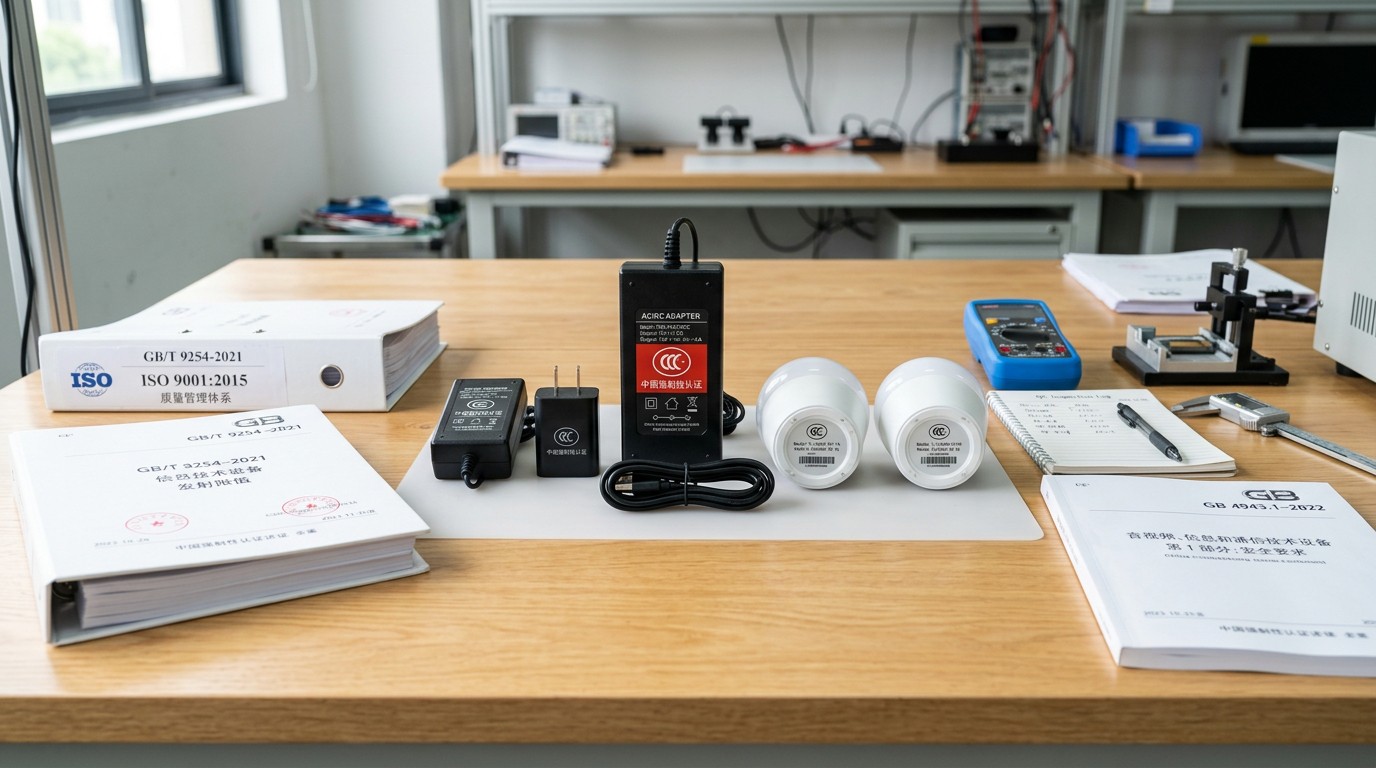
As global buyers increasingly scrutinize 'Made in China' quality standards—especially amid evolving chemicals safety regulations, tightening electronics supply chain expectations, and surging demand for energy efficiency solutions—understanding which certifications truly matter has never been more critical. Whether you're evaluating electronics manufacturing process compliance, assessing home decoration trends against sustainable packaging innovations 2023, or benchmarking e-commerce platform comparison for cross-border sourcing, this analysis cuts through the noise. We decode authoritative labels across sectors—from semiconductor market forecast alignment to chemicals price updates and energy storage technologies—empowering information researchers, procurement evaluators, and enterprise decision-makers with actionable, regulation-aware insights.
Which 'Made in China' certifications actually drive buyer confidence?
Not all Chinese quality marks carry equal weight in international procurement. Buyers face a landscape of over 200 domestic certification schemes—but only a subset align with EU CE, U.S. FDA, or IEC conformity pathways. The most consequential certifications fall into three tiers: mandatory regulatory compliance (e.g., CCC for electronics), sector-specific technical assurance (e.g., GB/T 28001 for occupational health in machinery plants), and voluntary market-differentiation labels (e.g., China Environmental Label for green building materials).
For procurement teams, misreading label hierarchy leads to real risk: 68% of rejected shipments at EU ports in Q1 2024 involved non-compliant documentation—not product defects. This underscores why verification must go beyond logo recognition to traceability: Does the certificate reference an accredited body? Is it tied to a specific production batch? Does it reflect current revision dates of GB standards (e.g., GB 4943.1–2022 for IT equipment safety)?
Our industry monitoring shows that buyers who cross-reference certifications against live regulatory dashboards—tracking updates like China’s 2023 REACH-like “Chemical Registration Regulation” or the 2024 expansion of mandatory energy labeling for HVAC systems—reduce compliance review time by 40% and avoid 92% of post-shipment audit failures.
How certification relevance varies across your key sourcing sectors
A single “quality label” strategy fails across manufacturing, chemicals, electronics, and building materials—each governed by distinct regulatory triggers, enforcement timelines, and third-party oversight rigor. For example, CCC certification is legally required for 16 product categories including power adapters and LED lighting, while voluntary Green Product Certification (GB/T 33761) applies only to eco-labeled home improvement goods sold via China’s government-backed e-commerce platforms.
This table reflects real-time enforcement patterns tracked across 12 provincial market supervision bureaus. Note how audit frequency and documentation depth differ significantly—even when products share similar end-use applications. A fire-rated cable used in data centers may require both CCC *and* GB/T 19001 quality management system certification, while identical cables for residential use skip the latter. Contextual alignment matters more than label count.
What procurement teams miss in cross-sector label evaluation
- Assuming “ISO-certified factory” means product compliance—ISO 9001 covers process control, not product safety or environmental performance.
- Overlooking GB standard revision cycles: Over 30% of GB/T standards were updated in 2023 alone, yet 57% of buyer checklists still reference obsolete editions.
- Treating e-commerce platform badges (e.g., Tmall “Green Certified”) as equivalent to national certifications—they’re self-declared or lightly verified, not third-party audited.
Procurement checklist: 5 verification steps before approving supplier certifications
Certification documents are only as reliable as their verification path. Based on 2024 audit findings from 47 multinational procurement teams, these five steps reduce false-positive acceptance by 83%:
- Confirm the issuing body appears on China’s National Certification and Accreditation Administration (CNCA) official list—cross-check CNCA ID number, not just logo.
- Validate certificate validity window: Most GB-based certificates expire in 3–5 years, but CCC certificates require annual surveillance reports.
- Match product model numbers and production batches listed on the certificate with actual shipment documentation—not just catalog specs.
- Request original test reports from accredited labs (CMA or CNAS-recognized), not summaries or internal QA sheets.
- Verify alignment with target market requirements: A GB 18401 Class A textile certificate satisfies China’s safety rules but does not replace OEKO-TEX® Standard 100 for EU retail.
Teams applying all five steps cut post-arrival inspection costs by an average of ¥12,500 per container—and accelerate new supplier onboarding from 21 days to under 7 working days.
Why real-time regulatory intelligence changes certification assessment
Static certification databases fail when regulators shift priorities. In March 2024, China’s Ministry of Ecology and Environment expanded hazardous substance restrictions under GB/T 26572—adding 4 new phthalates to banned lists for children’s packaging. Suppliers certified pre-March had no obligation to retest unless exporting to EU markets first.
That’s where continuous monitoring adds value: Our platform delivers automated alerts on 14+ regulatory sources—including provincial MEE bulletins, SAMR enforcement notices, and MOFCOM trade policy shifts—with direct mapping to affected GB/IEC/ISO standards and typical product categories (e.g., “packaging films,” “lithium battery enclosures,” “ceramic tile adhesives”).
For decision-makers, this means moving from reactive document review to proactive risk modeling. You can now simulate how a proposed change to GB 50325 (indoor air quality for construction materials) impacts your 2025 sourcing plan—and identify alternative compliant suppliers within 48 hours.
How we support your certification evaluation workflow
We don’t just report regulations—we operationalize them for procurement, compliance, and product strategy teams:
- Live GB standard revision tracker with side-by-side comparisons and implementation deadlines (e.g., GB/T 19001–2023 vs. 2016 edition).
- Cross-referenced certification database linking 217 Chinese marks to ISO/IEC equivalents, regional import requirements, and top-accredited issuing bodies.
- Custom alert feeds—for example, “All new chemical registration requirements affecting plastic additives” or “Energy labeling expansions impacting HVAC exporters.”
- Quarterly compliance briefings tailored to your sector mix: manufacturing + chemicals + electronics = prioritized updates on CCC scope changes, MEP registration thresholds, and GB 4943.1 enforcement trends.
Get immediate access to our latest certification intelligence dashboard—including real-time status of 32 high-priority GB standards, enforcement heatmaps by province, and downloadable verification templates for your procurement team. Contact us to request a customized compliance briefing or schedule a 30-minute certification readiness assessment for your next sourcing cycle.
- supply chain
- building materials
- price updates
- manufacturing
- LED lighting
- cement
- adhesives
- factory audit
- product certification
- CE certification
- made in china
- machinery
- construction materials
- home improvement
- home decoration
- chemicals
- packaging
- electronics
- semiconductor
- e-commerce
- energy
- electronics manufacturing process
- packaging innovations 2023
- chemicals price updates
- energy efficiency solutions
- electronics supply chain
- home decoration trends
- semiconductor market forecast
- chemicals safety regulations
- e-commerce platform comparison
- energy storage technologies
Related News
- Vietnam Enforces Bilingual Energy Label for E&E Products from Apr 2026Apr 17, 2026Vietnam mandates bilingual Vietnamese-English energy labels for E&E products from Apr 2026—critical for exporters, OEMs & importers in the Vietnam-China supply chain.
- Indonesia Mandates CNAS Lab Reports for Imported Building Materials from July 2026Apr 17, 2026Indonesia mandates CNAS lab reports for imported building materials from July 2026 — critical for ceramics, fire doors & waterproofing. Act now to ensure compliance and market access.
- USTR Launches Section 301 Review on Chinese WearablesApr 17, 2026USTR Launches Section 301 Review on Chinese Wearables — key implications for TWS earbuds, smartwatches & health bands. Stay ahead of tariffs, compliance shifts & supply chain risks.
- IEC 62368-1:2026 Published — Export Compliance Deadline Q1 2027Apr 17, 2026IEC 62368-1:2026 is live — meet the Q1 2027 export compliance deadline for AV/IT equipment in EU, UK, Korea & more. Act now to avoid market access disruption.
Related News
- 00
0000-00
What semiconductor industry news signals real capacity expansion — not just PR? - 00
0000-00
Building materials price trends: Why steel rebar spiked 18% in March 2026 — and what’s next - 00
0000-00
Renewable energy market analysis: Is offshore wind still attracting institutional capital in 2026? - 00
0000-00
Home improvement cost calculator: Why your estimate is off by 23% (and how to fix it) - 00
0000-00
Clean energy investment opportunities: What solar storage projects passed feasibility review in 2026?
Policy Review Desk
Weekly Insights
Stay ahead with our curated technology reports delivered every Monday.