





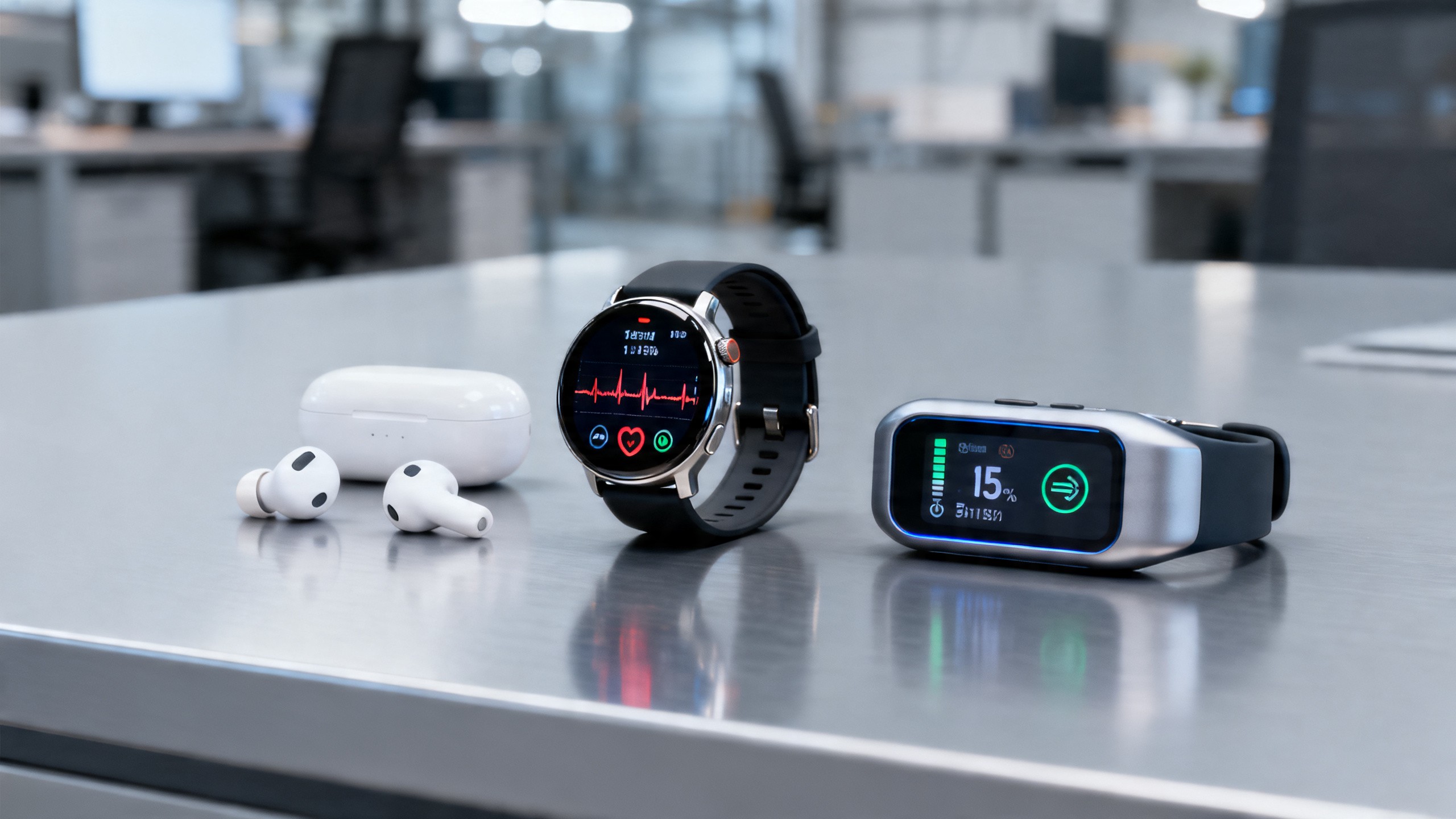
On April 15, 2026, the U.S. Trade Representative (USTR) initiated a new 301 investigation review targeting Chinese smart wearable devices—including smartwatches, wireless earbuds, and health monitoring equipment. This action directly affects exporters, OEM/ODM manufacturers, component suppliers, and compliance service providers serving the U.S. and broader Western markets. It signals potential tariff adjustments and tightening regulatory expectations, making it critical for stakeholders across the smart wearables supply chain to reassess operational and compliance readiness.
Event Overview
On April 15, 2026, the Office of the United States Trade Representative (USTR) issued a public notice launching a statutory review under Section 301 of the Trade Act of 1974 concerning Chinese smart wearable devices. The review covers smartwatches, wireless headphones, and health monitoring devices. Its stated purpose is to assess whether these products continue to benefit from or are associated with unfair trade practices. A final determination is expected by August 2026. If the original findings are upheld, new ad valorem tariffs of 15%–25% may be imposed.
Industries Affected by Segment
Direct Exporters & Brand-OEM Partners
These entities face direct exposure to potential tariff increases and heightened scrutiny during U.S. customs clearance. Impact manifests in revised landed cost calculations, longer shipment lead times due to documentation checks, and increased pressure from U.S. brand partners to demonstrate traceability and compliance beyond basic CE/FCC marking.
Contract Manufacturers & EMS Providers
Manufacturers producing smart wearables for global brands—especially those operating in Guangdong, Jiangsu, and Zhejiang provinces—may encounter new requests for localized testing reports, data flow mapping, and third-party privacy certification (e.g., ISO/IEC 27701). These requirements could extend production timelines and raise unit compliance costs.
Component & Subsystem Suppliers
Suppliers of Bluetooth SoCs, biometric sensors, battery modules, and firmware stacks may see downstream demand shifts—not necessarily volume declines, but stronger preference for components pre-validated against U.S.-aligned data governance frameworks. Requests for audit-ready documentation (e.g., source code provenance, firmware update logs) are likely to increase.
Distribution & Cross-Border Logistics Providers
Fulfillment centers, customs brokers, and freight forwarders handling smart wearables shipments to the U.S. must prepare for more frequent classification challenges (e.g., HTSUS Chapter 85 vs. 90), additional entry documentation, and possible CBP inquiries regarding origin claims and software functionality—particularly where cloud-based health analytics are embedded.
What Enterprises and Practitioners Should Monitor and Do Now
Track official USTR updates and docket submissions closely
The USTR has opened a public comment period as part of the review process. Companies should monitor the Federal Register docket (USTR-2026-001) for deadlines, stakeholder testimony, and any clarification on scope—especially whether ‘smart wearable’ definitions include hybrid devices (e.g., smart glasses with health tracking) or firmware-only updates.
Identify and isolate high-risk product categories and U.S.-bound SKUs
Not all smart wearables will be equally impacted. Prioritize internal review of models shipped to the U.S. under HTS codes 8517.62 (wireless earphones), 9102.12 (smartwatches), and 9018.90 (health monitors). Map each SKU’s bill of materials, software architecture, and data handling pathways to anticipate compliance queries.
Distinguish between policy signaling and enforceable requirements
While the 301 review raises the possibility of new tariffs, no new duties have been levied yet. Current enforcement remains under existing Section 301 Lists (e.g., List 4A). Companies should avoid premature pricing or sourcing shifts based solely on this review—instead treat it as a trigger to stress-test current compliance posture and escalation protocols.
Prepare documentation packages for data governance and localization readiness
Begin compiling evidence of data processing transparency: privacy policy versions per market, anonymization methods applied to biometric data, server location maps, and records of third-party security assessments. Even without mandatory certification today, having these documents organized supports faster response to buyer or customs requests.
Editorial Perspective / Industry Observation
From an industry perspective, this USTR review is best understood not as an imminent tariff trigger—but as a formalized signal that smart wearables are now treated as dual-use digital infrastructure, not just consumer electronics. Analysis来看, the focus on health monitoring functions and embedded connectivity suggests growing U.S. concern over data integrity and device-level cybersecurity risks. Observation来看, the timing aligns with ongoing EU AI Act implementation and FDA guidance updates for digital health tools—indicating converging regulatory attention across key Western markets. Current更值得关注的是 how U.S. brand partners translate this review into contractual terms: e.g., adding data residency clauses or requiring SOC 2 reports—even before new tariffs take effect.
It is neither a finalized outcome nor merely procedural. Rather, it reflects a structural shift: smart wearables are increasingly evaluated through trade, technology, and trust lenses simultaneously. Sustained monitoring is warranted—not because tariffs are inevitable, but because compliance expectations are already evolving in real time.
Conclusion
This USTR review marks a formal escalation in how smart wearable devices are governed at the intersection of trade policy and digital regulation. Its immediate impact lies less in new tariffs and more in accelerated compliance demands from downstream buyers and logistics gatekeepers. For affected enterprises, the most rational interpretation is not alarm—but calibration: aligning documentation, testing protocols, and supplier communications with emerging transatlantic expectations for data-responsible hardware.
Information Source
Primary source: USTR Federal Register Notice, Docket No. USTR-2026-001, published April 15, 2026. Pending developments include the USTR’s August 2026 determination and any subsequent Federal Register amendments. These remain under active observation.
Related News
- IEC 62368-1:2026 Published — AV/IT Exporters Must Comply by Q1 2027Apr 16, 2026IEC 62368-1:2026 is live — AV/IT exporters must comply by Q1 2027. Discover key changes, affected industries, and actionable compliance steps now.
- USTR Launches 301 Review on Chinese Smart WearablesApr 16, 2026USTR 301 review on Chinese smart wearables signals new tariffs & stricter compliance—key for exporters, OEMs, and suppliers. Act now.
- Vietnam Enforces Bilingual Energy Labeling for EEE ProductsApr 16, 2026Vietnam enforces bilingual energy labeling for EEE products—Vietnamese & Chinese required. Key for Chinese exporters of power adapters, LED lights, and appliances. Act now to avoid penalties!
- EU CBAM Transition Rules Finalized: Data Submission by Apr 30Apr 16, 2026EU CBAM transition rules are live: Chinese steel, aluminum & cement exporters must submit verified carbon data by Apr 30. Act now to avoid customs delays and penalties.
Related News
- 00
0000-00
Indonesia Mandates CNAS Lab Reports for Imported Building Materials from July 2026 - 00
0000-00
China's CPO Optical Module Exports Up 41%; Eoptolink First Global Vendor on US AI Infrastructure White List - 00
0000-00
IEC 62368-1:2026 Published — AV/IT Exporters Must Comply by Q1 2027 - 00
0000-00
Red Sea Tensions Lift Asia-Europe Freight Costs 23% Weekly - 00
0000-00
RCEP e-CO Platform Launches for Faster Export Clearance
Policy Review Desk
Weekly Insights
Stay ahead with our curated technology reports delivered every Monday.