





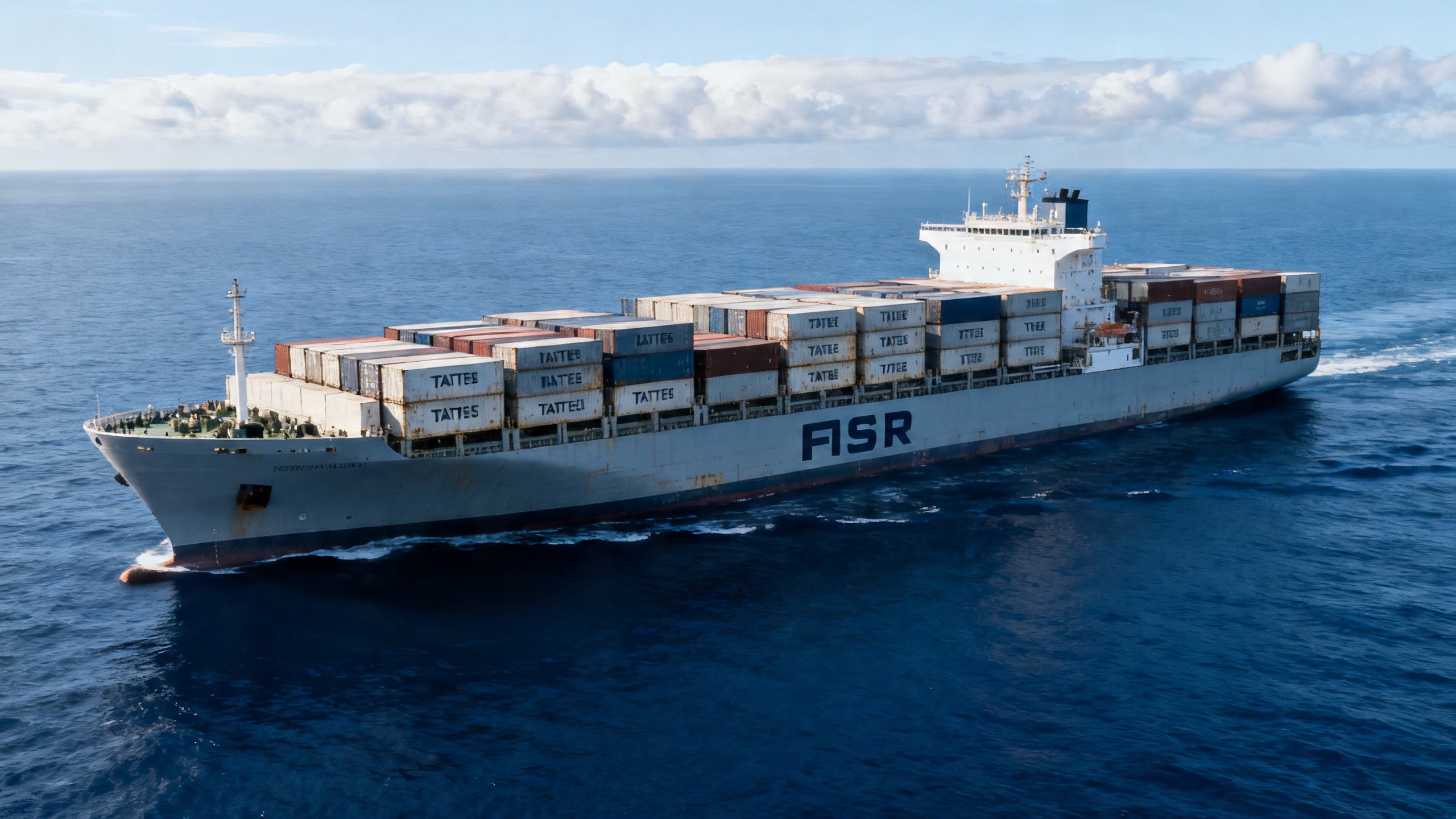
Geopolitical tensions in the Middle East have driven a sharp rise in Red Sea bypass costs, pushing spot freight rates on key Asia–Europe container routes up 23% week-on-week as of April 15, 2026. Exporters, forwarders, and European importers engaged in China–EU trade are now facing measurable pressure on logistics cost structures and delivery reliability — making this development highly relevant for stakeholders across maritime logistics, cross-border manufacturing, and international supply chain planning.
Event Overview
According to data released by the Baltic Exchange on April 15, 2026, spot freight rates on major Asia–Europe trunk routes — including Shanghai to Rotterdam — surged to $3,850 per TEU, representing a 23% weekly increase. This escalation follows renewed instability in the Red Sea region. In response to ongoing uncertainty around Suez Canal passage, several container shipping lines have reinstated Cape of Good Hope routing, extending voyage duration by 12–15 days.
Impact on Specific Industry Segments
Direct Exporters (China-based)
Chinese manufacturers exporting finished goods to Europe face immediate upward pressure on landed costs. The 23% freight rate jump directly reduces margin flexibility, especially for low-margin, high-volume products. Longer transit times also compress order-to-cash cycles and increase working capital requirements tied to in-transit inventory.
Importers & Distributors (EU-based)
European importers reliant on just-in-time replenishment are encountering tighter lead time windows and greater scheduling volatility. The return to Cape Horn routing delays arrival forecasts and increases exposure to port congestion and customs clearance variability at alternate EU gateways (e.g., Hamburg or Bremerhaven), affecting downstream retail and wholesale distribution cadence.
Supply Chain Service Providers (Freight Forwarders, NVOCCs, 3PLs)
Third-party logistics providers must now manage heightened volatility in both pricing transparency and capacity availability. Spot market rate spikes reduce predictability for contracted service level agreements (SLAs), while extended voyages demand revised inland transportation coordination, warehouse staging, and documentation timelines — particularly for time-definite services.
Procurement & Sourcing Teams (Multinational Corporations)
Global procurement units sourcing from Chinese suppliers are being prompted to reassess risk allocation in commercial terms. Key clauses under review include Incoterms® (e.g., shifting from FOB to CIF), marine cargo insurance coverage limits, and contractual allowances for force majeure–linked delivery variance — all triggered by navigational rerouting rather than port-specific disruptions.
What Relevant Enterprises or Practitioners Should Monitor and Do Now
Track official updates from maritime authorities and carrier alliances
Monitor statements from the Suez Canal Authority, IMO, and major vessel operators (e.g., Maersk, MSC, CMA CGM) regarding confirmed transit windows, security advisories, and scheduled reversion timelines to Suez routing — as these will signal inflection points for rate stabilization.
Review shipment profiles by origin port, destination terminal, and product category
Identify high-frequency lanes (e.g., Ningbo–Rotterdam) and sensitive cargo types (e.g., automotive components with strict build schedules, perishable electronics) where schedule slippage carries disproportionate operational impact — prioritizing mitigation actions for those segments first.
Validate insurance policy terms for war risk and deviation coverage
Confirm whether existing marine cargo insurance policies explicitly cover losses arising from mandatory Cape of Good Hope routing due to Red Sea insecurity — many standard policies exclude war-related deviations unless specifically endorsed.
Assess nearshoring or regional warehousing feasibility for priority SKUs
Evaluate whether holding buffer stock in EU-based bonded warehouses (e.g., in Poland or the Netherlands) for top-20 fast-moving items can offset extended ocean lead times — focusing on unit economics, duty deferment benefits, and minimum viable stock cover (e.g., 4–6 weeks).
Editorial Perspective / Industry Observation
From an industry perspective, this freight surge is best understood not as a transient spike but as a structural stress test of current Asia–Europe supply chain resilience. Analysis来看, the 23% weekly jump reflects acute capacity tightening rather than broad-based demand growth — suggesting limited near-term elasticity in alternative routing options. Observation来看, the renewed Cape Horn deployment signals that carriers prioritize asset utilization and contractual reliability over marginal transit time savings when geopolitical risk thresholds are crossed. Current更值得关注的是 how long rerouting persists beyond Q2 2026 — because sustained use of longer legs may accelerate longer-term recalibrations in network design, such as increased transshipment via West African or Mediterranean hubs.
This development is less a short-term cost anomaly and more a marker of elevated baseline risk in core east–west maritime corridors. It underscores that geopolitical contingency planning — once treated as peripheral — is now central to commercial viability for any firm operating across this trade lane.
Conclusion
The April 15, 2026 freight rate increase reflects tangible, near-term cost and timing impacts on China–Europe trade flows — not merely a statistical outlier. It highlights growing interdependence between maritime security conditions and commercial execution capability. Rather than treating this as an isolated incident, stakeholders should interpret it as evidence of structural vulnerability in current routing dependencies — warranting deliberate, data-informed adjustments to sourcing, contracting, and inventory strategy.
Source Attribution
Main source: Baltic Exchange (BFI) — published freight rate data as of April 15, 2026.
Areas requiring continued observation: Duration of Cape of Good Hope routing adoption by major carriers; official guidance from Egyptian and international maritime safety bodies on Red Sea navigation resumption; potential regulatory responses from EU or Chinese trade authorities regarding cargo insurance or customs facilitation measures.
Related News
- Red Sea Tensions Lift Asia-Europe Freight Costs 23% WeeklyApr 16, 2026Red Sea tensions spike Asia-Europe freight costs 23% weekly—impacting exporters, importers & supply chains. Key insights & mitigation strategies inside.
- Shanghai Port Launches Full Rollout of Export Compliance Pre-Inspection ChannelApr 16, 2026Shanghai Port's Export Compliance Pre-Inspection Channel now live—cut customs clearance to 22 hours for electromechanical & building materials exporters. Boost predictability, slash demurrage risk, and optimize EPC logistics today.
- Container shipping delays aren’t random—they follow predictable seasonal patternsApr 18, 2026Unlock predictable cross border trade timing for made in china sourcing—optimize FOB, CIF & ex factory price planning amid container shipping delays.
- Power transmission components sourced via wholesale channels often lack batch traceabilityApr 16, 2026Cross border trade & direct factory sourcing: Ensure batch traceability for gears, motors, VFDs—avoid risks in FOB/CIF/EXW procurement. Verify made in China suppliers now!
Related News
- 00
0000-00
Indonesia Mandates CNAS Lab Reports for Imported Building Materials from July 2026 - 00
0000-00
China's CPO Optical Module Exports Up 41%; Eoptolink First Global Vendor on US AI Infrastructure White List - 00
0000-00
IEC 62368-1:2026 Published — AV/IT Exporters Must Comply by Q1 2027 - 00
0000-00
Red Sea Tensions Lift Asia-Europe Freight Costs 23% Weekly - 00
0000-00
RCEP e-CO Platform Launches for Faster Export Clearance
Supply Chain Editor
Weekly Insights
Stay ahead with our curated technology reports delivered every Monday.