





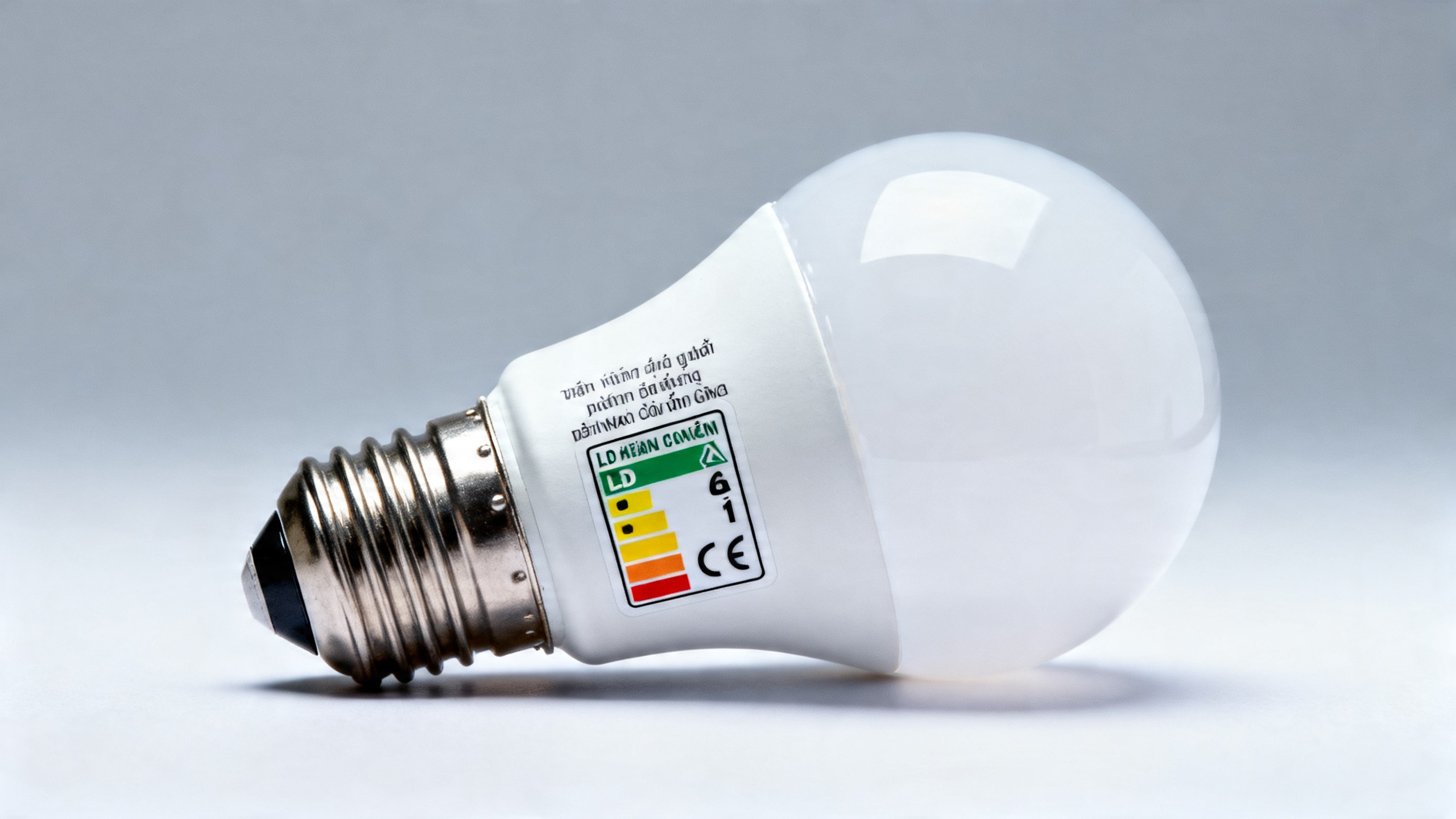
Vietnam’s new mandatory energy labeling requirement for electronic and electrical equipment (EEE) — requiring both Vietnamese and Chinese text on labels — took effect on April 15, 2026. This regulation directly impacts Chinese exporters of power adapters, LED lighting, small household appliances, and related products entering the Vietnamese market. It signals a tightening of technical market access conditions and introduces immediate compliance obligations for supply chain actors involved in packaging, labeling, and distribution.
Event Overview
On April 15, 2026, Vietnam’s Ministry of Industry and Trade officially implemented Decree No. 15/2026/ND-CP. The decree mandates that all electronic and electrical products sold in Vietnam — including power adapters, LED lamps, and small household appliances — must carry an energy efficiency label compliant with Vietnam’s national standard TCVN ISO 50001. Crucially, label text must appear in both Vietnamese and Chinese; English-only or monolingual labels are not permitted. Chinese exporting enterprises have 30 days from the effective date to update product packaging and labels, failing which they risk removal from shelves and administrative penalties.
Which Subsectors Are Affected
Direct Exporters (China-based)
These enterprises face direct regulatory exposure as named responsible parties under the decree. Their export shipments may be detained at Vietnamese customs or rejected by local distributors if labels do not meet the bilingual requirement. Impact manifests in revised artwork approvals, updated printing specifications, and potential delays in shipment clearance.
Contract Manufacturers & OEMs (China-based)
Manufacturers producing for foreign brand owners or Vietnamese importers must align label design and printing processes with the new bilingual format. Since labeling is often embedded in final packaging stages, this requires coordination with clients on version control, documentation, and batch traceability — especially where multiple language variants coexist across markets.
Distribution & Import Agents (Vietnam-based)
Local importers and distributors bear de facto responsibility for market compliance. Under Vietnamese law, they are liable for non-compliant products placed on sale. This increases pre-market verification workload: each incoming consignment now requires bilingual label validation before warehousing or retail placement.
Logistics & Compliance Service Providers
Third-party labeling, packaging audit, and certification support providers will see rising demand for bilingual label verification services and localized documentation review. However, no official accreditation mechanism for such verification has been announced — meaning service scope remains subject to client-defined acceptance criteria rather than formalized oversight.
What Relevant Enterprises or Practitioners Should Focus On — And How to Respond Now
Monitor official guidance on label layout and font specifications
The decree references TCVN ISO 50001 compatibility but does not detail typographic rules, minimum font sizes, or positional requirements for Chinese vs. Vietnamese text. Enterprises should track updates from Vietnam’s General Department of Vietnam Standards and Quality (TCVN) and the National Authority on Technical Regulations (NATR), as these bodies may issue supplementary notices.
Prioritize high-volume and high-risk product categories for label revision
Given the 30-day deadline, resources should first be allocated to best-selling or fast-turnover items — particularly power adapters and LED bulbs — which constitute the largest share of Chinese EEE exports to Vietnam and are most likely to trigger rapid enforcement action due to visibility and volume.
Distinguish between legal mandate and operational rollout timelines
While the decree entered force on April 15, 2026, inspection protocols, penalty thresholds, and grace periods (if any) for transitional stock remain unconfirmed. Enterprises should treat the effective date as a hard deadline for new production, but also verify whether existing inventory with pre-April labels may be grandfathered — pending clarification from Vietnamese authorities.
Update internal SOPs for multilingual label approval and print vendor management
Companies must revise internal workflows to include dual-language proofing, bilingual artwork sign-off, and vendor qualification checks for Chinese typesetting accuracy (e.g., simplified vs. traditional character alignment, term consistency). Relying solely on automated translation tools carries compliance risk and should be avoided without human linguistic review.
Editorial Perspective / Industry Observation
From industry perspective, this requirement is better understood as a procedural signal than an isolated technical amendment. It reflects Vietnam’s broader shift toward embedding language-specific consumer protection into technical regulations — particularly for markets with high import dependency and strong bilateral trade ties. Analysis来看, the inclusion of Chinese — rather than English — underscores the dominance of Chinese-sourced EEE in Vietnam’s retail channels and signals growing expectations for upstream supply chain localization. Observation来看, enforcement capacity remains uneven across provinces, meaning initial implementation may focus on major ports and Ho Chi Minh City/Hanoi retailers. Current more appropriate interpretation is that this is a binding regulatory baseline — not a pilot or voluntary scheme — and its enforcement is likely to intensify after the initial 30-day adjustment window.
This measure does not introduce new energy efficiency performance thresholds; it focuses exclusively on labeling transparency. Its significance lies less in technical stringency and more in the procedural burden it places on cross-border labeling governance — particularly for exporters managing parallel labeling requirements across ASEAN markets. For now, it serves as a concrete indicator of Vietnam’s increasing emphasis on domestic language accessibility as a non-tariff trade condition.
Information Sources:
— Official Gazette of Vietnam, Decree No. 15/2026/ND-CP
— Vietnam Ministry of Industry and Trade Public Notice dated April 15, 2026
Note: Details on enforcement procedures, penalty amounts, and transitional provisions for existing stock remain pending official clarification and are subject to ongoing monitoring.
Related News
- IEC 62368-1:2026 Published — AV/IT Exporters Must Comply by Q1 2027Apr 16, 2026IEC 62368-1:2026 is live — AV/IT exporters must comply by Q1 2027. Discover key changes, affected industries, and actionable compliance steps now.
- USTR Launches 301 Review on Chinese Smart WearablesApr 16, 2026USTR 301 review on Chinese smart wearables signals new tariffs & stricter compliance—key for exporters, OEMs, and suppliers. Act now.
- Vietnam Enforces Bilingual Energy Labeling for EEE ProductsApr 16, 2026Vietnam enforces bilingual energy labeling for EEE products—Vietnamese & Chinese required. Key for Chinese exporters of power adapters, LED lights, and appliances. Act now to avoid penalties!
- EU CBAM Transition Rules Finalized: Data Submission by Apr 30Apr 16, 2026EU CBAM transition rules are live: Chinese steel, aluminum & cement exporters must submit verified carbon data by Apr 30. Act now to avoid customs delays and penalties.
Related News
- 00
0000-00
Indonesia Mandates CNAS Lab Reports for Imported Building Materials from July 2026 - 00
0000-00
China's CPO Optical Module Exports Up 41%; Eoptolink First Global Vendor on US AI Infrastructure White List - 00
0000-00
IEC 62368-1:2026 Published — AV/IT Exporters Must Comply by Q1 2027 - 00
0000-00
Red Sea Tensions Lift Asia-Europe Freight Costs 23% Weekly - 00
0000-00
RCEP e-CO Platform Launches for Faster Export Clearance
Policy Review Desk
Weekly Insights
Stay ahead with our curated technology reports delivered every Monday.