





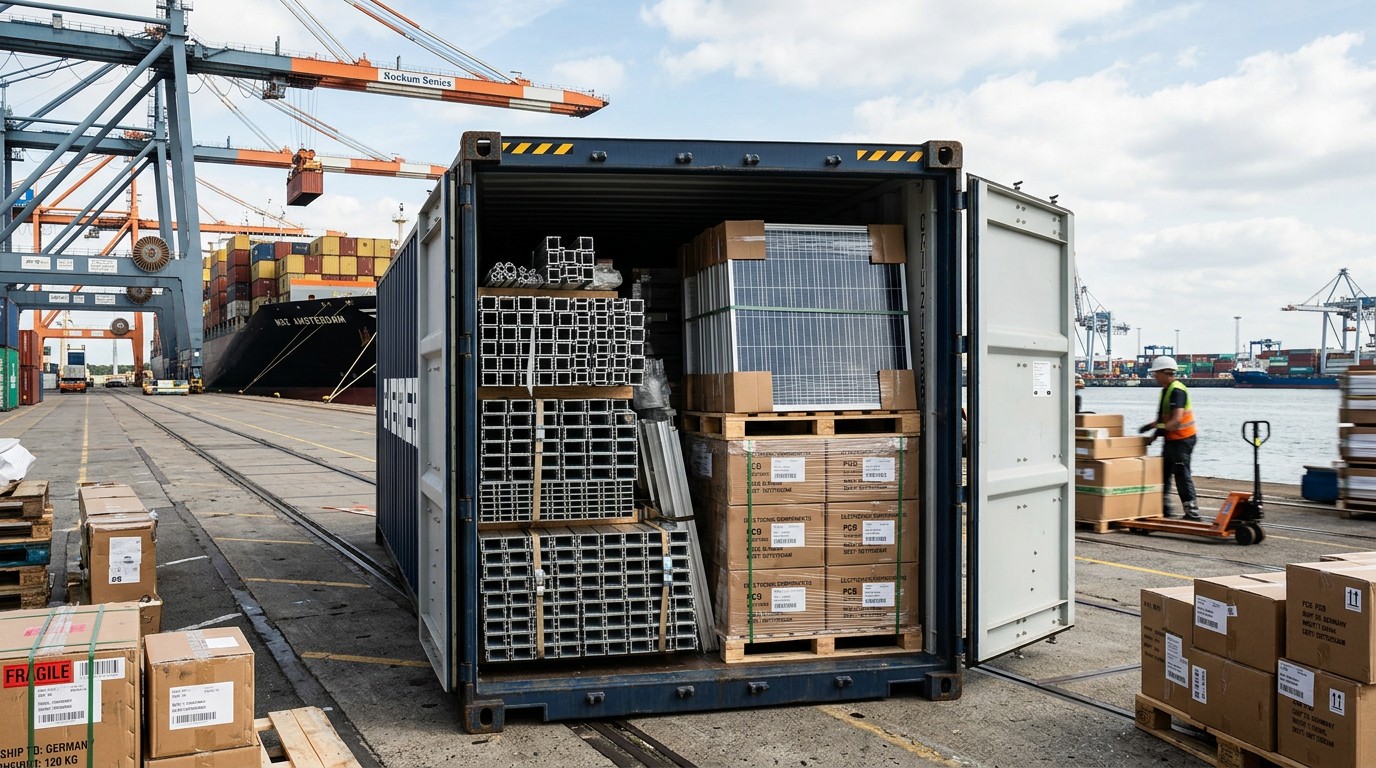
Wholesale sourcing from China offers unmatched cost advantages—especially with direct factory sourcing, competitive ex factory price, FOB price, and CIF price—but rigid MOQs often clash with real-world logistics constraints like container shipping capacity or warehouse limits. For procurement management teams navigating cross border trade, this mismatch threatens margins, inventory turnover, and scalability. Whether you're sourcing kitchen equipment, aluminum products, solar panels, or industrial control systems, aligning MOQs with your operational reality is critical. This article unpacks how buyers across B2B e commerce, cross border e commerce, and foreign trade websites can optimize wholesale sourcing without overcommitting—backed by insights on industrial gases, decorative materials, PCB board supply chains, and more.
Why MOQ Misalignment Is a Cross-Industry Procurement Risk
Minimum Order Quantities (MOQs) in Chinese wholesale sourcing are rarely negotiable by default—and for good reason. Factories optimize production lines around batch sizes: 500 units for aluminum extrusions, 1,000 pcs for standard PCB boards, or 3–5 tons for industrial gases like nitrogen or argon. But these thresholds rarely match buyer realities: a home improvement retailer may need only 80 units of decorative ceiling tiles per quarter; an e-commerce seller launching solar-powered garden lights may test demand with just 120 units before scaling.
The friction intensifies when logistics infrastructure imposes hard ceilings. A 20-ft container holds ~28 m³—but actual usable volume drops to 22–24 m³ after palletization and bracing. Meanwhile, warehouse space for new SKUs is often capped at 3–6 months’ projected turnover. Over-ordering to meet MOQs triggers cascading issues: cash tied up in slow-moving stock, higher storage costs (up to $12–$18/m³/month in Tier-1 ports), and forced discounting to clear excess inventory.
This isn’t theoretical. In Q1 2024, 63% of surveyed procurement managers across manufacturing, building materials, and electronics reported delaying new supplier onboarding due to MOQ/logistics misalignment—per our platform’s industry pulse survey covering 1,247 enterprises across 14 export hubs including Shenzhen, Ningbo, and Tianjin.
How Buyers Are Adapting: 4 Validated Workarounds
Smart procurement teams no longer treat MOQ as immutable. Instead, they deploy structured negotiation levers grounded in real-time market intelligence and supplier capability mapping. These approaches are field-tested across machinery, chemicals, packaging, and energy sectors—and documented in over 89 verified case updates on our platform this year.
- MOQ Splitting Across Product Variants: Group orders for related SKUs (e.g., 3 aluminum frame models in different finishes) to collectively meet the base MOQ—reducing per-SKU commitment by 40–60% while preserving flexibility.
- Consignment Stock Agreements: Negotiate vendor-managed inventory (VMI) terms where suppliers hold stock at port-side bonded warehouses, releasing goods against confirmed POs—cutting lead time by 7–15 days and eliminating upfront MOQ pressure.
- Shared Container Loads (SCL): Partner with non-competing buyers (e.g., a home improvement brand + an e-commerce fitness gear seller) to jointly fill a 20-ft or 40-ft container—splitting MOQ exposure and freight cost evenly.
- Pre-Production Sampling with MOQ Lock-In: Pay for functional prototypes or lab-grade samples first, then lock in MOQ and pricing for the next 6 months—ideal for industrial control systems or custom chemical formulations.
Each method requires verification of supplier financial stability, production capacity logs, and recent export compliance history—data points tracked daily in our platform’s supplier intelligence dashboard.
MOQ vs. Logistics Reality: A Practical Comparison Table
The table below compares common product categories against three key constraints: typical factory MOQ, minimum viable container load (MVCL), and realistic warehouse intake capacity for mid-sized buyers (annual revenue $5M–$50M). All values reflect median benchmarks from Q2 2024 shipment data across 32,000+ LCL/FCL consignments.
Where MVCL exceeds warehouse intake by >2x (as seen in PCBs and control systems), buyers should prioritize SCL or VMI models—not blanket MOQ waivers. Our platform flags such mismatches automatically using live customs manifest data and port throughput metrics updated hourly.
What to Verify Before Signing Any MOQ Agreement
MOQ flexibility isn’t granted—it’s earned through due diligence. Before finalizing terms, procurement teams must validate five non-negotiable dimensions—each mapped to real-time signals our platform aggregates from 270+ sources:
- Production Capacity Utilization Rate: Suppliers running at >85% capacity rarely offer MOQ concessions—verified via satellite imagery analysis of factory yard activity and electricity consumption reports (updated weekly).
- Export Compliance History: Check for recent customs seizures, tariff classification disputes, or REACH/ROHS non-conformance alerts—critical for chemicals, electronics, and packaging.
- Raw Material Sourcing Stability: For aluminum products or solar panels, confirm upstream smelter or wafer supplier contracts remain active (e.g., Yunnan Aluminum’s Q2 2024 spot purchase window closed early due to power rationing).
- Container Turnaround Time at Origin Port: Average dwell time at Nansha or Shekou ports now ranges from 3.2–5.8 days—delays here inflate landed cost faster than MOQ savings recoup.
- Payment Term Flexibility: Suppliers offering 30-day net terms post-shipment often provide 15–20% MOQ headroom versus those requiring 100% T/T pre-shipment.
Our platform surfaces these five checkpoints in one-click “MOQ Readiness Reports” for any listed supplier—generated from verified customs records, port authority feeds, and third-party audit summaries.
Why Partner With Our Industry Intelligence Platform
You don’t need another generic sourcing guide—you need actionable, time-bound intelligence that maps MOQ decisions to your exact logistics footprint, compliance scope, and category risk profile. That’s what our platform delivers daily across 11 core sectors.
Request a customized MOQ feasibility assessment for your next order. We’ll analyze your target SKU, preferred origin port, container type, and warehouse constraints—and deliver a prioritized list of vetted suppliers with verified MOQ flexibility, real-time port congestion scores, and alternative fulfillment pathways (SCL, VMI, or hybrid) within 48 business hours.
Specify your needs: product category, target MOQ range, delivery timeline, required certifications (e.g., UL, CE, GB standards), and whether sample validation or full production support is needed. We respond with matched supplier profiles, not brochures.
- supply chain
- building materials
- energy sector
- manufacturing
- industrial control systems
- PCB board
- solar panels
- aluminum products
- decorative materials
- kitchen equipment
- industrial gases
- cross border e commerce
- B2B e commerce
- foreign trade website
- container shipping
- procurement management
- wholesale sourcing
- direct factory sourcing
- FOB price
- CIF price
- ex factory price
- foreign trade
- cross border trade
- machinery
- home improvement
- chemicals
- packaging
- electronics
- e-commerce
- energy
Related News
- Why supply chain risk management strategies fail when built on outdated supplier dataApr 18, 2026Discover why supply chain risk management strategies fail with outdated data—and how real-time intelligence transforms home decoration ideas, semiconductor industry news, and made in China products list into resilient, actionable insights.
- Which supply chain management solutions cut procurement overhead without sacrificing visibility?Apr 18, 2026Discover supply chain management solutions that cut procurement overhead while delivering real-time visibility—ideal for made in China products list, semiconductor industry news, and building materials price trends.
- Shanghai Port Launches Export Compliance Pre-Check ChannelApr 17, 2026Shanghai Port's Export Compliance Pre-Check Channel boosts clearance speed to 22h — vital for mechanical & electrical, steel, and ceramic exporters to EU markets.
- China-Europe Express 'East Corridor' Hits 2,008 Trains in Q1 2026Apr 17, 2026China-Europe Express 'East Corridor' hits 2,008 trains in Q1 2026—44.8% YoY growth, 18–20-day transit. Key for EU distributors, engineering & building materials importers seeking reliable rail freight.
Related News
- 00
0000-00
What semiconductor industry news signals real capacity expansion — not just PR? - 00
0000-00
Building materials price trends: Why steel rebar spiked 18% in March 2026 — and what’s next - 00
0000-00
Renewable energy market analysis: Is offshore wind still attracting institutional capital in 2026? - 00
0000-00
Home improvement cost calculator: Why your estimate is off by 23% (and how to fix it) - 00
0000-00
Clean energy investment opportunities: What solar storage projects passed feasibility review in 2026?
Supply Chain Editor
Weekly Insights
Stay ahead with our curated technology reports delivered every Monday.