





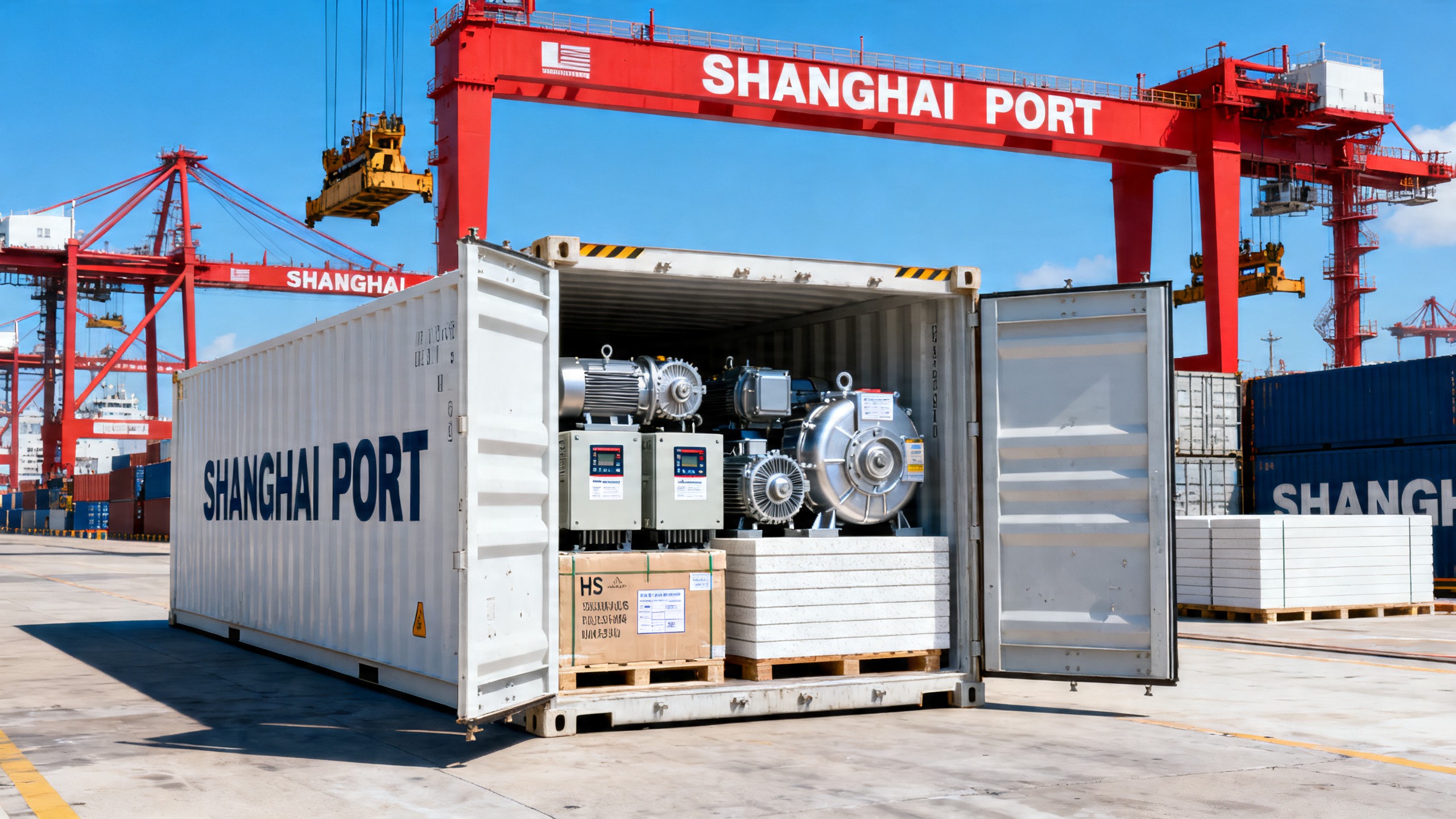
On April 15, 2026, Shanghai Customs fully rolled out the Export Compliance Pre-Inspection Channel across its entire jurisdiction—marking a significant operational upgrade for exporters of electromechanical equipment and building materials. This initiative directly affects overseas engineering procurement firms and large-scale distribution networks that rely on predictable shipment timelines.
Event Overview
Following a successful pilot phase, Shanghai Customs officially expanded the Export Compliance Pre-Inspection Channel to all export categories under its jurisdiction effective April 15, 2026. The channel covers key export commodities including electromechanical equipment, architectural ceramics, and structural steel components. Eligible enterprises may submit documentation and schedule pre-inspection up to 72 hours in advance, enabling ‘instant declaration and instant release’. As a result, average customs clearance time for these categories has been reduced from 48 hours to within 22 hours.
Impact on Specific Industry Segments
Electromechanical Equipment Exporters: These enterprises face tight delivery windows for overseas infrastructure and industrial projects. The shortened clearance window enhances scheduling reliability for OEMs and system integrators supplying turnkey solutions abroad.
Building Materials Exporters (e.g., architectural ceramics, prefabricated steel structures): Seasonal demand peaks and project-linked delivery schedules make predictability critical. Faster clearance supports just-in-time logistics for overseas construction sites and reduces demurrage risk at destination ports.
International Engineering Procurement Firms: As end buyers coordinating multi-supplier deliveries, they benefit from improved lead-time certainty when consolidating shipments from Shanghai Port—especially for EPC contracts with strict milestone penalties.
Large-Scale Distribution Networks (e.g., regional hardware or industrial supply chains): These operators manage inventory across multiple markets and depend on synchronized inbound flows. Reduced clearance variability helps align warehouse intake planning with retail or wholesale replenishment cycles.
What Relevant Enterprises or Practitioners Should Focus On
Monitor official implementation scope and eligibility criteria
While the channel is now active across the Shanghai Customs district, eligibility remains tied to specific commodity codes and documentation completeness. Enterprises should verify whether their HS codes are formally included—and whether pre-inspection requires additional certifications (e.g., energy efficiency declarations for certain electromechanical goods).
Assess readiness for 72-hour pre-submission workflow
The mechanism requires full documentation submission and inspection scheduling at least three days prior to export. Companies must evaluate internal coordination between sales, logistics, and compliance teams to avoid missed slots or last-minute revisions that forfeit the ‘instant release’ benefit.
Distinguish between policy rollout and actual throughput consistency
Initial data shows an average 22-hour clearance—but this reflects optimal conditions. Enterprises should track real-world performance over the next 6–8 weeks, especially during peak filing periods (e.g., month-end or quarter-end), to assess whether the benefit holds under volume pressure.
Align upstream procurement and production planning with new timeline expectations
With clearance no longer a major bottleneck, bottlenecks may shift upstream—to factory output, inland transport, or container yard availability. Exporters should revisit end-to-end lead-time mapping and adjust buffer allocations accordingly.
Editor Perspective / Industry Observation
From an industry perspective, this rollout is best understood as an operational signal—not yet a systemic transformation. It reflects Shanghai Customs’ targeted effort to reduce friction for high-volume, low-risk export segments, rather than a broad liberalization of export controls. Analysis来看, the 22-hour benchmark is meaningful only if sustained across varying cargo volumes and document complexity levels. Observation来看, adoption will likely remain uneven: larger exporters with dedicated compliance staff are better positioned to leverage the channel than SMEs managing exports ad hoc. Current more appropriate interpretation is that this is a capacity-optimization measure—not a regulatory easing—and its value depends heavily on execution discipline on both the enterprise and customs side.
Shanghai Port’s Export Compliance Pre-Inspection Channel represents a measurable improvement in procedural efficiency for select export categories—but its broader significance lies in signaling a shift toward anticipatory, data-informed customs engagement. For affected sectors, the change does not eliminate compliance requirements; instead, it front-loads verification and rewards preparation. At this stage, it is more accurately viewed as a timing optimization tool than a substantive regulatory change—and its utility hinges on consistent application and enterprise readiness.
Source: Official announcement by Shanghai Customs, effective April 15, 2026. Note: Ongoing observation is recommended regarding coverage expansion beyond electromechanical and building materials categories, as well as potential integration with national-level single-window platforms.
Related News
- Red Sea Tensions Lift Asia-Europe Freight Costs 23% WeeklyApr 16, 2026Red Sea tensions spike Asia-Europe freight costs 23% weekly—impacting exporters, importers & supply chains. Key insights & mitigation strategies inside.
- Shanghai Port Launches Full Rollout of Export Compliance Pre-Inspection ChannelApr 16, 2026Shanghai Port's Export Compliance Pre-Inspection Channel now live—cut customs clearance to 22 hours for electromechanical & building materials exporters. Boost predictability, slash demurrage risk, and optimize EPC logistics today.
- Container shipping delays aren’t random—they follow predictable seasonal patternsApr 18, 2026Unlock predictable cross border trade timing for made in china sourcing—optimize FOB, CIF & ex factory price planning amid container shipping delays.
- Power transmission components sourced via wholesale channels often lack batch traceabilityApr 16, 2026Cross border trade & direct factory sourcing: Ensure batch traceability for gears, motors, VFDs—avoid risks in FOB/CIF/EXW procurement. Verify made in China suppliers now!
Related News
- 00
0000-00
Indonesia Mandates CNAS Lab Reports for Imported Building Materials from July 2026 - 00
0000-00
China's CPO Optical Module Exports Up 41%; Eoptolink First Global Vendor on US AI Infrastructure White List - 00
0000-00
IEC 62368-1:2026 Published — AV/IT Exporters Must Comply by Q1 2027 - 00
0000-00
Red Sea Tensions Lift Asia-Europe Freight Costs 23% Weekly - 00
0000-00
RCEP e-CO Platform Launches for Faster Export Clearance
Supply Chain Editor
Weekly Insights
Stay ahead with our curated technology reports delivered every Monday.